
Show summary Hide summary
Each winter the sands at the meeting point of the Ganga and Yamuna in Prayagraj become a temporary city: rows of tents, ritual fires and steady streams of early-morning pilgrims. For those who commit to the month-long vow known as kalpvas, this is more than a pilgrimage—it’s a structured withdrawal from daily life, and this year’s calendar and logistics will determine how visitors plan travel, health precautions and where they stay.
What kalpvas means today
At its core, kalpvas is a household practice, not the life of a renunciant. Farmers, teachers, retired workers and whole families come to live on the floodplain for a lunar month, sleeping simply in tents, bathing at the river before dawn, eating once a day and spending long hours in prayer, satsang and charity.
Magh Mela 2027: thousands observe monthlong kalpvas ritual on Sangam sands
Dharma essentials: what it means and why it matters today
The name combines Sanskrit roots that point to a fixed sacred span of residence; historically it is presented in local texts as one of the most rigorous winter austerities at the Triveni Sangam. Many participants return year after year—some keeping the vow for decades—so the mela is a mix of newcomers and long-standing communities.
Key dates for Magh Mela 2027
- Makar Sankranti — 15 January: the mela opens with the first major snan (bath); the tent city begins to fill.
- Paush Purnima — 22 January: the full moon that traditionally marks the start of kalpvas; camps and vows are formalized around this date.
- Mauni Amavasya — 6 February: the principal bathing day of the mela and usually the season’s largest congregation; many observe silence and special charitable rites.
- Basant Panchami — 11 February: a festive snan day that celebrates learning and the onset of spring colours.
- Maghi Purnima — 20 February: the full moon that closes the kalpvas period; many perform final donations and dismantle tents thereafter.
- Mahashivratri — 6 March: the final major observance that brings the mela to an official close.
These dates follow the mela schedule and the panchang; arrangements for bathing and access on peak days are controlled by the authorities, so always confirm current guidance before travelling.
A typical day on the sand
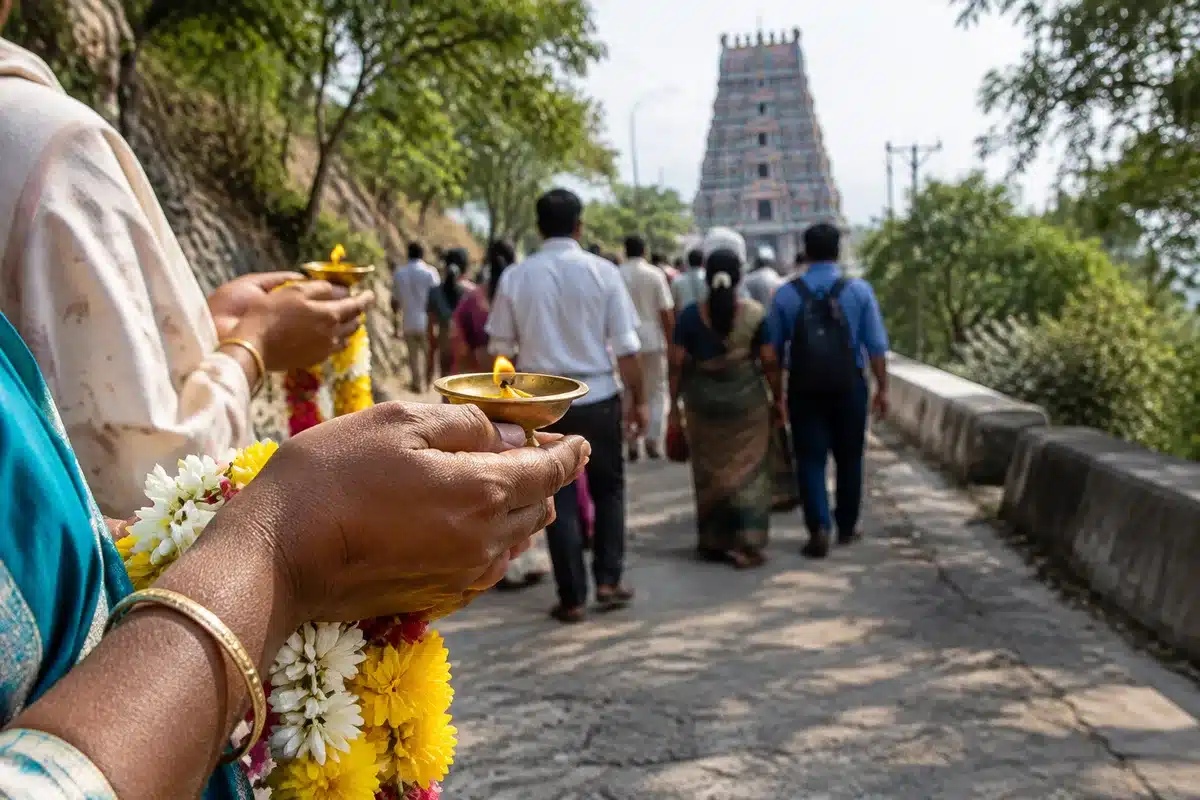
Life on the floodplain is ordered around the river’s schedule. Before sunrise the camp lanes stir; many head to the ghats for a ritual dip—often three quick immersions—offerings to the rising sun and a few minutes of mantra or silent repetition.
After the morning puja the single main meal of the day is prepared and shared. Some camps run communal kitchens; others are self-catering. The afternoons are taken up by satsang: discourses, scriptural recitals and bhajan sessions spill from one tent to the next, creating an informal network of teachings.
The rhythm of cold dawns, a restrained diet, simple sleeping arrangements and repeated devotional practice is meant to steady the body and mind. At the same time, the mela is intensely social—neighbours swap tea, blankets and news; friendships renew each year.
Where to stay and what facilities to expect
There are three common accommodation approaches, chosen according to how strictly you want to follow the vow.
- Camp with an ashram, akhara or trust: traditional and structured; tents or shared spaces are provided, along with communal kitchens and organised satsang. Best for those who want guidance and company.
- Private tent colonies or tour operators: pitched tents with cots, bedding and basic sanitation. More privacy and creature comforts but less immersion.
- Base in Prayagraj and visit: stay in a city hotel or dharamshala and come to the Sangam for days at a time—suitable for short stays or those who can’t commit to a full month.
The mela authority lays out temporary infrastructure each year: mapped lanes, pontoon bridges, water points, lights, medical tents and police posts. The scale has increased, but the environment remains a cold, dusty winter tent city—expect long walks and queues on major bathing days.
Travel, health and practical tips
Prayagraj is served by multiple train stations and a regional airport; special trains often run for mela periods and Varanasi and Delhi are common international connectors. Plan inward travel with padding for delays around the biggest snan dates.
- Clothing and gear: layer up—thermals, a warm jacket, woollen socks, a cap and easy-slip sandals for the ghat. A small torch helps in early hours.
- Health: carry personal medication and a simple first-aid kit. The mela has medical posts, but your own supplies save hassle.
- Crowd days: on Mauni Amavasya and other peak dates, move only with essentials, set a clear meeting point for groups, and follow one-way routes and steward directions.
- For older visitors: choose a comfortable camp close to services, avoid dense hours on major snan days and keep dawn dips brief in heavy fog.
Questions newcomers often ask
Must I stay the full month? Tradition values the full lunar month from Paush Purnima to Maghi Purnima, but many participate for shorter periods. There is no external policing—sincerity matters more than duration.
Are women welcome? Absolutely. Women have long taken part in kalpvas—alone, in couples, or as part of organised groups.
How much does it cost? Expenses vary. Staying simply in a camp with a communal kitchen is relatively inexpensive; private tents and hotel options raise the price. The practice itself is intended to be austere.
Can I do kalpvas without joining a camp? You can rent a private tent, but first-timers often find a camp’s structure—meals, satsang and community—easier for keeping the vow.
Kalpvas is a disciplined, social and ritual-rich way to spend a month by the Sangam: it reshapes daily rhythms toward fewer needs, repeated devotion and close communal life. If you are planning to attend Magh Mela 2027, use the calendar above to choose dates, contact camps early, and check the Mela Authority’s announcements for registration and bathing arrangements before you travel.