Show summary Hide summary
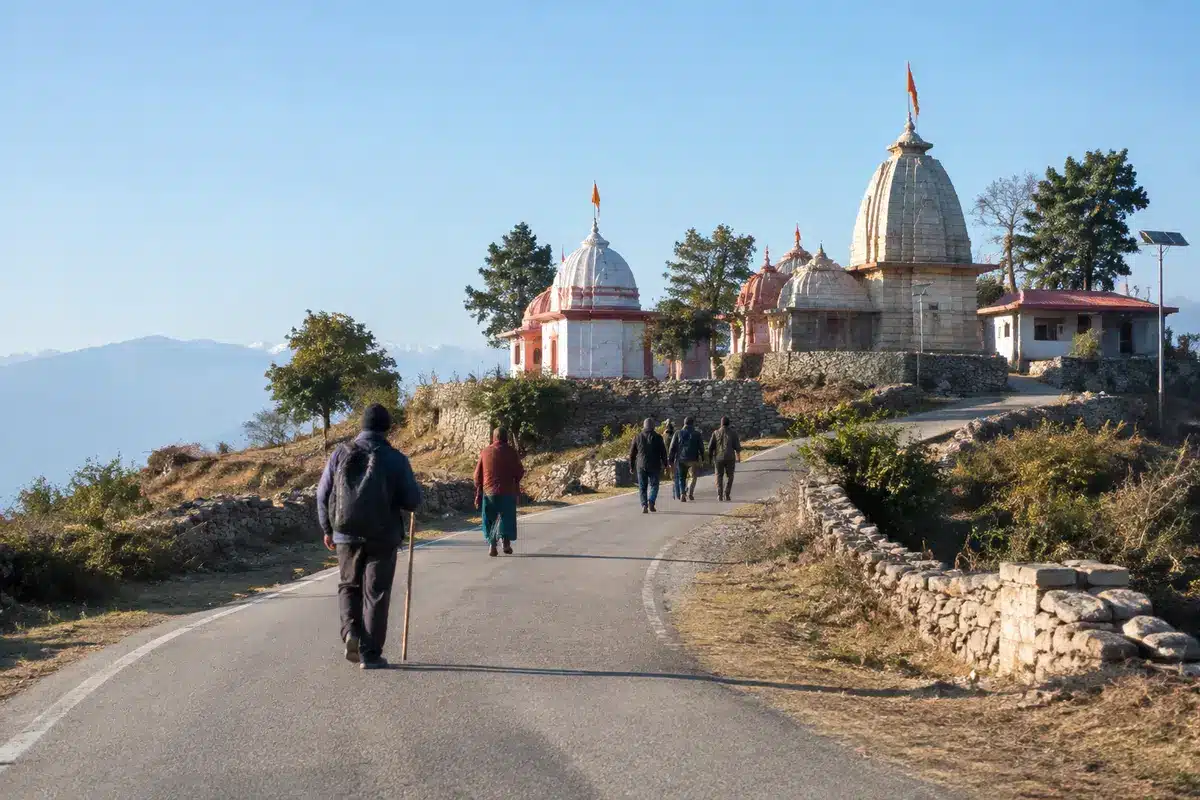
Across small towns and hillocks within easy reach of Pune lie eight modest temples that together form the Ashtavinayak pilgrimage — a compact but storied circuit devoted to Lord Ganesha. With winter travel season and the next Sankashti Chaturthi approaching on 27 November 2026, many families are planning this two- to three-day drive; the pilgrimage’s one standing rule is simple but absolute: begin at Morgaon and return there to complete the yatra.
A fixed circuit, varied shrines
The Ashtavinayak yatra is codified in Marathi religious tradition: the eight temples are visited in a specific sequence and the journey is considered incomplete until the pilgrim comes back to the starting shrine. What surprises most visitors is how different each stop feels — rock-cut caves, fort-like gateways, riverside sanctuaries and small-town halls — all housing murtis believed to be swayambhu, or self-manifested.
Ashtavinayak pilgrimage: Maharashtra’s eight Ganesha temples spark tourism surge
Karwa Chauth: what couples do to mark the fast and strengthen bonds this autumn
Rather than repetition, the route reads like a string of distinct episodes: each temple carries a separate legend, a particular iconography and, in several cases, local rituals or architectural quirks you won’t find at the others.
The eight temples (traditional order)
- Shri Mayureshwar, Morgaon — The traditional start and finish of the circuit; a fortified temple complex said to represent Ganesha mounted on a peacock and guarded by high stone walls.
- Shri Siddhivinayak, Siddhatek — Perched on a small hill above the Bhima, this is the rare right-trunked Ganapati, considered especially potent; a full pradakshina means walking around the hillock.
- Shri Ballaleshwar, Pali — Named after a devotee boy, Ballala; the shrine is known for its besan laddu prasadam and its winter-sun alignment that lights the idol after the solstice.
- Shri Varadavinayak, Mahad — Found near the old Mumbai–Pune route; the murti was recovered from a lake in the 17th century and an oil lamp in the sanctum has been tended continuously for generations.
- Shri Chintamani, Theur — Close to Pune, at the confluence of rivers; local legend links this shrine with a wish-fulfilling jewel and the Peshwa family’s devotional history.
- Shri Girijatmaj, Lenyadri — Housed in a rock-cut Buddhist cave near Junnar, reached by 307 carved steps; the cave’s single-rock hall receives daylight instead of electric lighting.
- Shri Vighnahar, Ozar — On the Kukadi’s banks, behind walkable ramparts with a golden pinnacle added in Peshwa-period expansions; the name recalls Ganesha’s role in overcoming obstacles.
- Shri Mahaganapati, Ranjangaon — Associated with a Shaiva legend of Shiva seeking Ganesha’s blessing before battle; the present sanctum dates to Peshwa-era construction and marks the turn back toward Morgaon.
Timing and why winter is best
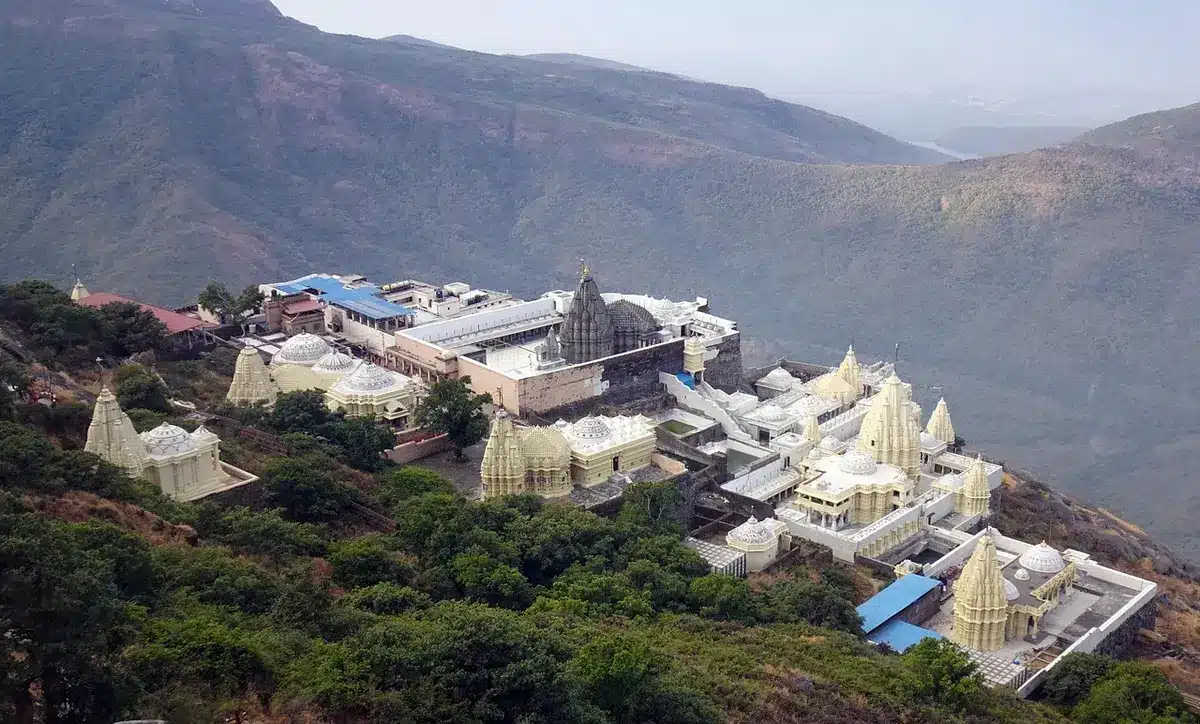
The full loop from Pune covers roughly 690–715 kilometres depending on the roads taken. Conditions on the Deccan plateau are most pleasant from November through February: cooler mornings, clearer skies across the ghats and lighter crowds after the Ganesh festival season. The seasonal light also reveals architectural features at some shrines — sun alignments at Pali and Ranjangaon, for example — that are easiest to appreciate in winter.
Practical calendar note: Sankashti Chaturthi — the monthly fast and worship for Ganesha — draws larger numbers at all eight temples. This winter’s convenient dates include 27 November 2026 and 25 January 2027; Maharashtra observes Angarki Chaturthi (a Tuesday Sankashti especially venerated here) less often, with the next on 22 June 2027.
Two common ways to do the route
Travelers generally choose between a scriptural three-day plan that follows the traditional sequence and a road-optimized two-day version that reduces ghat crossings and driving time.
Typical two-day order: start at Morgaon, visit Siddhatek, Theur and Ranjangaon on day one with an overnight near Ozar; on day two do Lenyadri and Ozar in the morning, descend to Pali and Mahad, then return to Morgaon. Purists who want the full, scripture-prescribed experience give themselves a third day and accept the extra travel.
Practical tips for the drive
No advance permits or paid bookings are required for darshan; temple entry is open to all. Opening hours vary by shrine and day — some close briefly in the afternoon — so check current timings before fixing your schedule. Photography is typically restricted inside sanctums; wear modest clothing.
The only significant climb is the 307 steps at Lenyadri; take them in the cool of morning and plan for alternate arrangements if elders or those with mobility issues are in your party. Accommodation is most plentiful in Pune; on the two-day plan a night halt around Ozar, Lenyadri or Narayangaon is convenient. Highway food is largely reliable — dhabas and small-town thalis dominate — and local taxi drivers from Pune commonly know the circuit and its timing quirks.
Quick answers for first-time pilgrims
- One day? Not realistically. Even a rushed itinerary runs two days; three is preferable for the traditional order or a relaxed pace.
- Must I follow the ancient order? Tradition prescribes it and insists on returning to Morgaon. Many modern visitors, however, adapt the route for road efficiency while still concluding at Morgaon.
- Good for children and elders? Largely yes. Seven of the eight sites require minimal walking; Lenyadri’s steps are the main exception to plan around.
- Busiest times? Ganesh Chaturthi and Sankashti evenings (especially Angarki) see the largest crowds; ordinary winter weekends are much quieter.
- Need a guide or package? Not essential. A knowledgeable driver or local guide can smooth the day’s sequence and avoid closures, but many travelers manage independently.
Eight modest temples, each with a separate story, clustered within a day’s drive of Pune — the Ashtavinayak is a manageable pilgrimage that combines religious tradition with scenic motoring through the Western Ghats’ foothills. For pilgrims planning a winter visit, the essentials are straightforward: start and finish at Morgaon, allow at least two days, and check the Sankashti dates if you prefer quieter or more auspicious timings.