Show summary Hide summary
Every year Hindu communities observe Chaturmas — a four‑month stretch set aside for restraint, reflection and intensified devotion that begins with Devshayani Ekadashi and closes with Devutthana Ekadashi. Beyond ritual changes and dietary rules, the period shifts social calendars across South Asia, influencing when marriages, public ceremonies and community festivals can take place.
The calendar and why it matters now
Chaturmas follows the lunar cycle, typically spanning the monsoon months (roughly June–July through October–November in the Gregorian calendar), though exact dates move each year. For households and temples the interval signals a pause in certain public activities and a heightened focus on private worship.
Govardhan Puja 2026: Annakut draws pilgrims as parikrama and special darshans kick off
Diwali: crucial updates on travel, markets and celebrations
Practically speaking, the observance affects everyday life: many families alter menus, priests adjust temple schedules, and couples delay weddings until after the period ends. Traders, pilgrims and cultural organizers also use Chaturmas as a predictable window for planning or postponing events.
A compact myth that explains the pause
The scriptural explanation for Chaturmas centers on a well‑known Puranic episode between the generous king Mahabali and the dwarf‑Brahmin incarnation, Vamana. According to traditional texts, Mahabali — an asura monarch famed for his charity and commitment to his word — hosted a great sacrifice when Vamana requested just three paces of land.
Mahabali, bound by his promise even after being warned by his adviser, offered the gift. Vamana then expanded into the colossal cosmic form called Trivikrama, covering earth and heaven in two strides. With no ground left for the third step, the king humbly offered his own head. Vishnu’s response was not only to exact the pledge but to bless Mahabali, granting him a safeguarded realm and personal protection.
The episode is often read as a lesson in integrity and devotion — and it provides the narrative reason why the Preserver is said to enter a period of rest, marking the beginning of Chaturmas.
The divine rest and dual presence
Classical sources such as the Padma Purana and passages recounted in later retellings explain that on Devshayani Ekadashi one aspect of Lord Vishnu reclines in cosmic repose (Yoga Nidra) on the serpent Shesha in the ocean of milk, while another form remains with Mahabali. That dual presence continues until Devutthana Ekadashi, when the divine awakening ushers in a return to regular ritual life.
- Devshayani Ekadashi — marks the start of Vishnu’s rest and the opening of Chaturmas.
- Shravana, Bhadrapada, Ashwin, Kartika — the four lunar months most commonly observed within Chaturmas; practices vary by region and family tradition.
- Devutthana (Prabodhini) Ekadashi — signifies Vishnu’s awakening and the resumption of auspicious ceremonies.
Typical observances during the four months
Customs are diverse, but many routines fall into recognizable patterns: reduced social festivities, focused devotional activity, and selective dietary changes. The specifics below reflect long‑standing practices described in canonical Puranic material and in living regional traditions.
- Shravana — increased worship and often the avoidance of leafy greens in some communities.
- Bhadrapada — additional restraints such as limiting milk‑products or curd depending on local rules.
- Ashwin — continued devotion with prescribed dietary adjustments in observant households.
- Kartika — culmination of the period; certain grains or pulses may be avoided until the Ekadashi awakening.
Contemporary implications
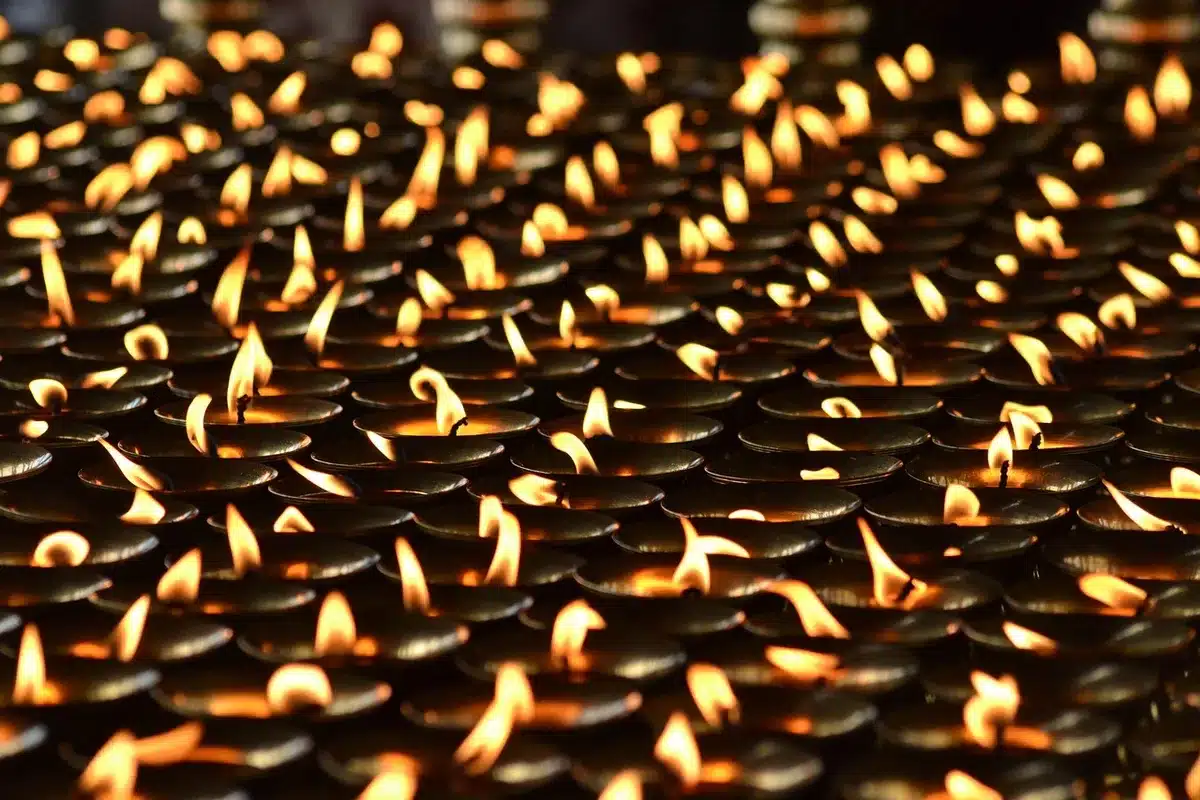
For modern practitioners and organizers, two clear outcomes follow from the Chaturmas cycle. First, it provides a predictable, community‑level pause that supports concentrated spiritual practice and charitable work. Second, it creates logistical constraints: weddings and other rites considered manglik are commonly scheduled after Devutthana Ekadashi, and temple calendars shift to accommodate longer prayer sessions, lamp offerings and special recitations.
Regional customs remain adaptive. Urban devotees may interpret the period primarily as a time for inner discipline and charitable initiatives, while rural and temple communities often adhere more closely to traditional dietary and ritual prescriptions.
What the story teaches
The Mahabali–Vamana episode and the observance of Chaturmas together frame a larger teaching about restraint, commitment and spiritual renewal. The myth underlines that moral standing and humility can outweigh temporal power, while the months that follow encourage deliberate withdrawal from certain comforts to renew spiritual focus.
Whether observed as a set of strict rules or as a seasonal prompt to reflect, Chaturmas remains a living part of Hindu practice — shaping calendars, communal life and individual devotion every year.