Show summary Hide summary
Planning a pilgrimage rarely follows a straight path; it unfolds in loops of curiosity, doubt and rediscovery. That pattern matters now more than ever as fast AI tools, mass internet access and growing interest in wellness reshape how millions in India—and beyond—approach spiritual travel.
How inspiration sparks before a search begins
People seldom decide on a sacred journey by opening a travel app and fixing dates. Instead, a short video, a family story or a devotional song can plant a longing that sits quietly for weeks or years before turning into action. In other words, the first impulse often arrives through social feeds and conversations long before anyone types a query into a search bar.
Supreme Court quota decision: BJP says it exposes opposition’s vote-bank tactics
Didgeridoo and sitar electrify Purana Qila: Indigenous Australia meets Indian classical

That early phase is fragile: impressions accumulate across platforms and formats—images, voice notes, eyewitness accounts—so the context behind a fledgling wish can vanish the moment someone switches devices or apps.
The hidden cost of switching information sources
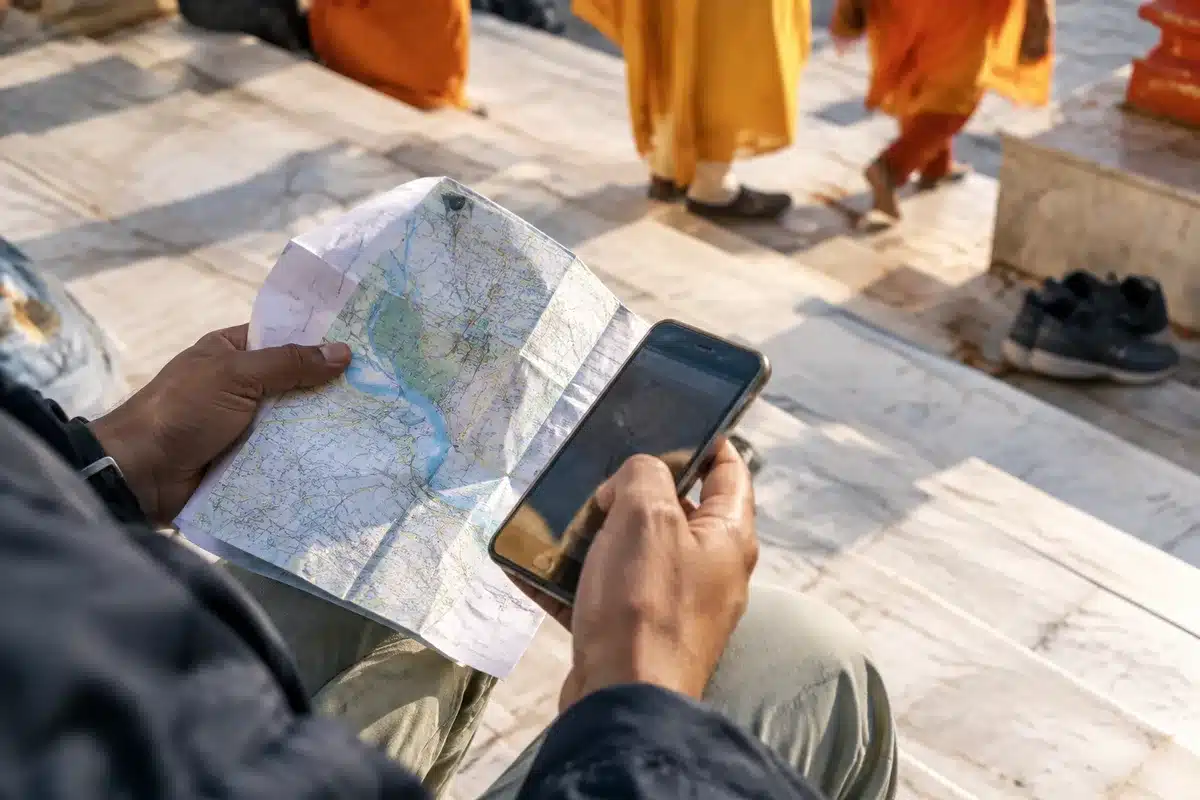
Anyone who researches travel online knows the churn: comparing options on one site, checking timings on another, confirming rituals in chats. Each switch erodes context and forces people to reconstruct what they already learned.
For spiritual trips this “restart” carries higher stakes. An inaccurate ritual time or an unvetted priest is more than an inconvenience; it can damage the experience. Families coordinating a pilgrimage often depend on long group chats where bits of planning—transport, accommodation, puja rules—are scattered among many hands. When those threads break, plans stall or quietly dissolve, especially for older relatives who may be discouraged by the friction.
Fast answers, slower confidence
Large language models can produce a full itinerary in seconds. But rapid responses do not automatically translate into trust. People use AI for ideas, then validate those suggestions through reviews, trusted contacts or official sources before committing.

Trust in spiritual matters is not an add-on; it is central. When a seeker asks about a ritual or a sacred site, they are looking for factual accuracy and cultural sensitivity—an assurance that the guidance respects the meaning behind the practice. That is why observers say the most useful AI applications in devotion will pair automated answers with verified sources and human oversight.
Booking is a milestone, not the finish line
Confirming reservations can feel like closure, but for many pilgrims a plan remains provisional until the final hours. Health, auspicious timings, crowd conditions and last-minute logistics routinely reshape journeys. After darshan, the experience often prompts lifestyle changes—daily practices, community ties or wellbeing routines—that extend the trip’s impact.
The growing global interest in wellness—fueled by consumers seeking calm, meaning and renewal—means that what pilgrims carry home from a yatra frequently translates into sustained habits and new local communities.
- Persistent memory: seekers expect a service to remember past queries and preferences across sessions and devices.
- Verified guidance: accurate muhurat, temple procedures and vetted priest information matter as much as logistics.
- Real-time updates: crowd, weather and transport alerts that adapt plans on the go.
- Post-trip continuity: resources to help maintain practices and connect with nearby groups or teachers.
Why India is poised to change the shape of devotional tech
Recent data underline a pivotal shift: India now hosts nearly a billion active internet users, with a majority outside urban centers and almost all consuming content in regional languages, according to IAMAI-Kantar’s ICUBE 2025 report. At the same time, conversational AI use has exploded—OpenAI’s leadership recently noted India among its largest markets—pointing to voice and local-language interactions as the dominant pattern for the next wave of seekers.
Put simply, millions who will soon ask, “When should I visit Badrinath?” or “How do I perform shraddha for my father?” will do so in Hindi, Tamil, Telugu, Bengali, Marathi, Gujarati and other mother tongues—often by voice rather than typed search. That changes product design: AI must work conversationally, in-context, and across languages.
What seekers actually want
Strip away features and marketing claims: at core, people want continuity. They want a system that recognizes them when they return, that preserves prior research, and that pairs speed with reliability. They want to feel there is a trustworthy human or institutional anchor behind automated suggestions.
Startups and platforms working in this space say they are focusing on exactly that problem. One emerging service, DharmikVibes, describes its goal as providing a continuous companion for spiritual journeys—supporting inspiration, verified planning, live adjustments and post-trip practices across Indian languages. Independent observers note such efforts will succeed only if they balance automation with transparency and accountable sourcing.
Technology is beginning to match the circular, iterative way people approach faith: inspiration, reappraisal, planning, return and renewal. The challenge ahead is clear—combine convenience with credibility so seekers can move through that cycle with both ease and confidence.