Show summary Hide summary
An Indian student who moved to the United States this year says the way exams are run there felt like a “culture shock”: instead of tightly monitored classrooms, they encountered largely unproctored, open‑book assessments and take‑home assignments. The experience has reopened a debate about how universities balance trust, measurement of learning and academic integrity—and why those choices matter for international learners arriving now.
A sharp contrast in exam environments
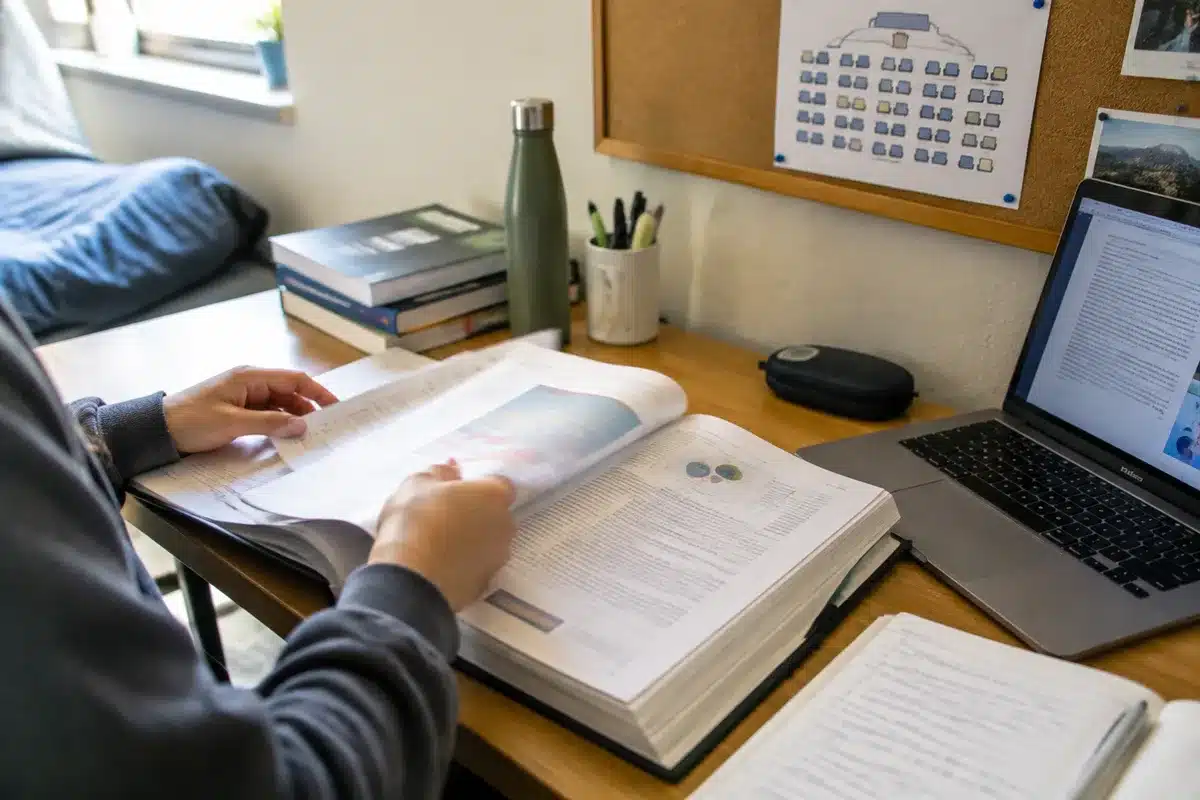
Back home, the student described examinations as a regimented, uniform process—assigned seating, staff watching the room, and careful checks to keep devices out of reach. In several U.S. courses, they found a different routine: professors handing out problem sets to complete at home, timed online submissions, or in‑class tests that explicitly allow notes and references.
Supreme Court quota decision: BJP says it exposes opposition’s vote-bank tactics
Didgeridoo and sitar electrify Purana Qila: Indigenous Australia meets Indian classical
The shift surprised the student not because oversight vanished entirely, but because the testing philosophy felt different. Where one system prioritizes strict enforcement, the other often tests how well students apply knowledge under looser rules.
Not all U.S. classes are the same
Peers at American universities were quick to point out that this is not universal. Many introductory or large lecture courses still use proctors and closed‑book exams, while smaller seminars and advanced classes favor project work or open resources. Institutions also vary in their reliance on an honor code, remote proctoring technology, or in‑person supervision.

That variety means newcomers can encounter anything from highly controlled testing halls to assessment formats that reward research and problem solving over memorization.
| Feature | Typical Indian exam setting | Typical U.S. university setting |
|---|---|---|
| Proctoring | In‑person invigilators, identity checks | Mixed — in‑person or online; some rely on honor codes |
| Phone/device controls | Strict checks, occasional jammers or bans | Varies — browser lockdowns, remote proctoring, or open‑resource tests |
| Exam format | Closed‑book, recall‑based questions | More open‑book, take‑home projects, application tasks |
| Assessment focus | Memory and timed problem solving | Analysis, synthesis, and practical application |
The contrast is not only procedural. It reflects differing assumptions about what assessments should measure. In classrooms that permit notes and sources, instructors often design questions that require interpretation, argumentation or data handling—skills that cannot be demonstrated by rote recall alone.
- Assessment design shifts from testing recall to evaluating reasoning and real‑world problem solving.
- Academic integrity relies more on trust and task design than on surveillance in many U.S. courses.
- Student experience can change dramatically: some feel relieved, others unsettled by the responsibility to self‑manage.
Implications for international students and institutions
For students arriving from systems with heavy invigilation, the difference can be disorienting. It changes study habits, time management and even the kinds of notes students keep. Universities that enroll growing numbers of international learners must weigh how assessment choices affect fairness and clarity.
Faculty and administrators say the broader move toward open formats is partly educational and partly practical: larger classes, online education and a push for skills employers value all influence exam design. Yet those trends raise questions about equity—particularly when students are unfamiliar with the norms that underlie open‑resource tests.
Ultimately, the student’s story underscores a transitional moment in higher education: assessment is evolving, and that evolution has immediate consequences for how learning is measured—and how students adapt.