Show summary Hide summary
Artist Manjari Sharma’s recent conversation with curator and host Sheetal Shah casts fresh light on three interconnected bodies of work that probe ritual, clothing and mourning. The interview, which pairs audio with a visual selection from Sharma’s series, offers a concise guide to projects that reached a wider public through a major museum presentation in Denmark and continue to resonate in conversations about memory and material culture.
Why these works matter now
The projects map private traditions onto public forms: devotional exchange, the ritual of dressing, and responses to loss. At a time when artists and institutions are rethinking how cultural practices travel and transform, Sharma’s pieces act as touchstones for questions about identity, heritage and the endurance of ritual objects.
Supreme Court quota decision: BJP says it exposes opposition’s vote-bank tactics
Didgeridoo and sitar electrify Purana Qila: Indigenous Australia meets Indian classical

Darshan
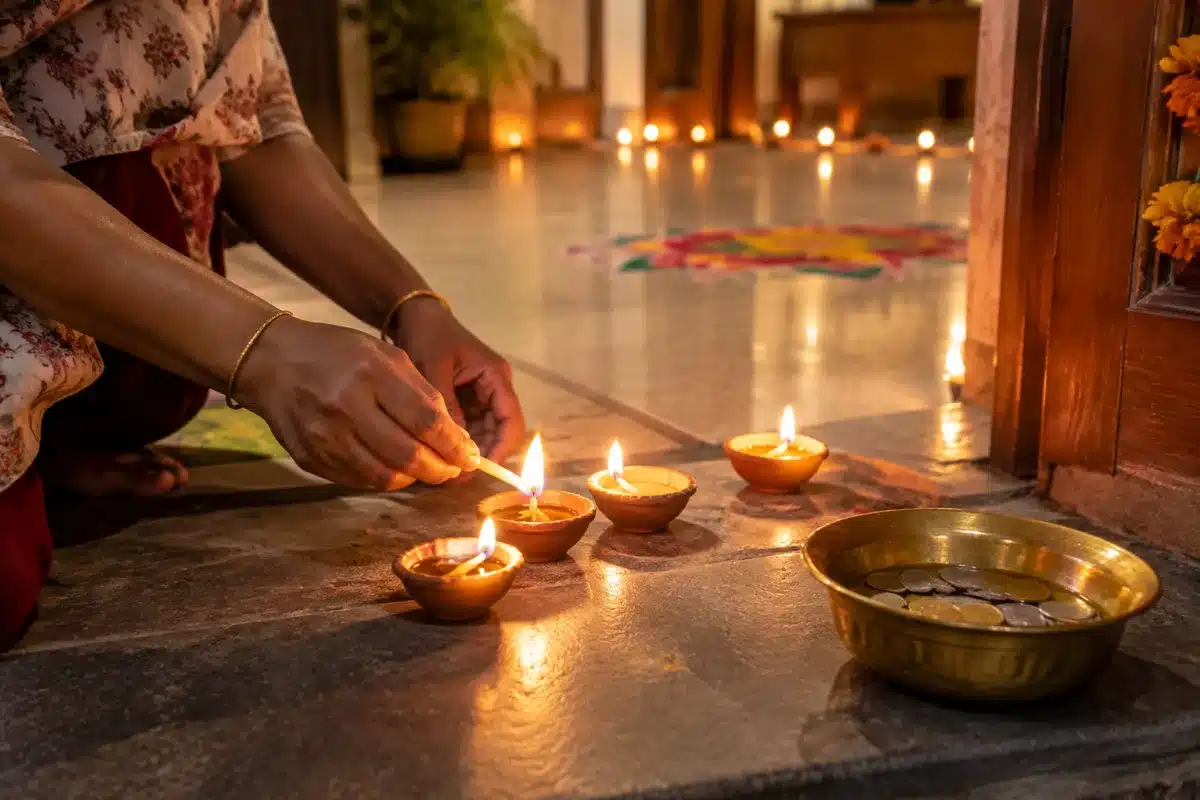
Sharma’s series titled Darshan revisits the intimate encounter between worshipper and deity, but through contemporary materials and collaborations that blur the sacred and the domestic. The work translates moments of visual exchange — the glance, the offered object, the contained gaze — into layered images that refuse a single reading.
Rather than reproduce ritual verbatim, the pieces stage it: they invite viewers to consider how devotion is mediated by objects, surfaces and presentation. The project’s visual language privileges close observation; small shifts in scale and texture alter the perceived boundary between reverence and display.
How to Wear a Sari
Another strand of Sharma’s practice examines clothing as a carrier of cultural knowledge. In How to Wear a Sari, she treats the sari as both garment and mnemonic device — a form that holds technique, etiquette, and stories passed across generations.

Images and fragments from this series unfold method and memory. Some works emphasize construction — pleats, borders, tucks — while others record gestures: the touch of an elder’s hand, the adjustments made for comfort or ceremony. The result reads less like a fashion plate and more like an archive of bodily knowledge.
There’s a quiet politics here too: by centering the sari’s everyday expertise, the series resists simplistic exoticization and foregrounds domestic labor as cultural labour.
Loss and Resurrection
Grief and regeneration form the third axis of Sharma’s output. The ongoing series Loss and Resurrection looks at absence not as a final state but as a material process, where objects and rituals are enlisted to reorder meaning after bereavement.
Pieces in this cycle combine found materials, recreated textiles and collaged imagery to suggest stages of mourning — dissolution, remembrance, reconstitution. The work does not prescribe consolation; instead it maps the often-uneven passage through loss and the ways communities recover continuity through ritual practices.
- Exhibition note: A collaborative body of work by Sharma — numbering over one hundred individual pieces — was included in a group show at the Louisiana Museum of Modern Art in Denmark, presented from February to May 2021.
- Media: A recorded conversation between Sharma and Sheetal Shah pairs audio commentary with selected images from the projects, offering context and artist reflections.
- Topics covered: the intersection of ritual and art, the transmission of textile knowledge, and artistic responses to mourning.
The artist’s blending of intimate practice and public presentation raises practical questions for museums and audiences alike: how should institutions conserve ritual objects that are also functional? When does documentation become part of the work? Sharma’s pieces prompt curatorial thinking about stewardship, display and audience education.
For readers, the significance is concrete. These projects suggest ways to value everyday expertise and communal rituals that are often undervalued in mainstream cultural narratives. They also offer visual and conceptual tools for anyone interested in how traditions adapt when they move between private life and institutional settings.
The conversation between Sharma and Shah is short but dense, pairing anecdote with close reading — a compact entry point to three bodies of work that continue to invite study. For those tracking contemporary South Asian art, or the politics of material culture more broadly, Sharma’s work is a clear example of art that bridges personal history and public display.