Show summary Hide summary
Heading into Diwali from overseas means more than packing sweets and reserving time off — it requires syncing rituals with a different clock, finding local gatherings, and adapting traditions to apartments and local rules. With the 2026 festival falling across the first ten days of November, practical planning now determines whether your celebration will feel connected or dislocated.
Check the calendar for your location
In 2026 the five-day festival runs in India from Dhanteras on 6 November to Bhai Dooj on 10 November, with the main Lakshmi night on 8 November. Lunar-day timings, however, are tied to local sunrises and sets, so the correct observance date can shift for people living far from India.
Supreme Court quota decision: BJP says it exposes opposition’s vote-bank tactics
Didgeridoo and sitar electrify Purana Qila: Indigenous Australia meets Indian classical
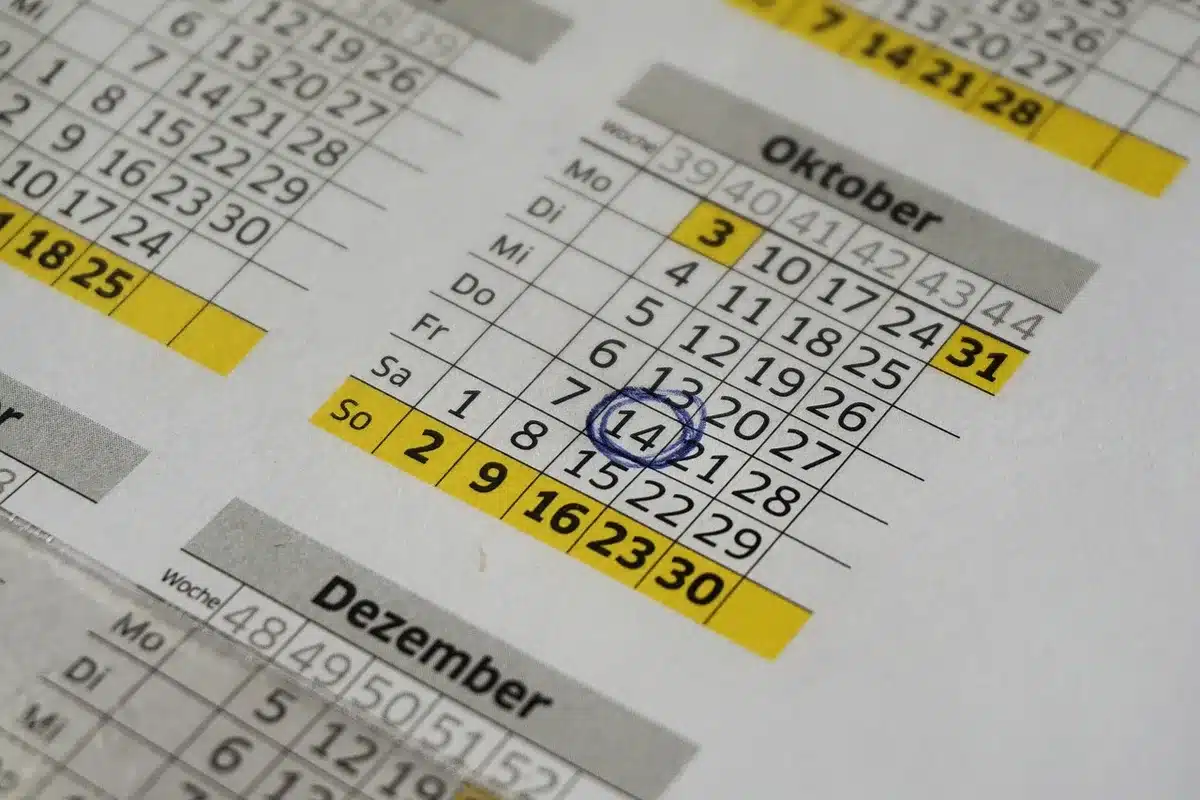
Do not assume the Indian calendar date automatically applies where you live. Use a local panchang (for example, DrikPanchang) or a trusted astronomical calendar to find the exact muhurat for your city — that tells you the precise window for Lakshmi Puja and related rites.
Where to find community
Major cities with Indian communities usually host public Diwali events, but they often fill up quickly. If you wait until the week of the festival you may miss tickets or volunteer slots.
- Contact nearby temples and cultural societies for schedules — many stage the main events on the closest weekend to accommodate families.
- University Hindu student groups, community centres and cultural associations commonly run open melas and are a good entry point if you’re new to the area.
- If you expect to be alone, offer to help with setup or parking; working alongside others is the fastest route into a circle.
The pared-down home puja
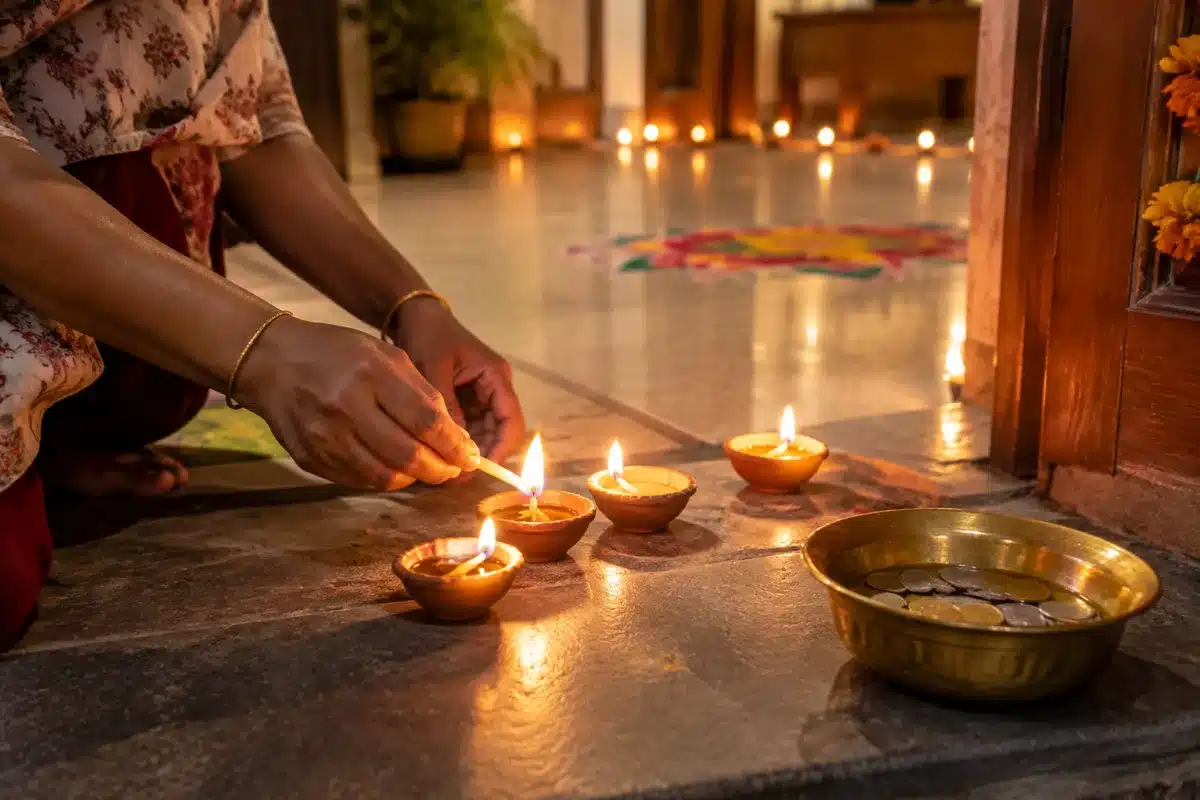
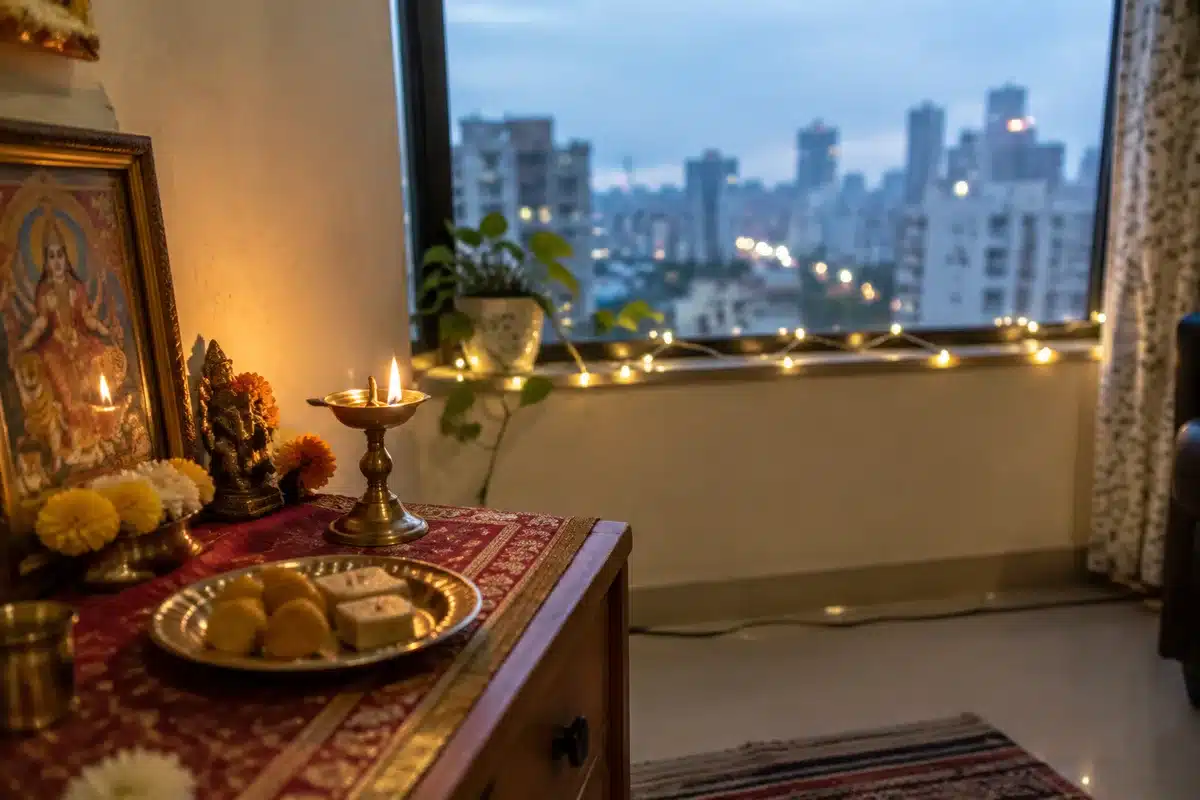
You don’t need a dedicated shrine to perform the core rituals. A tidy corner, a small image or figure of the deities, a lamp or candle, simple offerings and a moment of focused attention are enough.

Emphasize intention over instruments — in practice what matters is a clean space, a lit flame and an offering made with care. Many households abroad schedule the puja at a local, convenient hour rather than the exact Indian muhurat; tradition values sincere observance more than precise timing.
Practical tips for bridging the distance
Small actions make a big difference when family is far away.
- Join the family puja by video call; being on screen during the aarti preserves ritual presence better than a phone call afterward.
- Ship sweets or gifts well in advance — couriers slow down around the festival season, so aim for at least two weeks earlier.
- Invite a neighbour or a non-Indian friend; explaining the practice opens a door and turns light into a shared moment.
- Follow local safety and building rules: many places ban open flames on balconies and restrict fireworks. Battery-powered or LED alternatives and string lights are safe, compliant options.
Quick checklist before Diwali night
| Festival day | Date in India (2026) | Typical observance | Tip for overseas celebration |
|---|---|---|---|
| Dhanteras | 6 Nov | Buy something new, small puja for prosperity | Purchase early; online deliveries surge around this time |
| Chhoti Diwali | 7 Nov | Preparatory rituals, early oil bath in some households | Use this day to decorate and rehearse the puja |
| Lakshmi Puja | 8 Nov | Main night of lighting lamps and goddess worship | Confirm local muhurat and light lamps safely |
| Annakut / Govardhan | 9 Nov | Offerings of many dishes; communal feasts | Consider a potluck or shared meal at a community centre |
| Bhai Dooj | 10 Nov | Siblings exchange blessings and gifts | Schedule a call or send a heartfelt message in advance |
Across continents the framework of the festival remains consistent: light, cleanliness, offerings and family connection. The outward details — time zone calculations, venue rules, and community availability — change, but the purpose does not. With a little preparation, Diwali away from home can feel both respectful of tradition and adapted to your present life.
Photo credit: Wikimedia Commons (CC BY-SA 2.0)