Show summary Hide summary
- Does a remote puja have spiritual standing?
- Choose the ritual, the place and who will be present
- Fix the muhurat — and check the clock where you are
- Decide which format fits your needs
- Vet the person performing the ritual
- Put payments and services in writing
- Prepare the sankalp details
- Tips for the day of the puja
- After the ceremony — closure and receipts
- Quick checklist
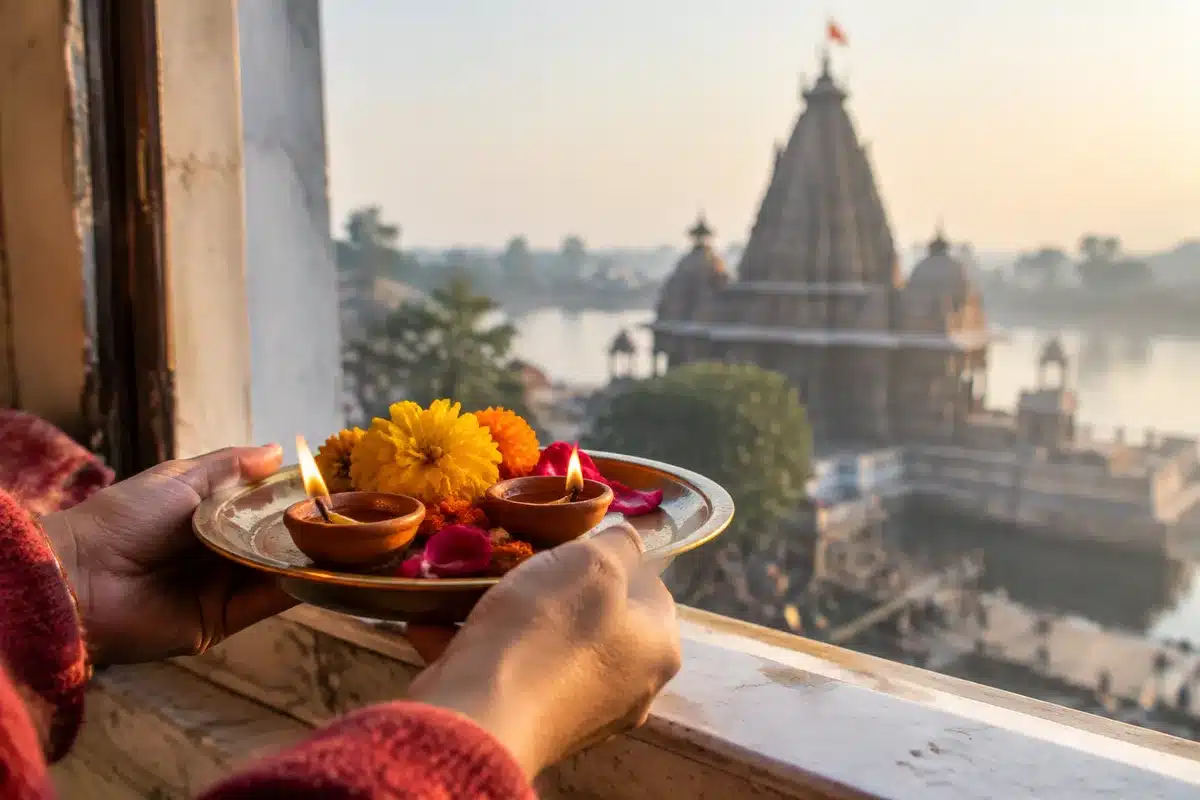
If you live abroad but want a Hindu rite performed back home, it can be done in a way that is meaningful and recognized — or it can feel like a distant, impersonal recording. With attention to timing, personnel and paperwork, you can arrange a genuinely valid puja and take part in it even from thousands of kilometres away.
Does a remote puja have spiritual standing?
Short answer: yes. Traditional practice recognises a ritual performed by a competent priest when your name and lineage are recited in the sankalp. Video connections and couriered prasadam do not change the ritual’s status so long as customary procedures are observed at the site where the ceremony is done.
Supreme Court quota decision: BJP says it exposes opposition’s vote-bank tactics
Didgeridoo and sitar electrify Purana Qila: Indigenous Australia meets Indian classical

Choose the ritual, the place and who will be present
Begin by specifying three essentials before you contact anyone: the exact rite you want (for example, Satyanarayan katha, Rudrabhishek, house-warming or shraddha), the physical location (family home, a named temple or a specific kshetra) and whether relatives will attend in person.
Vague requests such as “do a puja for the family” cause confusion. Every ceremony has particular requirements for duration, items used and priestly training.
Fix the muhurat — and check the clock where you are
The auspicious moment is always calculated for the place where the ritual takes place. That means the tithi and muhurat will be in Indian Standard Time; you must convert that to your local time if you plan to join live.

Practical tip: offer two or three dates you can accept, ask which muhurats fall on them, and pick the one you can reasonably attend. Festival days fill up fast, so book well in advance for Diwali, Purnima observances and similar dates.
Decide which format fits your needs
| Format | Best for | What to verify |
|---|---|---|
| Temple seva or abhishek (booked directly) | Individual deity sevas, large temples with established routines | Official booking channel, exact seva name, courier prasad options |
| Pandit at the family home | Griha Pravesh, intimate family ceremonies | Who supplies samagri, host arrangements, local helper |
| Fully arranged ePuja with live video | When no one in India can host; remote participation is essential | Live unedited stream, audible sankalp, clarity on what you will see |
Vet the person performing the ritual
This step determines whether the ceremony will be authentic or merely cosmetic. Ask about the priest’s training and sampradaya, whether they regularly perform the specific rite you want, and how they will document the ceremony.
If a temple is involved, prefer official booking offices over unknown resellers. If hiring a pandit, request references or links to past livestreams so you can assess their method and language.
Put payments and services in writing
Confirm a full cost breakdown in advance: fees for the priest (dakshina), material costs, temple charges and shipping for prasad or ritual items. Know the rules for rescheduling if the muhurat changes.
Always use a payment method that provides a receipt. For temple bookings, keep official confirmation emails or transaction IDs.
Prepare the sankalp details
At the start of the ritual the priest will recite the sankalp naming the petitioner(s) and the purpose. You should supply exact spellings for names, the household gotra if required, and any birth-star or rashi details the priest requests.
Do not guess lineage information at the last minute — confirm these details with elders well before the ceremony.
Tips for the day of the puja
Test the video link early and ensure a stable connection. Keep your device charged and positioned so you can follow the ritual hands-free.
When the priest asks participants to repeat mantras, hold an offering or bow, be ready to join. If you plan to fast, remember the fast is observed according to the Indian tithi where the puja is happening, not by your local date.
After the ceremony — closure and receipts
A complete arrangement should end with tangible evidence: photos or a recording of the key moments and delivery of any promised sacred items. Confirm the courier address and expected delivery timing before the ceremony, not afterwards.
Quick checklist
- Puja, location and format decided
- Date fixed from a panchang and workable for your timezone
- Priest vetted: tradition, training and live-video experience
- Full cost itemised and payment method produces a record
- Names and gotra for the sankalp confirmed with family
- Video link tested; fasting, clothing and participation plan set
- Prasad or ritual items and photo/recording arrangements confirmed
The combination of global mobility and reliable video and courier services means geographical distance no longer has to separate people from rites that matter to them. With a little planning — and attention to the ritual, the time and the paperwork — a puja performed in India can be spiritually and practically equivalent to being there in person.
Sources consulted: official temple booking portals and city panchang services for muhurat and tithi calculations. Ritual practices and minor procedures vary by region and family tradition; confirm specifics with the priest who will conduct your ceremony.