Show summary Hide summary
In May 2026 Travel and Tour World placed India at the top of its global list of wellness destinations — ahead of long-standing leaders such as Thailand and Switzerland. That ranking signals a deeper market realignment: global wellness demand is shifting from high-cost, short-term interventions toward long-established systems rooted in Indian traditions, with clear implications for travelers, clinics and hospitality operators worldwide.
From product to protocol
For years, Western wellness marketed itself as a sequence of purchasable interventions: cryotherapy, red-light therapy, and a parade of the latest gadgets. Those offerings often promised rapid results but delivered incremental benefits, and their lifecycle has been driven by novelty.
Annamalai applauds Bhagwat’s message on Muslim inclusion in India
Navratri in Times Square goes viral: social media splits over Indian celebrations abroad
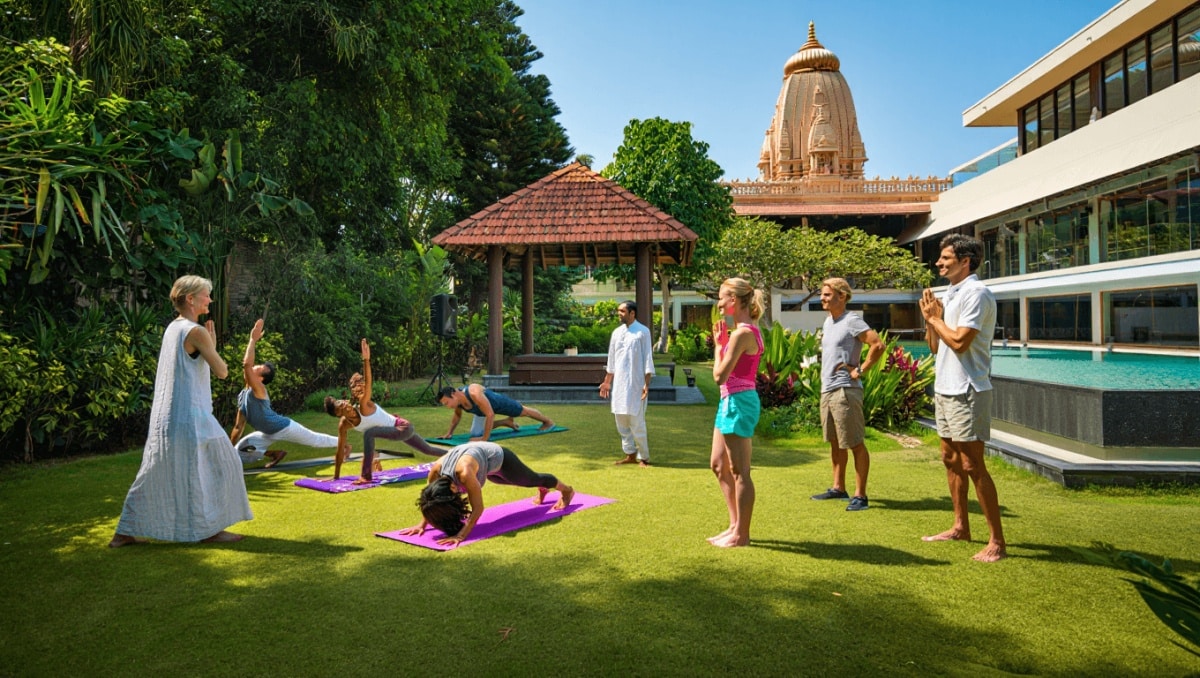
India’s model is fundamentally different. Practices such as Ayurveda, yoga and meditative disciplines function as integrated frameworks — diagnostic methods, daily routines and multi-week therapeutic regimens meant to be adopted rather than sampled. Entering a Panchakarma programme in Kerala, for instance, typically means signing on to a two-to-four-week therapeutic course, not a one-off spa treatment.
Why the ranking matters now
Travel and Tour World’s decision did more than celebrate cultural cachet: it reflected how the market is valuing sustained, evidence-linkable outcomes over Instagram-ready experiences. Industry estimates put India’s wellness tourism market at roughly USD 35 billion in 2025, with projections toward USD 61 billion by 2034. Yoga and meditation retreats alone account for about 41% of that market, and South India — led by Kerala’s Ayurveda corridor — currently captures nearly half of the country’s wellness revenues.
The fast-growing segments also reveal the new demand profile: digital-detox and multi-week immersion programmes are expanding rapidly (some reports show growth north of 17% annually), and travellers increasingly seek condition-specific care for sleep, hormonal balance and metabolic health rather than generic relaxation packages.
The new consumer: problem-first, not place-first
The industry’s early phase was destination-driven: visitors chose a place and experienced whatever that location offered. Today, many arrive with a concrete health concern — persistent insomnia, burnout, midlife metabolic decline — and they expect measurable improvement.
That shift favors retreats and clinics that combine classical diagnostic tools with modern biomarkers: pulse diagnosis alongside blood panels, HRV tracking paired with prescribed daily routines. Properties that can translate between ancient texts and contemporary clinical literature are filling calendars.
- Condition-specific programs: Sleep optimisation, hormonal care, and longevity tracks replacing generic yoga packages.
- Protocol length: Multi-week immersions becoming the norm, matching the timelines of traditional therapies.
- Hybrid staffing: A rising demand for practitioners versed in classical systems and modern diagnostics.
- Measurable outcomes: Before-and-after biomarkers and clinical metrics are increasingly expected by international clients.
Talent and business implications
One immediate commercial consequence is a talent gap. Western properties have often staffed programs with social-media savvy instructors; leading Indian centres now prize “system designers” — professionals trained in classical medicine who can also interpret lab results and design longitudinal care plans. That combination commands premium compensation and creates a global hiring market centred on India.
For hospitality operators and investors, the lesson is simple: converting weekend-spa models into clinically credible, protocol-driven offerings requires different expertise, longer guest stays, and integrated measurement systems. The result is a reallocation of investment toward training, diagnostics and partnerships with accredited medical professionals.
What travellers should watch for
As the market matures, quality will vary. Not every centre using traditional terminology delivers genuine, evidence-informed care. Travellers seeking substantive results should consider:
- Whether programmes include baseline and follow-up clinical measurements.
- The qualifications of lead practitioners and their familiarity with both classical texts and modern physiology.
- Program length and whether the schedule reflects authentic therapeutic timelines.
- Transparency about outcomes and potential risks.
Wider consequences
The rise of India in global wellness is unlikely to be a momentary trend. Expect increased cross-border referrals, more formalised accreditation standards, and deeper collaboration between conventional medical centres and traditional practitioners. Insurance products, corporate well-being budgets and longevity research may follow the money toward integrative programmes that promise sustained physiological change rather than cosmetic improvements.
Ultimately, the market is acknowledging a distinction that many long-term travellers and practitioners have observed for years: some systems are designed for living, not for buying. That recognition is reshaping where high-value wellness demand goes and what providers must offer to meet it.
The immediate takeaway is practical: travellers, clinicians and businesses who recognise and adapt to protocol-driven, measurable care will be best placed to benefit from this next phase of global wellness tourism.