Show summary Hide summary
Priya Saha’s life charts the arc of Bangladesh’s turbulent modern history: a childhood in a prosperous Hindu village, flight from mass violence in 1971, and years of exile and activism advocating for religious minorities. Her story matters now because debates over Bangladesh’s treatment of minorities, land restitution and the role of international trade remain unresolved and influence global supply chains and human-rights diplomacy.
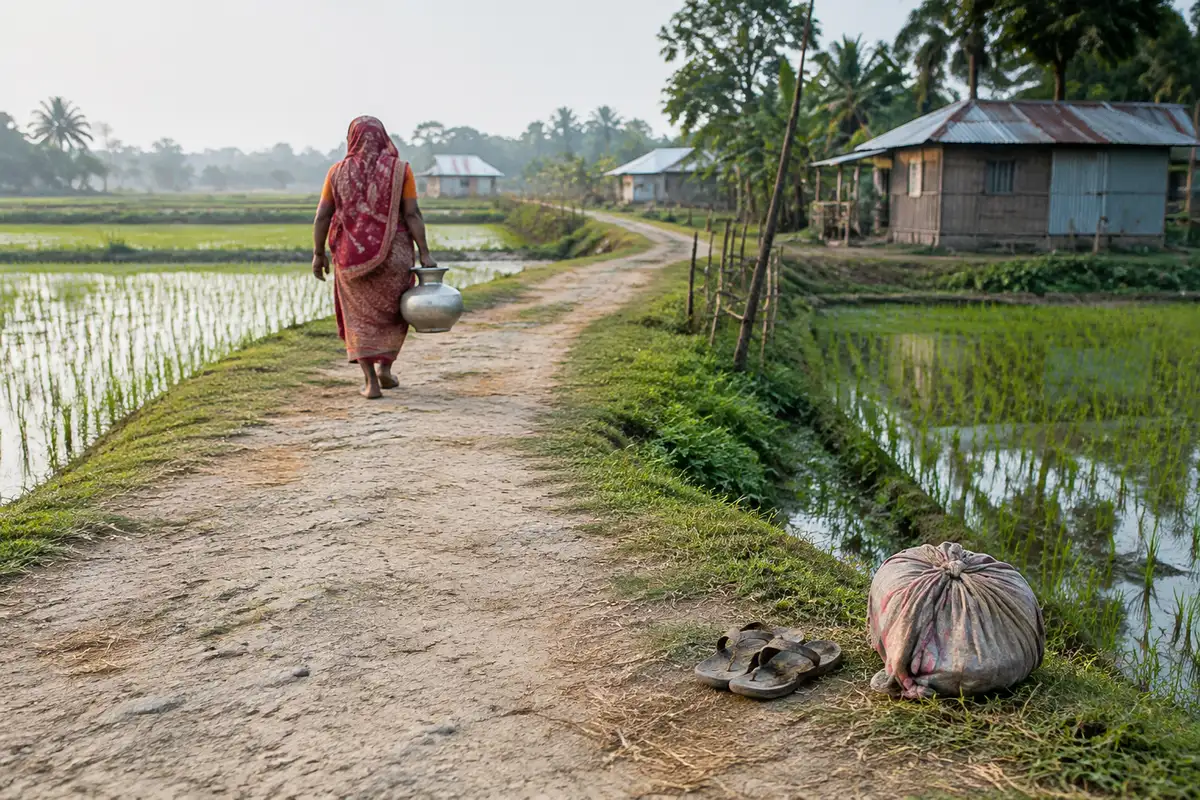
Born into a farming family in Barisal when the region was still East Pakistan, Saha remembers a close-knit rural community, ritual life and abundant farmland. That early stability disappeared as long-standing political and economic grievances between East and West Pakistan escalated into open conflict.
From discrimination to mass violence
Post‑Partition power imbalances concentrated political control in West Pakistan and left East Pakistan — home to a substantial Hindu minority — economically neglected. Policies such as the move to elevate Urdu over local languages and the 1965 law that allowed the state to seize properties of those labelled “enemies” intensified resentment and dispossession.
Verify pandit online: quick checks to vet priests and protect your puja
Bangladesh: five decades after genocide, diversity and rights remain elusive

When demands for autonomy grew, the response in March 1971 included a military crackdown known as Operation Searchlight. The campaign and the ensuing Bangladesh Liberation War produced large-scale atrocities against civilians, forcing millions to flee. Saha and her family were among the first waves of refugees crossing into India.
- Refugee flows: An estimated 1.5 million people fled to India in a single month in 1971; by November, refugee numbers neared 10 million.
- Casualties: Contemporary estimates place deaths during the conflict in the millions, and hundreds of thousands of women were sexually assaulted.
- Property loss: Scholars and activists have documented widespread expropriation of minority-owned land in the decades since.
Saha’s family walked for days through rain and hunger to reach safety. After months in refugee camps, they returned to a burned-out village. Life briefly resumed, but the country’s political course shifted again: an initial post‑independence commitment to a secular state gave way to rising influence for religious political organizations.
From survivor to campaigner
Over the last three decades Saha has emerged as a prominent advocate for minorities. She led a nonprofit focused on Dalit communities, provided counseling to survivors of sexual violence, and later became executive director of the Human Rights Congress for Bangladesh Minorities.

Her activism brought her to Washington in 2019, where she raised concerns about land seizures, threats to minority communities and the need for international pressure. Since then she has lived outside Bangladesh, citing safety concerns after receiving threats and facing multiple cases lodged against her by elements of the Bangladeshi state.
The personal cost is ongoing: family members have gone into hiding or left the country, and Saha says she must frequently change addresses to remain safe. At the same time she continues to press for the reinstatement of secular safeguards, return of seized land and stronger protections for religious minorities.
Why this matters to global audiences
Bangladesh is a major exporter of textiles and garments; trade partners and consumers therefore have leverage and a stake in how the country treats vulnerable groups. Saha argues that international pressure — including from the United States and the European Union, which import large volumes of Bangladeshi goods — could be decisive in forcing reforms.
For readers tracking human rights and supply‑chain ethics, the case raises practical questions: what responsibilities do importing countries and multinational companies have when supplier nations face documented rights abuses? How should governments balance trade interests with accountability?
Below is a concise timeline of key moments in Saha’s life and the wider political events that shaped it:
- 1947–1960s: Partition, demographic shifts and years of economic and cultural marginalization of East Pakistan.
- 1965: Enactment of the law enabling seizure of property from those labelled “enemies.”
- March–December 1971: Military crackdown, mass atrocities, and the Bangladesh Liberation War; mass refugee exodus to India.
- 1975–late 1970s: Political upheaval and the return of religion‑based political parties to mainstream politics.
- Late 1990s–2010s: Saha’s community work and leadership of minority-rights organizations.
- 2019: Saha speaks at an international ministerial forum in Washington, urging action on minority rights and land restitution.
Priya Saha’s testimony blends personal survival with policymaking concerns: recovery of lost land, restoration of secular protections and safeguarding of minorities are not only matters of national justice but also of international consequence. As debates over trade, human rights and corporate responsibility intensify, stories like hers underscore the human stakes behind diplomatic and economic decisions.