Show summary Hide summary
America’s Hindu community has seen a string of disturbing incidents that spotlight a growing risk: from vandalism at places of worship to harassment in public spaces, attacks drawing on long-standing stereotypes are resurfacing and evolving online. The pattern matters now because law enforcement, universities and social platforms are still adapting to how to identify, report and respond to crimes and harassment specifically targeting Hindu Americans.
What happened recently
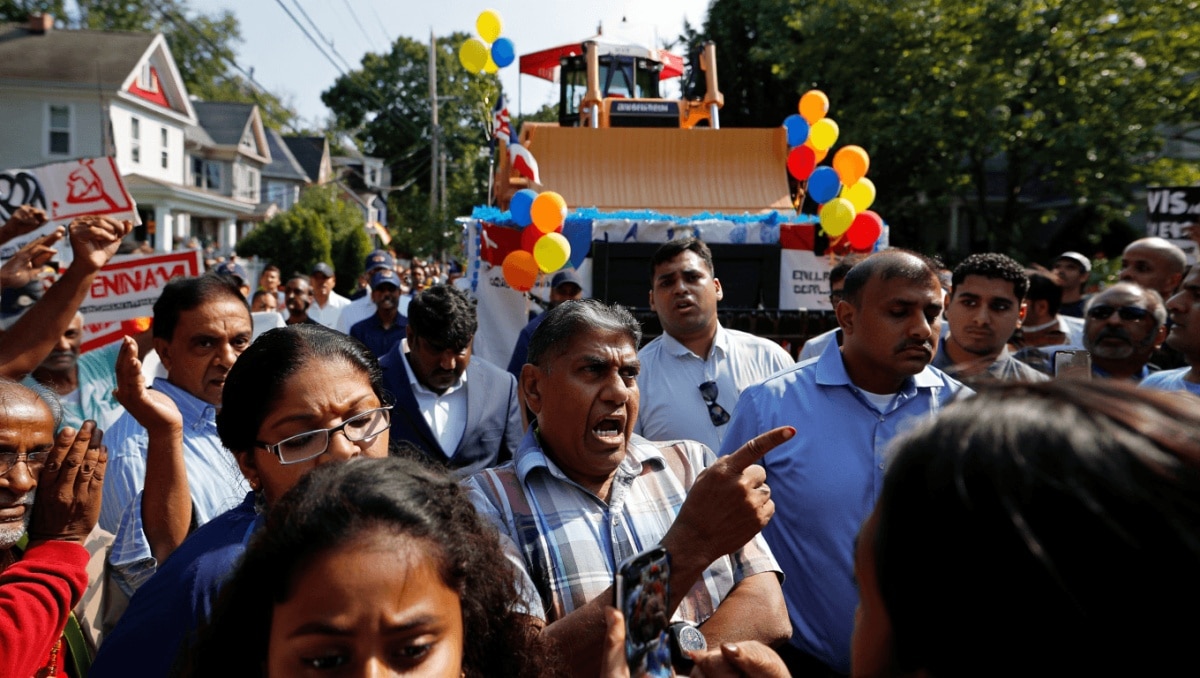
Over the past months several episodes drew attention: statues and temple grounds defaced in New York, a verbal and physical assault in California, threatening confrontations in Texas captured on video, and a controversial parade display in New Jersey that some residents interpreted as endorsing polarizing politics. Community leaders say these incidents are not isolated but part of a broader trend of rising anti-Hindu rhetoric and attacks.
Shah Rukh Khan used the name Abinav to ease in-law worries: Gauri adopted Ayesha during nikaah
Javed Akhtar hails Hindu festivals as cultural glue: throwback of atheist celebrating resurfaces
| Date (approx.) | Location | Incident | Reported impact |
|---|---|---|---|
| August (same month) | Richmond Hill, New York | Repeated break-ins at a temple and vandalism of a statue | Community alarm; authorities investigating; perpetrators used anti-Hindu slogans |
| August | California | Assault and verbal abuse of a Hindu man in a fast-food restaurant | Victim targeted about diet and religion; hate language reported |
| August | Texas | Video shows a woman threatening Hindu women and using anti-Indian slurs | Viral footage heightened fears among local Indian-origin communities |
| India’s Independence Day (parade) | Edison, New Jersey | Bulldozer float with photos of Indian leaders; viewed by some as political messaging | Local Hindu organizations and student groups faced unrelated accusations and backlash |
Why experts say this is happening
Community advocates point to a mix of old prejudices and modern amplification. Colonial-era tropes that portray South Asians as alien or immoral still shape hostile attitudes, and those narratives are now spreading more quickly through online channels.
Researchers at Rutgers University’s Network Contagion Research Institute have documented rising anti-Hindu messaging across fringe platforms and mainstream social networks, noting the growth of derogatory memes, slurs and organized amplification that can precede real-world attacks.
At the same time, public discourse has become polarized. On the political right, some hostile narratives cast immigrants and minority religions as threats; on parts of the left, Hindu institutions and figures have sometimes been criticized in ways that Hindu advocates say crosses into collective demonization. The mix creates a volatile environment for individuals and organizations.
Reporting and accountability
Tracking is improving but remains imperfect. The FBI has recently begun recording crimes targeting Hindus as a distinct category, a step advocates say is necessary to understand the scale of the problem and allocate resources. Still, underreporting, inconsistent classifications and reluctance to pursue bias motives can obscure the true picture.
Legal and civic responses vary. Elected officials and community leaders have publicly condemned certain attacks and harassment; some victims and organizations are pursuing legal action. On campuses, disputes between students and faculty have spilled into wider debates about academic freedom, bias and safety—most prominently at institutions where both Hindu students and critical scholars have clashed.
For example, a controversy at a New Jersey university involving a faculty member and Hindu student groups led to protests, a student assembly resolution acknowledging the phenomenon of anti-Hindu bias, and a pending lawsuit in which the professor is named as a defendant.
- Community safety: Temples and cultural centers report heightened anxiety and are reassessing security.
- Online risks: Coordinated harassment on fringe platforms appears to be a vector for offline incidents.
- Institutional response: Law enforcement, universities and social networks face pressure to improve reporting and moderation.
What this means for readers
These incidents have practical consequences: they affect personal safety, influence how institutions police bias, and shape conversations about immigration, religion and national identity. For Hindu Americans and other communities, the spike in targeted hostility underscores the need for clear reporting channels, better data collection and proactive community outreach.
For the broader public, recognizing that prejudice can take both violent and subtle institutional forms matters for policymaking and civic life. Accurate tracking of bias-motivated crimes, careful moderation of harmful content online, and measured dialogue on campuses are all part of a preventive response.
Hate and misinformation thrive on ignorance. When public institutions, social platforms and community leaders acknowledge the problem and respond with concrete steps — from improved data collection to legal remedies — the risk that harassment escalates into violence can be reduced. But that requires sustained attention, not just temporary outrage after a viral video or an alarming headline.
Reporting for this article drew on community accounts, a Rutgers Network Contagion Research Institute report on anti-Hindu content, and public statements from local officials and campus groups. Pending legal actions mentioned are reported as ongoing.