Show summary Hide summary
Every year, millions retrace an episode from ancient scripture when a young Krishna turned a landscape into a sanctuary — a narrative that still shapes ritual life across India and in diasporic communities worldwide. That story, rooted in devotion more than doctrine, keeps bhakti yoga alive as a daily practice and fuels annual observances that blend faith, food and public spectacle.
The episode, in short
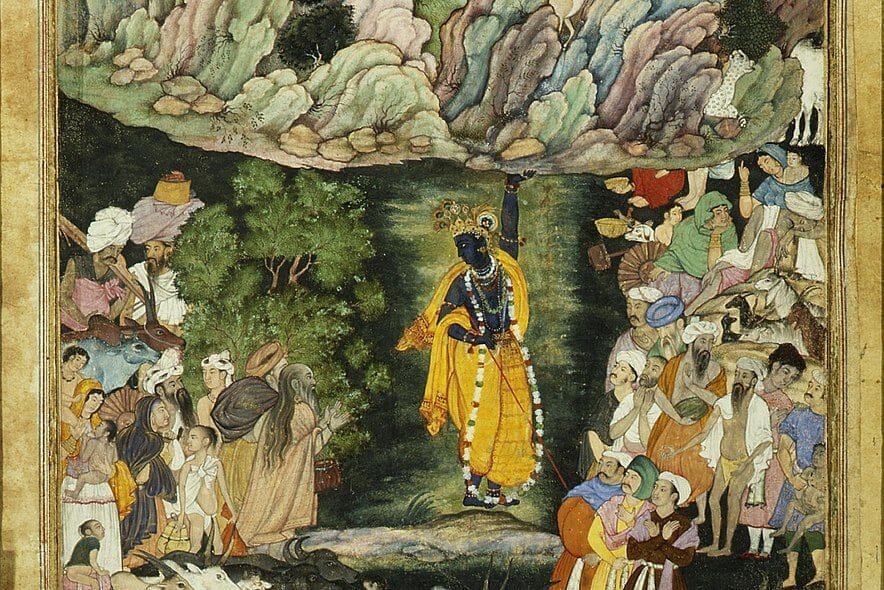
The account appears in the Bhagavat Purana, which chronicles episodes from Krishna’s life in the region known as Braj. When Krishna urged his village to honor the nearby hill rather than offer a ritual to Indra, the king of the heavens, he was arguing for gratitude toward the land that sustained them rather than deference to distant power.
Shah Rukh Khan used the name Abinav to ease in-law worries: Gauri adopted Ayesha during nikaah
Javed Akhtar hails Hindu festivals as cultural glue: throwback of atheist celebrating resurfaces
Angered by the perceived slight, Indra retaliated with a furious storm. In the story’s defining moment, Krishna provided protection in a striking, symbolic gesture: he lifted the hill and sheltered the villagers beneath it until the rains stopped. Humiliated, Indra repented and the village’s decision — to celebrate the hill and the spirit of selfless service — was affirmed.
What the story means today
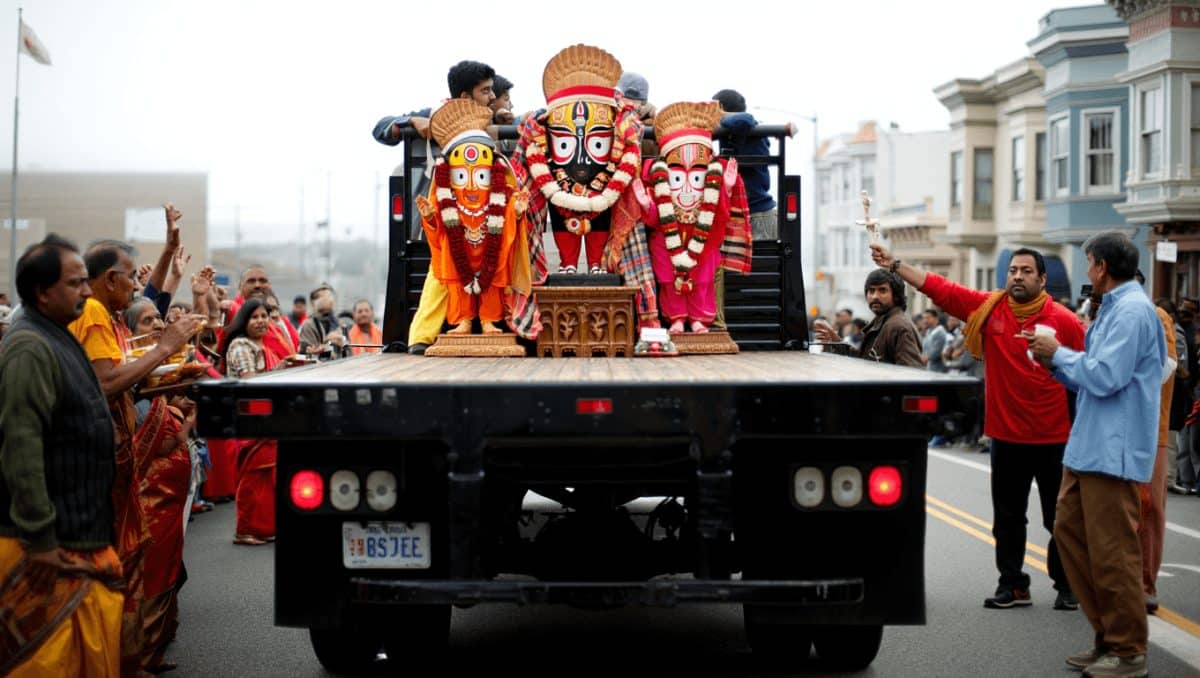
The tale is more than mythic drama for those who revere it; it functions as a living framework for ritual and community action. Pilgrims go to Govardhan for darshan, priests organize mountain-shaped feasts and entire neighborhoods perform processions, echoing the original worship and the communal meal that followed.
- Service as devotion: The episode reinforces a central bhakti principle — devotion expressed through acts of service and communal care.
- Nature as sacred: The hill is presented not as inert geography but as a personality deserving reverence and protection.
- Humility versus pride: Indra’s reversal highlights a moral lesson about power checked by devotion and accountability.
- Ritual continuity: The story underpins contemporary observances like Govardhan Puja and parikrama (circumambulation) practices.
Celebrations remain highly visible. Devotees arrange vast offerings — often stacked into symbolic mounds — and distribute food freely. In many places, the observance functions as both a religious rite and a public festival; it draws local worshippers, international pilgrims and cultural visitors curious about the living traditions.
Beyond devotion: social and cultural stakes
For communities around Braj and for Hindus globally, the hill is a point of identity as well as worship. The story’s emphasis on a localized, embodied divinity has contemporary repercussions: conservationists and heritage groups frequently point to religious reverence as a political and practical tool for protecting sacred landscapes from development and neglect.
At its core, the Govardhan episode continues to be deployed as a moral and communal touchstone. It calls on devotees to prioritize care — for one another and for the environment that sustains life — and to question the exercise of unchecked authority.
Whether experienced as scripture, a festival, or a call to stewardship, the hill and its story remain central to how millions practise devotion and imagine the relationship between humans, the divine, and the natural world.