Show summary Hide summary
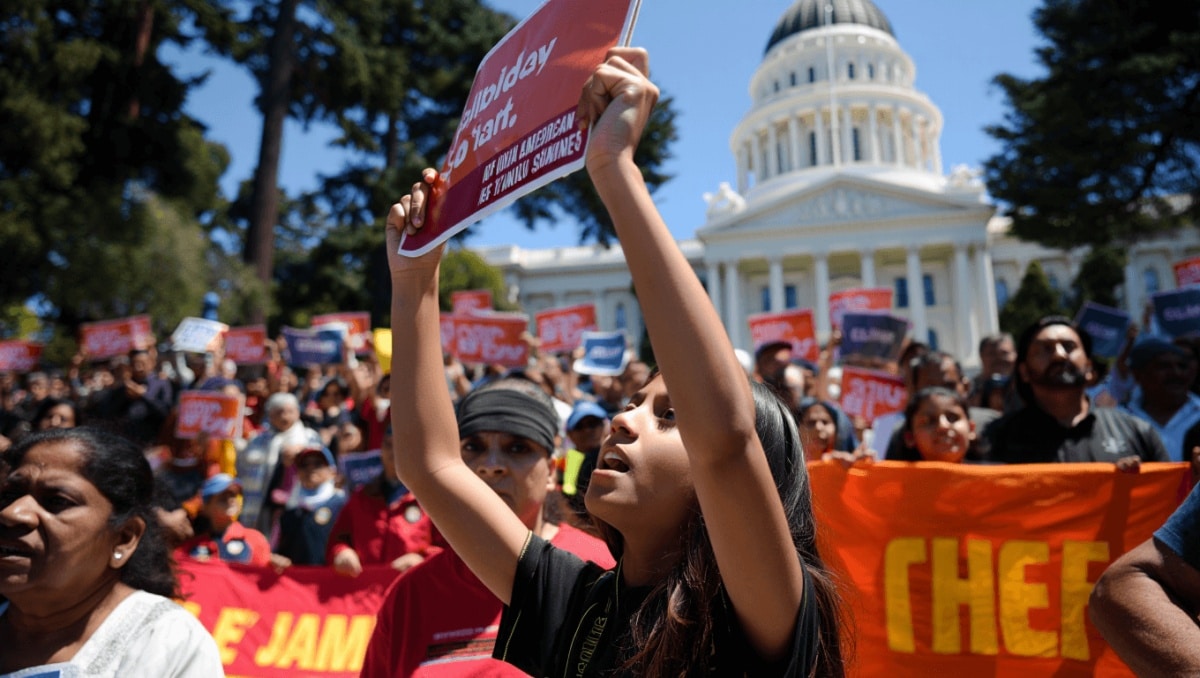
California’s debate over SB-403 has moved from committee rooms into the streets: hundreds of Hindu Americans gathered at the State Capitol in Sacramento to protest a bill they say would single out South Asians for scrutiny and amount to state-backed racial profiling. The demonstration, which included speeches, a silent vigil and calls for Governor Gavin Newsom to veto the measure, underscores how a technical change to civil-rights law has become a flashpoint for identity, representation and community stress.
The proposed legislation seeks to recognize caste as a protected characteristic under the state’s ancestry category, a legal tweak supporters say would help victims of caste-based harm. Opponents warn it would label an entire diaspora with an inherent bias and open the door to workplace and social profiling. The result has been months of intense advocacy, public testimony and visible organizing across California.
Organizers and participants described the Sacramento rally as the peak of a six-month effort. Many traveled from the Bay Area and Los Angeles, wearing coordinated shirts and carrying signs demanding equal treatment and opposing what they call a one-dimensional portrayal of Hindu communities.
Shah Rukh Khan used the name Abinav to ease in-law worries: Gauri adopted Ayesha during nikaah
Javed Akhtar hails Hindu festivals as cultural glue: throwback of atheist celebrating resurfaces
What the community said at the Capitol
Speakers at the event represented a coalition of groups including long-established advocacy organizations and newer grassroots networks. They honored community volunteers and activists who have worked on the issue—some of whom have experienced personal loss amid the campaign—and urged the governor to reject the bill. A number of representatives emphasized that their opposition is grounded in civil-rights concerns, not resistance to addressing discrimination where it exists.
- Who showed up: Families, seniors, youth and community leaders from multiple organizations.
- Primary demand: A gubernatorial veto of SB-403.
- Core concern: That codifying caste under ancestry could lead to broad-based profiling of South Asians, particularly Hindus.
- Counterpoint from supporters: Advocates for the bill argue it would provide legal recourse for caste victims; opponents say affected communities were not adequately consulted.
The day included a moment of remembrance for an activist who died while continuing advocacy work earlier this summer; several speakers noted the personal toll the fight has taken on volunteers and families. Protest organizers say the campaign’s emotional strain has caused anxiety, sleeplessness and disruption to everyday life for many participants.
Why this matters now
The issue reaches beyond a single bill. It touches on how the state defines protected classes, how minority communities are characterized in public policy, and how lawmakers consult— or fail to consult—members of the groups affected. For Californians worried about profiling, the bill raises concrete stakes about employment, education and public discourse. For lawmakers, the choice is whether to expand legal protections in a way that some say will create unintended consequences.
Voices on both sides claim civil-rights motivations. Supporters contend that legal recognition is necessary to address long-standing harms; opponents argue the proposal frames an entire ethnic and religious community as predisposed to discrimination. That tension—between remedying abuse and avoiding collective labeling—explains the intense reaction in recent months.
The Sacramento rally mixed visible protest with quieter forms of dissent. After speeches, attendees formed a single-file silent walk around the Capitol lawn—an act organizers described as symbolic of feeling silenced in public debate over their identity and rights.
Key facts at a glance
- SB-403: A bill introduced earlier in the year aiming to treat caste as part of ancestry under California law.
- Timeline: Introduced in March; sustained advocacy and hearings followed for several months.
- Main supporters: Activists and organizations who say the law would protect victims of caste-based discrimination.
- Main opponents: A coalition of Hindu and South Asian groups who say the bill risks racial profiling and misrepresentation.
- Next steps: The governor has the authority to sign or veto; community groups continue outreach to lawmakers.
Participants said the campaign has reshaped community engagement. Long-time residents reported connecting with neighbors they had only known online, while newcomers to advocacy described being galvanized into ongoing civic work. Several organizations involved say they will keep pressing legislators and the governor’s office until a final decision is reached.
Whatever the legal outcome, the episode has prompted broader questions about how state policy addresses complex social issues within diasporic communities and how those communities are heard in Sacramento. The Capitol demonstration captured both the anger and the resolve of a group that sees the debate as consequential for civil rights, representation and everyday freedoms in California.
For now, the immediate consequence is a heightened political spotlight and continued organizing. Lawmakers and the governor will face sustained attention as the state navigates whether to expand protected classes—and how to do so without stigmatizing the broad populations those measures aim to help.