Show summary Hide summary
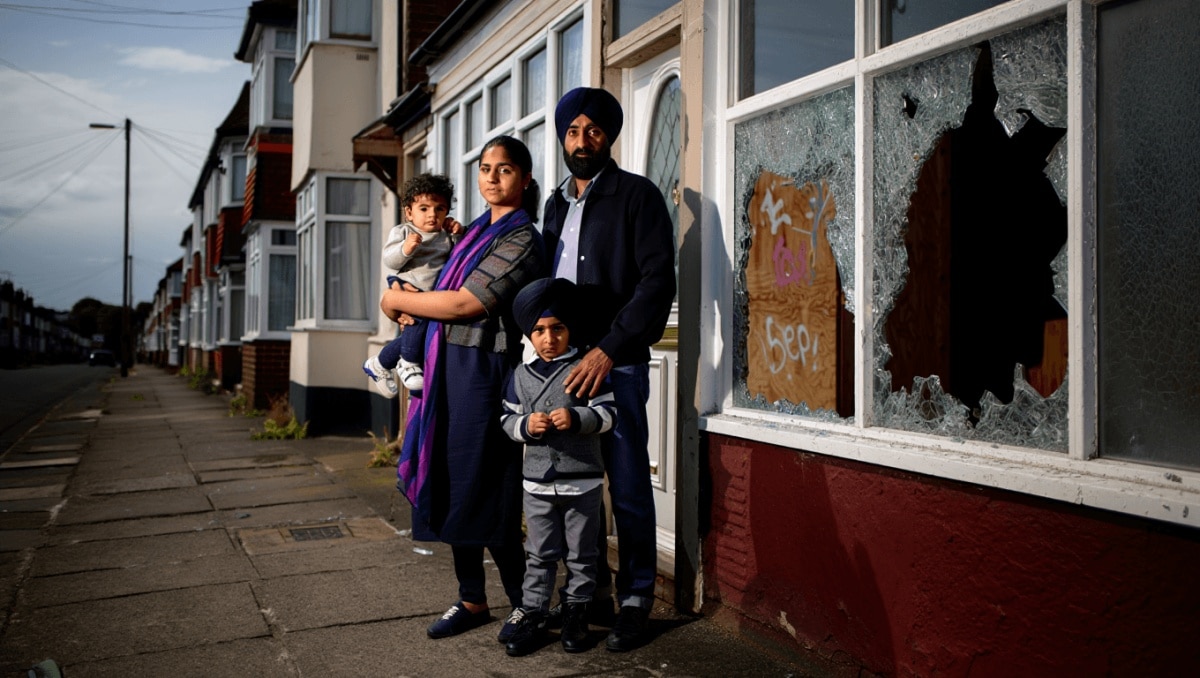
A British Sikh family who publicly rejected calls for a separate Khalistan state say they have been driven from their home and business by sustained threats — and they blame local security agencies for failing to protect them. Their account points to a wider problem: authorities in the UK may be ill-equipped to identify and tackle forms of diaspora-driven extremism that spill over from overseas politics into streets and shops at home.
Local fallout from transnational politics
We met the family outside their restaurant in west London, just across from the council building where the local Prevent team is based. Since posting videos opposing the Khalistan movement, they report death and sexual threats, repeated vandalism and assaults on their premises. Some family members say they no longer feel British and are considering leaving the country.
Shah Rukh Khan used the name Abinav to ease in-law worries: Gauri adopted Ayesha during nikaah
Javed Akhtar hails Hindu festivals as cultural glue: throwback of atheist celebrating resurfaces
These experiences sit within a broader phenomenon: a political cause rooted in South Asia — the push for an independent Khalistan in Punjab — has significant activity in Western diasporas. While many supporters pursue their aims through protest and lobbying, a minority have embraced intimidation and violence. The most notorious act associated with the movement remains the 1985 Air India bombing, which killed 329 people and stands as a watershed reminder of how overseas disputes can produce deadly attacks.
Where institutions are coming up short
Former front-line staff say problems begin with how the threat is framed. On one occasion, a Prevent practitioner who raised alarm about the family’s safety was told the extremists’ target was India, not Britain — and that the issue therefore lay outside of counter-terrorism priorities. That assessment, according to critics, reflects a limited grasp of how political violence in diaspora communities operates.
At the same time, victims describe slow police responses, delayed delivery of promised security measures and a loss of trust that undermines cooperation. When communities feel abandoned, the risk is twofold: crimes go unreported and young people are left vulnerable to radicalising influences.
- Gaps in understanding: Official reviews have pointed to limited capacity among some practitioners to recognise lesser-known forms of extremism.
- Operational delays: Victims report slow or incomplete responses from local policing units and counter-radicalisation teams.
- Community confidence: Perceived inaction fuels fear, reduces reporting and can push people to withdraw from public life.
- Youth vulnerability: Disaffected young people in diasporas may be most susceptible to recruitment or encouragement from transnational networks.
What this means going forward
As political debates about the subcontinent continue to circulate in news cycles and on social media, the UK is likely to see more episodes where overseas tensions are reproduced domestically. That makes timely, culturally informed responses essential.
Practical steps that emerge from victims’ accounts and practitioner critiques include better training for frontline Prevent officers, faster and more visible policing interventions, and dedicated research and outreach programs aimed at at-risk youth in affected communities.
Those involved in community safety say change must be both structural and local: central government reviews should be matched by borough-level action plans that build trust and deliver rapid, trauma-informed support to victims.
The family we spoke with urged authorities to stop treating difficult cases as external problems and to recognise the UK manifestations of these disputes for what they are: a public safety challenge that requires resources, expertise and community partnership. Without that shift, victims will continue to feel unprotected and tensions may harden into further violence.