Show summary Hide summary
In the 1960s, a quiet but potent exchange between American jazz musicians and South Asian spiritual traditions reshaped the sound and purpose of the music. That cross-cultural current—rooted in spiritual seeking as much as musical curiosity—helped sustain artists and informed a broader cultural moment whose echoes remain visible in music and public life today.
As social movements pressed for change, many jazz players sought sources of meaning beyond familiar institutions. The result was not only new sonic textures but a reorientation of music toward transcendence—an approach that drew on elements of Hinduism and Indian classical music as well as other Eastern ideas.
Why musicians looked east
Shah Rukh Khan used the name Abinav to ease in-law worries: Gauri adopted Ayesha during nikaah
Javed Akhtar hails Hindu festivals as cultural glue: throwback of atheist celebrating resurfaces
By the late 1950s and into the 1960s, traditional community anchors—family churches, neighborhood structures—were under strain. Younger artists and audiences, unsettled by social upheaval and eager for personal transformation, turned toward philosophies and practices that promised inward stability and expanded creative possibility.
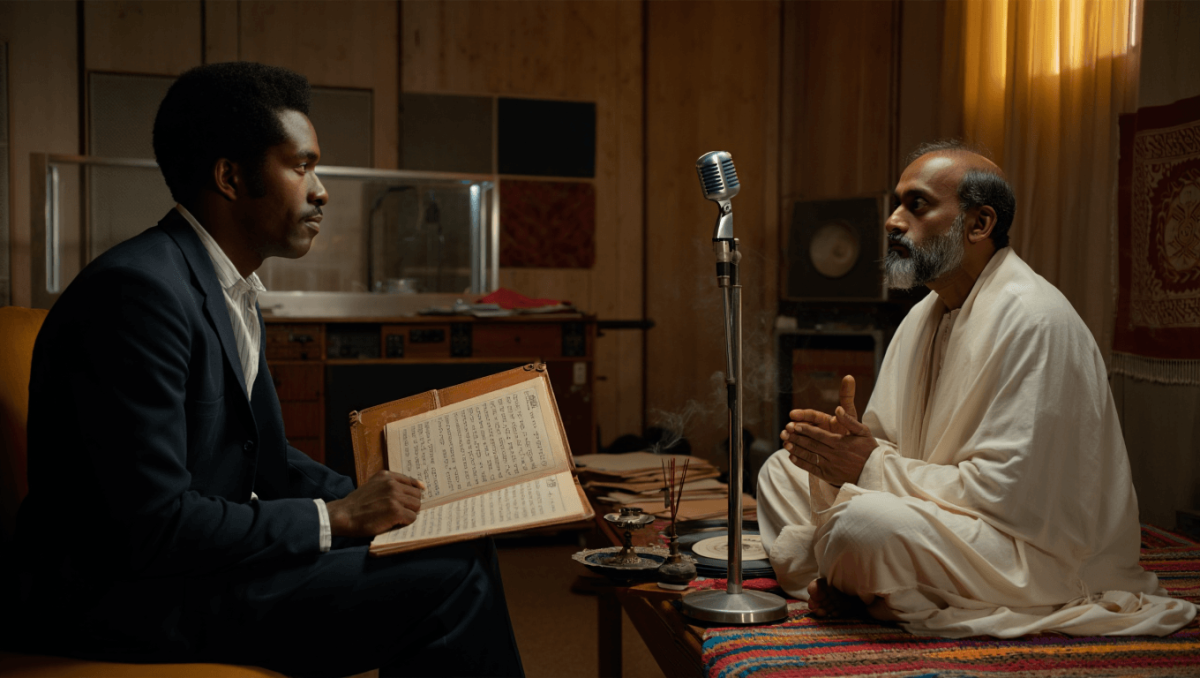
Indian music arrived in the United States through touring performers and recordings, offering improvisational frameworks that paralleled jazz yet emphasized different spiritual aims. For many jazz innovators, these traditions provided tools to pursue music as a vehicle for healing and moral uplift rather than only entertainment.
How the influence took shape
Two technical and spiritual concepts helped bridge the traditions. First, the idea of the raga—a set of melodic rules intended to evoke particular moods or states—resembled jazz’s modal and improvisational tendencies but was explicitly tied to emotional and spiritual effects known as rasas. Second, reading and adopting Eastern spiritual teachings encouraged musicians to view their work as part of a larger quest for unity and meaning.
Musicians reacted differently: some borrowed scales and rhythms; others adopted ritual, chant, or mantra as compositional elements; a number began to describe their practice in explicitly spiritual terms and to lead audiences toward contemplative experiences.
Key figures and contributions
- Ravi Shankar — Sitar virtuoso whose performances and collaborations introduced Indian classical forms to Western listeners and artists.
- John Coltrane — Saxophonist whose late-period work and public statements increasingly framed music as a spiritual practice; he explored Indian melodic ideas and sought a music that could aid inner transformation.
- Alice Coltrane — Pianist and composer who carried forward the spiritual direction after her husband’s death, blending devotional themes into albums and later leading a spiritual community.
- John McLaughlin — Guitarist who fused jazz, rock, and Indian elements, forming ensembles that explicitly referenced Hindu concepts and introduced global listeners to a new sound palette.
These musicians did not adopt Eastern traditions superficially. For many, engagement involved study, collaboration with Indian artists, and sustained attention to the philosophies underpinning the music. The result was an artistic shift in which improvisation and devotion became intertwined.
What this meant for the civil rights era—and why it still matters
Music played a direct role in sustaining activists and communities during moments of crisis. Beyond lyrics or marches, the spiritual dimension of sounds—breath, chant, sustained tones—helped create calm, resilience, and a sense of connectedness that complemented political action.
Understanding the Hindu and Indian influences on 1960s jazz reframes those recordings and performances: they are not merely experiments in timbre or technique but expressions of a wider search for moral and spiritual resources. Today, as artists and audiences revisit that period, that combination of political urgency and spiritual aspiration continues to inform creative practice and public memory.
Legacy and contemporary resonance
Decades on, the cross-pollination of jazz and Indian spiritual ideas can be seen across genres—from modern improvisers to electronic musicians sampling classical motifs. Record reissues, scholarly work, and renewed interest in spiritual approaches to music keep the conversation alive.
For listeners, the takeaway is twofold: the music stands on its own as innovation and artistry, and its deeper currents reveal how artists sought to respond to social crisis by pursuing inner resources. That dual legacy—musical and spiritual—helps explain why these recordings and stories continue to attract attention.
While the specifics of influence vary among individuals, the broad pattern is clear: a moment of intense cultural seeking produced a durable artistic interchange that reshaped jazz, expanded American musical vocabulary, and offered new models for how art can support social and personal resilience.