
Show summary Hide summary
As Hindu communities around the United States prepare for the 2026 Navaratri and Dussehra season, questions about cultural transmission and workplace or school recognition are resurfacing. Samir Kalra, Managing Director for Policy and Programs at the Hindu American Foundation, traces how these festivals shaped his outlook, how he celebrates them now with his family, and why formal resources matter for Hindu Americans today.
Belief and memory: what the festivals teach
In Hindu practice, the creative, balancing force of the Divine often appears in feminine form. For many families, that idea becomes most visible during the autumn nine-night observance known as Navaratri, which culminates in the public rituals and processions of Dussehra.
Annamalai applauds Bhagwat’s message on Muslim inclusion in India
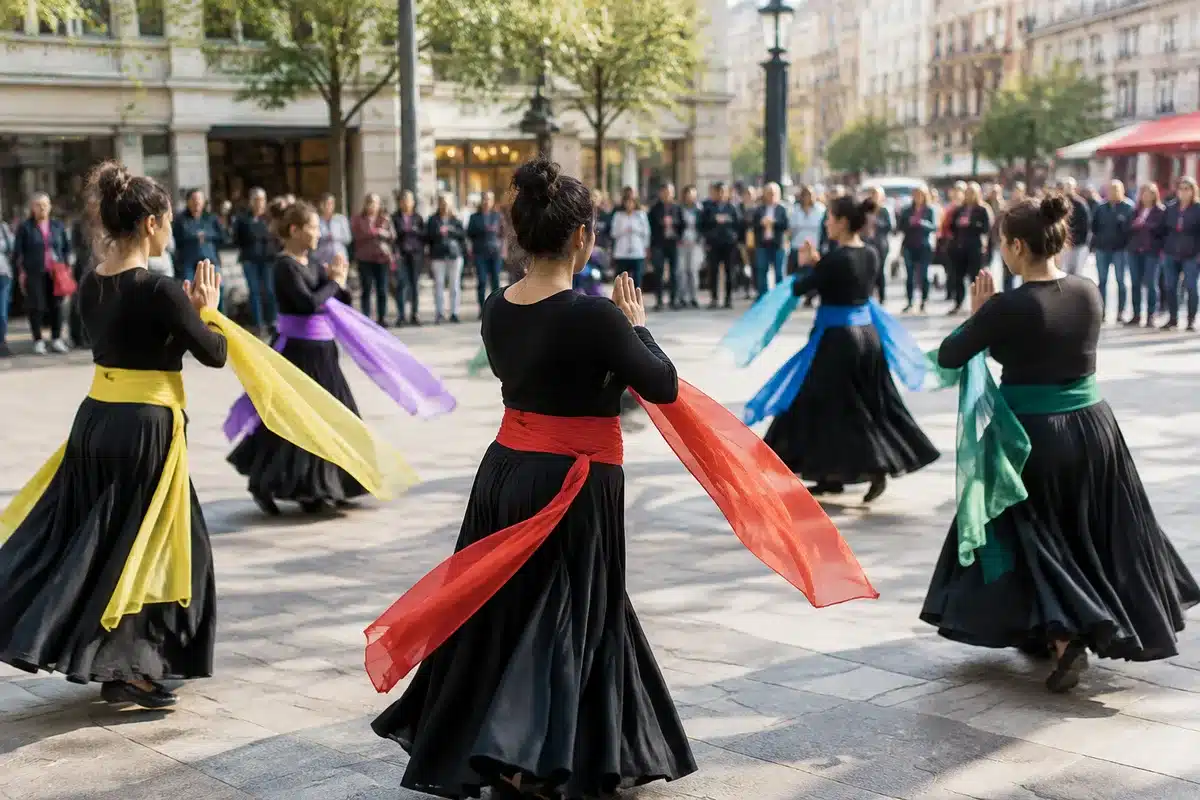
Navratri in Times Square goes viral: social media splits over Indian celebrations abroad
Kalra says his earliest vivid memories are tied not to ritual detail but to dramatic public displays. As a child he watched the burning of Ravana effigies at a local temple — a communal enactment of a story from the Ramayana that, for him, crystallized a moral lesson about confronting wrongdoing.
How celebration has shifted — and why family matters
His approach to these holidays has shifted with marriage and parenthood. Kalra’s family brings together Punjabi and Pahari traditions at home, and his wife’s Gujarati background has introduced more garba and dandiya dancing into their observances.
What stands out today is the devotional component: the evenings of music, the communal arati, and the chance to hand these rituals down to his daughters. The family focus, he says, is now the primary way he keeps the festivals alive.
Practical obstacles in the U.S. context
Kalra describes the practical friction many Hindu Americans face: aligning festival dates with work schedules and school calendars. Those conflicts, he notes, are usually logistical rather than hostile — especially in communities with an established Hindu presence — but they still require planning.
On balance, he says the main difficulty is timing: making space in an American rhythm of jobs and classes for observances that follow a lunar calendar and vary year to year.
How one organization helps
The Hindu American Foundation has created tools aimed at closing the gap between private belief and public life. These are intended to help families request time off, explain holidays in classrooms, and present accurate context about rituals.
| Common issue | HAF resource or solution |
|---|---|
| Need to request school or work leave | Email templates and guidance on standard procedures |
| Children unable to participate at school | Curriculum-friendly materials explaining festivals and symbols |
| Misperceptions about Hindu practice | Fact-based explainers that clarify beliefs and diversity |
- Simple templates for communicating with employers and school administrators
- Downloadable classroom packets for teachers and student presentations
- Background essays that contextualize ritual meaning beyond entertainment
Broader stakes: recognition, nuance, respect
For Kalra, the work goes beyond calendar logistics. He wants broader public familiarity with the ideas behind the celebrations — especially the centrality of the feminine Divine in many Hindu traditions — so that festivals are taken seriously as religious observance, not reduced to exotic spectacle.
He also emphasizes that improved understanding can counter crude stereotypes about the community and create space for dignity in civic life: easier time-off policies, accurate school lessons, and fair treatment in public forums.
That is where institutional support matters. According to Kalra, organizations that provide clear, accessible resources can empower families to explain their practices and to negotiate time for observance without awkwardness or misunderstanding.
On being part of a growing movement
Kalra first volunteered with HAF in the mid-2000s and now has spent more than a decade on staff. He describes the organization’s growth as steady and community-driven: volunteers and local advocates have helped move it from a small project to a recognized voice on Hindu-American concerns.
Watching that evolution, he says, reinforces his view that cultural transmission in immigrant communities depends as much on institutional scaffolding as it does on family practice — especially when festivals require public accommodation in schools and workplaces.
In Kalra’s telling, the festivals remain personal and communal at once: moments for devotion, for teaching the next generation about values, and for clarifying how those values fit into American civic life. As Navaratri and Dussehra approach this year, those practical and symbolic questions will shape how families celebrate and how institutions respond.