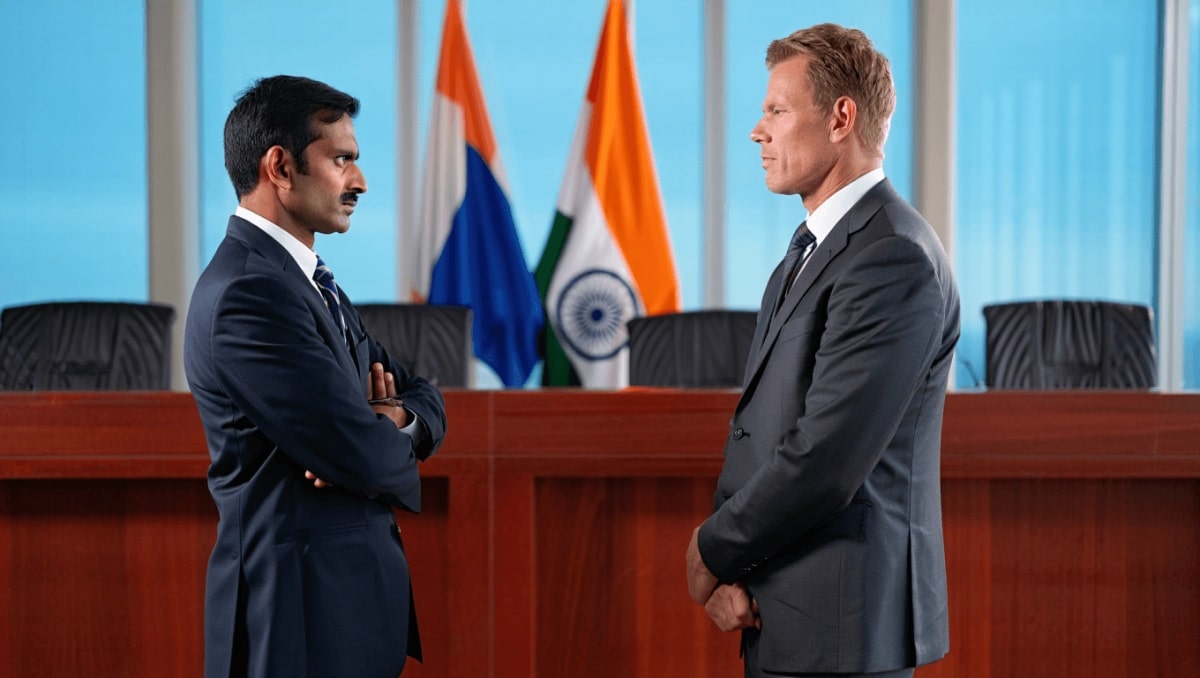
On May 19, 2026, New Delhi pushed back strongly against criticism from the Netherlands over its record on religion, framing the issue as a long-standing cultural and constitutional inheritance rather than a narrow policy failing. The exchange marks a clear shift toward a more assertive Indian response to what officials describe as selective Western scrutiny — a stance with diplomatic and domestic repercussions.
India’s response, delivered through official channels, rejected the premise of the Dutch remarks and emphasized the country’s own historical and legal approach to faith and conscience. Indian spokespeople pointed to centuries of plural religious practice and to constitutional guarantees as central to the debate, while accusing some Western critics of applying double standards when assessing other countries’ internal affairs.
The disagreement is notable not only for its rhetoric but for what it signals about India’s posture on the global stage. Rather than treating foreign criticism as routine, New Delhi has increasingly framed such interventions as politically motivated or culturally uninformed — and has begun to respond in kind.
Annamalai applauds Bhagwat’s message on Muslim inclusion in India
Navratri in Times Square goes viral: social media splits over Indian celebrations abroad
Why this matters today: the spat arrives amid heightened sensitivities over sovereignty, human rights discourse and the role of Western governments in criticizing non-Western states. It could affect bilateral ties with the Netherlands, shape cooperation on trade and technology, and influence how human-rights issues are debated in international forums.
- Diplomatic friction: sharper rhetoric can cool high-level visits and slow down negotiations on bilateral projects.
- Economic consequences: sustained tensions risk complicating trade discussions or technology partnerships that rely on political goodwill.
- Multilateral dynamics: India may press for rules that limit what it sees as politicized interventions in bodies such as the UN Human Rights Council.
- Domestic politics: the exchange can be used by policymakers at home to bolster national narratives of sovereignty and cultural continuity.
- Diaspora and cultural ties: public rows may spill into community relations and influence cultural or academic exchanges.
Observers caution against reading too much into a single diplomatic exchange, but the pattern is clear: Indian officials are more willing to contest criticism on principle and to cast that criticism as an affront to national dignity. That approach resonates domestically, where appeals to history and civilizational identity have political traction.
At the same time, European capitals—including smaller governments like the Netherlands—are unlikely to abandon human-rights commentary altogether. Expect a continuing tug-of-war: Western governments will press on issues they consider universal, while New Delhi will increasingly insist on context, non-interference, and parity in scrutiny.
What to watch next: whether the Netherlands issues a follow-up statement, whether the matter is raised in bilateral meetings or in multilateral settings, and how Indian policymakers balance international pushback with domestic messaging. The outcome will shape not just India–Netherlands relations but the broader conversation about how to reconcile universal norms with national narratives.