Show summary Hide summary
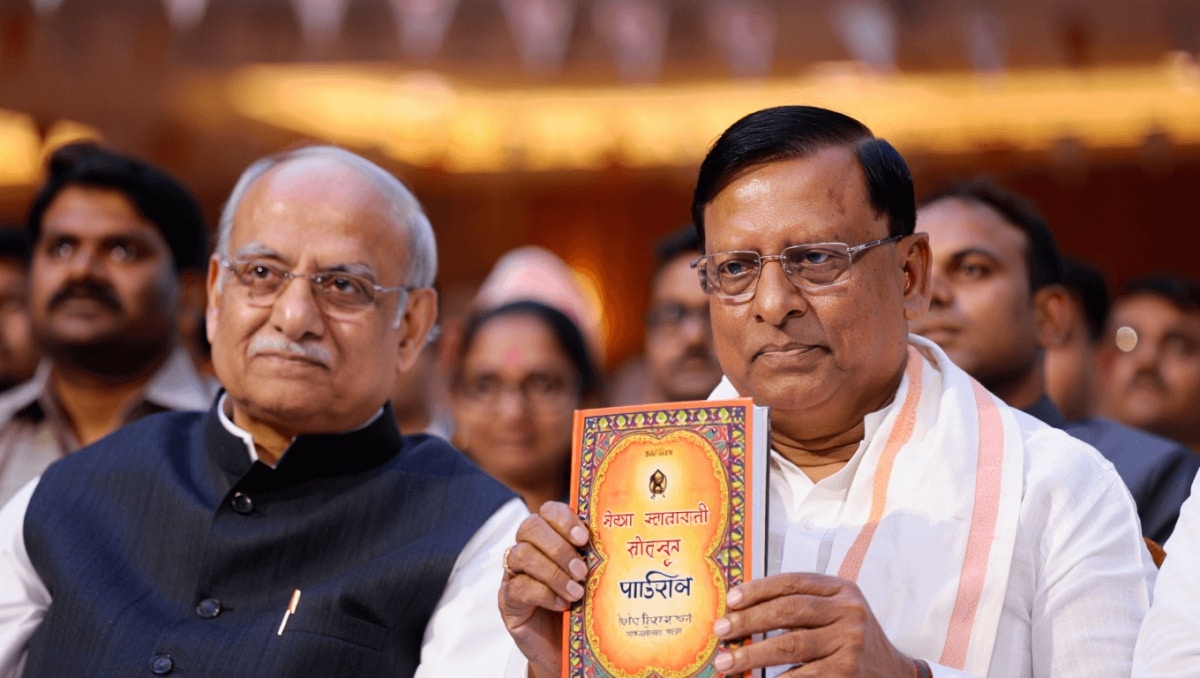
Jaipur — A new scholarly collection that re-examines the classical treatise on Indian theatre, the Natyashastra, was launched Friday at Lok Bhavan by Governor Haribhau Bagde. Edited by art historian and Sahitya Akademi laureate Dr Rajesh Kumar Vyas, the volume arrives as international recognition of the text has grown following its inclusion on UNESCO’s Memory of the World Register in April 2025.
Fresh perspectives on a foundational text
The book, titled “Natyashastra: Pancham Ved Par Ekagra,” assembles essays from scholars, critics and practitioners who explore the treatise’s literary, performative and philosophical dimensions. Attendees at the launch heard the governor describe the publication as a timely intellectual resource and commended the initiative by the Ministry of Culture’s North Zone Cultural Centre (NZCC) to support the project.
Annamalai applauds Bhagwat’s message on Muslim inclusion in India
Navratri in Times Square goes viral: social media splits over Indian celebrations abroad
Editors and contributors aim to move beyond standard summaries of the work, instead tracing how the Natyashastra has shaped performance, aesthetics and cultural pedagogy across centuries. The volume also preserves lesser-known critical writings, giving readers access to materials that are rarely reprinted.
What the book contains
- Essays by leading scholars on dramaturgy, music, iconography and stagecraft.
- Two rare articles by prominent Hindi literary figures Hazari Prasad Dwivedi and Namvar Singh, restored for contemporary readers.
- Contributions from performers and critics that link classical theory to modern practice.
- Historical context that traces the text’s transmission and interpretation within India’s knowledge traditions.
The mixture of academic analysis and practitioner insight is intended to make the volume useful both to specialists and to students or artists seeking a deeper, historically grounded understanding of performance theory.
Why this release matters now
Inclusion on UNESCO’s Memory of the World list has renewed public and institutional interest in documents tied to global cultural heritage. This book’s timing matters because it offers consolidated scholarship at a moment when preservation and reinterpretation of classical sources are gaining traction in cultural policy and education.
For researchers, the collection provides updated bibliographic leads and critical readings. For artists and educators, it supplies conceptual tools that can inform contemporary staging, curriculum design and cross-disciplinary projects.
Voices that anchor the volume
Alongside new research, the editors have ensured the presence of historically significant voices. The reinstated essays by Dwivedi and Namvar Singh function as touchstones—linking mid-20th century literary criticism to present-day debates about performance and textual authority.
Governor Bagde’s remarks at the launch highlighted the role of state-supported cultural centres like the NZCC in bringing such scholarship to public attention, emphasizing preservation without privileging any single interpretive approach.
As institutions and scholars respond to the UNESCO recognition, publications like “Natyashastra: Pancham Ved Par Ekagra” may shape how the text is taught, performed and curated in the years ahead—bridging archival recovery and living artistic practice.