Show summary Hide summary
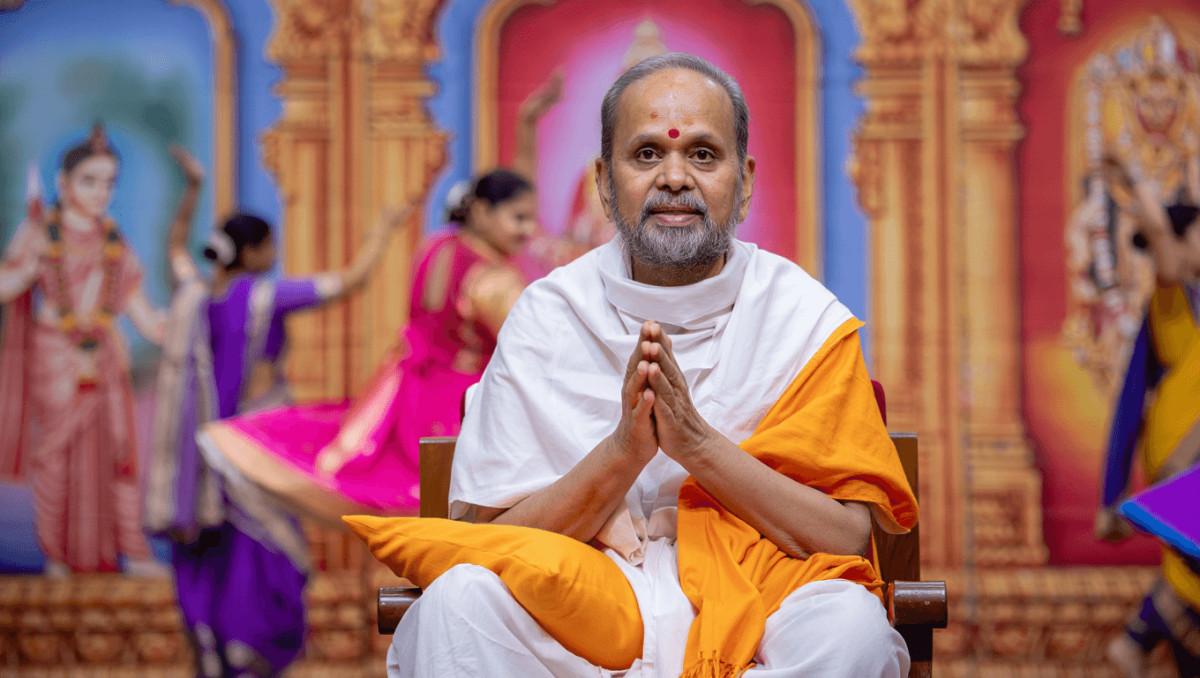
As Navaratri and Dussehra return to communities across the United States this year, public rituals are revealing how Hindu practice in America has shifted—from private devotion to visible, community-centered celebration. Anuttama Das, an ISKCON member since 1975, recounts nearly five decades of festival life and explains what the observances mean now for worshippers and for Hindu civic presence in the U.S.
From Denver ashram to a 30-foot Ravana: how celebrations have changed
Das’s earliest festival memories come from living as a brahmachari at the Denver ISKCON temple, where religious life revolved around collective observances. Even without full deity installations, Dussehra stood out as a major occasion—ritual dressing of deities, special kirtans, community feasts and occasional stage dramas brought people together.
Annamalai applauds Bhagwat’s message on Muslim inclusion in India
Navratri in Times Square goes viral: social media splits over Indian celebrations abroad
Today he worships near Washington, D.C., where the Potomac temple stages a visibly different kind of Dussehra: a massive Ravana effigy—roughly 30 feet tall—constructed over weeks, public safety coordinated with local fire services, and an outdoor bonfire that caps a festival involving children’s dramas, new outfits for the deities, and communal offerings of prashadam.
Ritual, theatre and theology
The Potomac celebrations blend spectacle with spiritual teaching. Children play roles—monkeys, demons, heroes—and the pageant often spills from the temple interior to the towering Ravana outside. For attendees, the visual drama reinforces a religious narrative: the triumph of moral order over corruption and the role of devotion in inspiring righteous action.
For Das, the festivals’ meaning has changed with age. The youthful emphasis on outward participation gave way to contemplation of dependence on the divine—the patience and sacrifice exemplified by Lord Rama, and the inner obstacles devotees must overcome. In his telling, festivals are as much reminders of inner transformation as they are communal rejoicing.
Obstacles, integration and acceptance in American life
In the early decades of ISKCON’s U.S. presence, practices now widely accepted—meditation, vegetarianism, yoga, chanting—were sometimes met with suspicion or dismissed as countercultural. Das says the social context has shifted: yoga studios, vegetarian and vegan dining options, and mainstream interest in mantras or guru-disciple relationships have normalized many elements once considered exotic.
That normalization has practical consequences. Public observance of holidays now meets less resistance; religious practices that once needed defensive explanation are often recognized as part of American pluralism.
Advocacy, representation and the Hindu American Foundation
Das remembers the early days of the Hindu American Foundation in Washington, D.C., when a small group began meeting to raise issues important to Hindu Americans. He credits the organization with developing into a respected policy voice that engages on textbooks, religious recognition, and visibility for Hindu festivals and teachings.
He describes HAF’s role as creating space at decision-making tables for Hindu perspectives—helping ensure accurate representation rather than caricature—while providing a mature interlocutor in a public environment he characterizes as increasingly fractious.
Hopes for the future
Looking ahead, Das frames his hopes in constitutional and spiritual terms. He warns that debates over religious freedom and cultural recognition are intensifying and argues that preserving space for spiritual inquiry should remain a civic priority. At the same time, he urges the Hindu community to maintain focus on its deeper religious aims rather than only socio-economic achievements.
Drawing on Vedic language, he describes the present era as one marked by quarrel and hypocrisy, and suggests that lasting solutions to social tensions will require a shift in consciousness—an emphasis on shared spiritual identity beyond temporary social labels.
Key takeaways
- Navaratri and Dussehra function as both public theatre and private reminder: celebrations educate, unify and dramatize core teachings.
- Festivals in the U.S. have evolved from insular temple rites to community-facing events, often involving large effigies, staged dramas and municipal coordination.
- Practices once regarded as fringe—yoga, vegetarianism, mantra—are now mainstream, easing public observance and cultural acceptance.
- HAF has helped build institutional recognition for Hindu viewpoints in policy, education and public discourse.
- Advocates warn that religious freedom and respectful representation remain active concerns as American civic life becomes more polarised.
Das’s account shows how a single festival season can map broader cultural change: a ritual that remains rooted in ancient narratives has also become a marker of community visibility, advocacy and intergenerational meaning in contemporary America.