
Show summary Hide summary
As Navaratri arrives this season, communities both in India and across the United States are renewing attention on a central theme: the celebration of the feminine divine and its practical role in cultural life today. For many in the Hindu diaspora, the festival has become a moment to reinforce identity, adapt traditions and educate non-Hindu neighbors about a holiday that often sits in the shadow of Diwali and Holi.
The festival honors the energy of creation known in Sanskrit as Shakti — the life force that complements masculine aspects of the divine in many Hindu traditions. Observances vary widely by region, but the throughline is the same: a ritual recognition of compassion, courage and renewal, culminating in the tenth-day observances of Dussehra or Vijayadashami in some communities.
To understand how Navaratri is lived and reshaped in the United States, I spoke with Ramya Ramakrishnan, a South Indian American who moved to the U.S. in 1996 and now works as Community Outreach Director for the Hindu American Foundation (HAF). Her reflections illustrate both continuity and change—how household practices persist even as public forms of celebration evolve.
Annamalai applauds Bhagwat’s message on Muslim inclusion in India
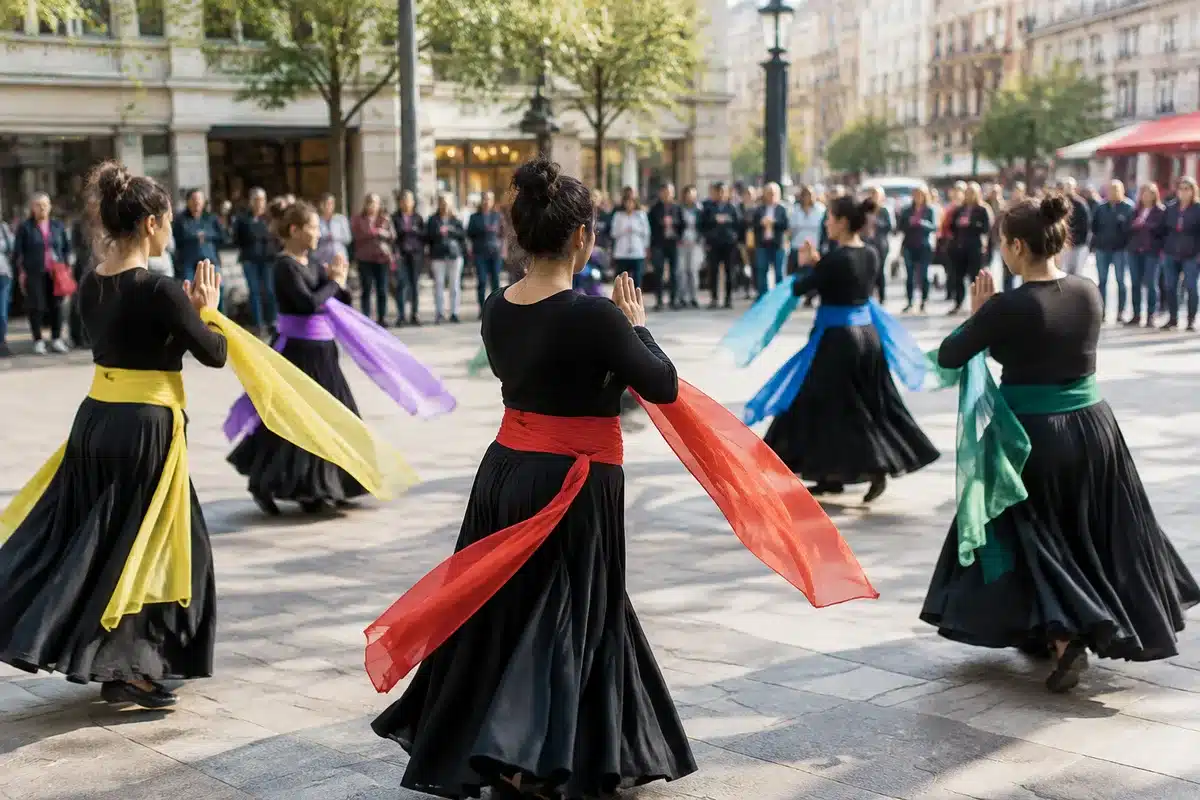
Navratri in Times Square goes viral: social media splits over Indian celebrations abroad
Memories that shape the ritual
Ramya’s earliest recollections are rooted in neighborhood life in India, where daily visits among friends and relatives filled the nine nights. In many South Indian homes, families arrange a golu—a stepped display of dolls and icons that tells stories from scripture and everyday life. Those displays were social magnets: comparing setups, greeting neighbors, and singing bhajans (devotional songs) made the festival communal and immersive.
Moving to the U.S. changed the rhythm of the observance. Geographic separation means weekday evenings are quieter; public and family gatherings tend to cluster on weekends. Still, the essential acts—prayers, food offerings and music—remain central to keeping the festival’s spirit alive.
How Navaratri looks now in American communities
Ramya notes two visible shifts: a widening of participants to include entire families, and a growing creativity around traditional displays. Where Navaratri in India often emphasized women hosting women, in many U.S. communities celebrations now draw children, spouses and extended networks. The result is less gender-segregated ritual and more multi-generational engagement.
Another recent development is the emergence of golu competitions and a market for decorative dolls. In California and elsewhere, families who previously did not keep a doll display are building them for the first time — sometimes consulting home-improvement stores for shelving ideas. That blending of cultural practice and local resources signals both adaptation and rising visibility.
- Traditional elements: daily prayers, naivedyam (offered food), bhajans, worship of multiple goddess forms.
- Diaspora adaptations: family-inclusive gatherings, weekend-focused events, regional variation showcased side-by-side.
- Public outreach: competitions, exhibitions, and educational materials to introduce Navaratri to non-Hindu audiences.
These changes have practical consequences. When festivals are family events, they become teaching moments for children born or raised outside India. When public displays and competitions proliferate, Navaratri gains cultural currency and reaches a broader public audience.
Education and advocacy: HAF’s role
Ramya credits HAF with creating resources that elevate the festival’s meaning, especially for women. The foundation’s Shakti Initiative compiles writings and programs that highlight goddess figures and women’s roles in Hindu history and contemporary life. Under HAF’s leadership, advocates aim to make Navaratri better known beyond the community by producing accessible content and encouraging civic recognition during Hindu American Awareness and Appreciation Month.
One immediate goal Ramya mentions is a practical toolkit for Navaratri—similar to existing guides for Diwali and Holi—that would document diverse regional customs and provide materials for schools, temples and local chapters planning events. Such a resource could standardize outreach without erasing local variation.
Challenges remain. Diaspora families are dispersed, making daily cross-house visits impractical. Time constraints and competing obligations mean that many observe a quieter, more private festival during the week and reserve public celebrations for weekends. But the broadened participation and institutional support suggest a resilient continuity.
“What I appreciate most,” Ramya says, “is how Navaratri foregrounds reverence for women — celebrating their power, leadership and devotion. That message resonates across generations and finds new expression here.”
For readers watching cultural traditions adapt, Navaratri’s current arc matters because it shows how religious practice can sustain identity while welcoming change. As communities produce toolkits, host public displays and invite wider participation, the festival becomes not just a private observance but a vehicle for civic education and cross-cultural exchange.
Reporting note: Interview material summarized with permission from Ramya Ramakrishnan, Community Outreach Director, Hindu American Foundation.