Show summary Hide summary
Monday, 9 November 2026, marks the year’s final Somvati Amavasya — a convergence of the new moon tithi and Monday that carries particular weight in Hindu practice. Because the Amavasya period in New Delhi begins late on 8 November and continues into midday on the 9th, the new moon is present at sunrise on Monday, making this an especially apt day for ancestral rites and Shiva-related observances.
Why this alignment matters now
Amavasya — the lunar day when the Moon is not visible — occurs each month, and Monday recurs weekly. When the lunar dark night coincides with Monday, traditions treat the day as especially receptive: a moment for inward attention and ritual focused on family, memory and renewal.
Somvati amavasya 2026: when it falls and quick rituals to mark it
Kashmir 30 years on: displaced communities recall the homes they left
Monday is linguistically linked to the Moon (Soma), and in many devotional practices the day is associated with Lord Shiva. The double association — a lunar night falling on the Moon’s weekday — is read as amplifying the spiritual potency of standard observances, particularly those honoring ancestors.
What people do on Somvati Amavasya
At the centre of the day is remembrance of the pitrs (forebears). Many families plan a simple sequence of rites rather than public pageantry: a purifying bath, offerings for ancestors, a lamp at dusk and charitable acts in memory of the dead.
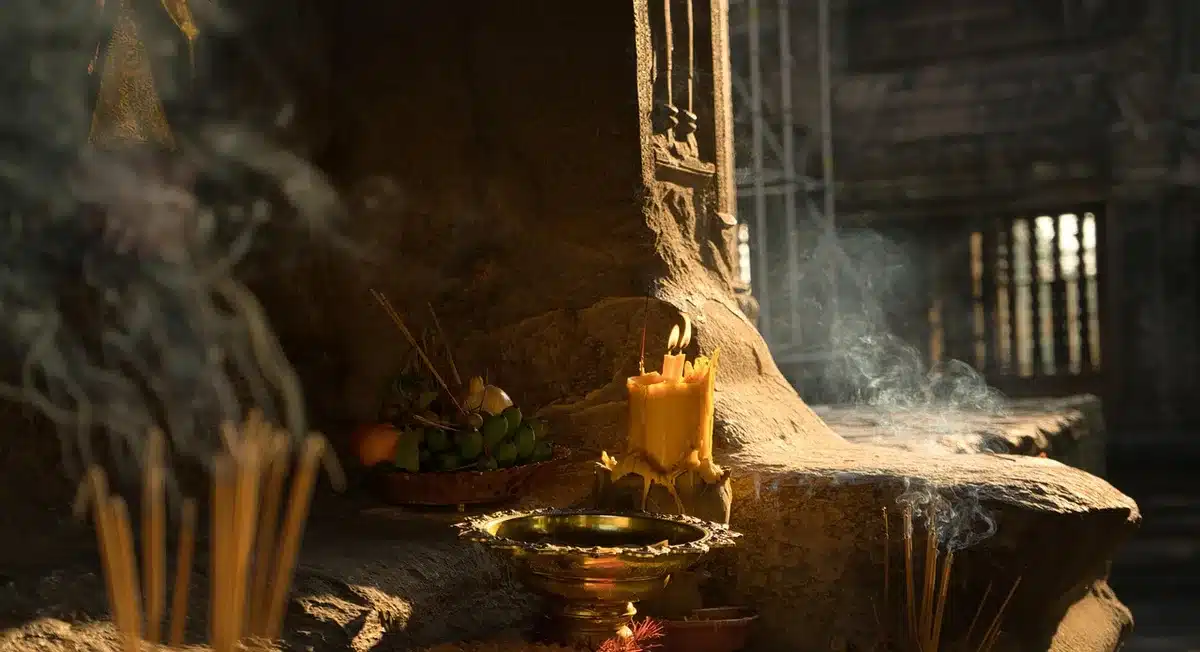
Bathing in a sacred watercourse — the Ganga, Yamuna, Narmada or any river, lake or sea meaningful to a family — is a common choice. Where travel is not possible, a sunrise bath at home followed by a small water offering or an evening lamp fulfills the same intention. Traditional texts and vrata guides emphasize intention: the sincerity of the act matters more than the place.
Because this is also a Monday, many devotees pair ancestral rites with customary worship of Shiva: pouring libations over a Shivalinga, offering bel (bilva) leaves, chanting mantras or observing a personal vrat (fast).
Practical observances — a simple checklist
- Begin before dawn with a bath — river if available, or at home.
- Tarpan: Offer water to ancestors, often using black sesame; traditionally directed toward the south while speaking or remembering names.
- Fast according to ability: from a full fast to a single meal or a phalahar (fruits and milk).
- Include Shiva devotion if you observe Monday practices — abhishekam, bel leaves, or mantra recitation.
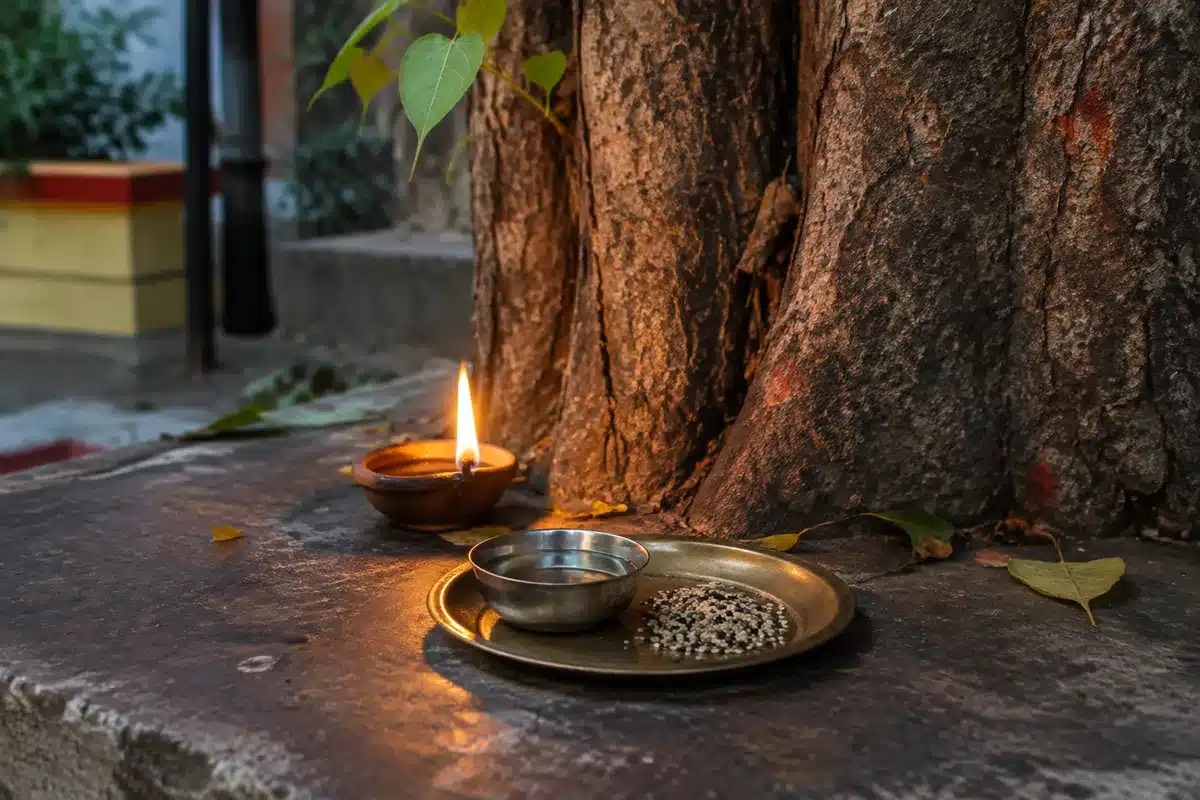
- Light a lamp at home or beneath a peepal tree in the evening; tie a thread or offer water at the tree’s roots where customary.
- Give charity or donate food, grain or other essentials in the names of the departed; remembrance itself is treated as an offering.
Rituals tied to the peepal and family life
The peepal tree features prominently in many local customs on this day. Practices include circumambulating the tree, offering water at its base and tying a thread around the trunk. These acts often carry specific family meanings: married women may pray for a husband’s long life, while unmarried people may pray for a suitable partner. The simple gestures around the tree frequently encode generations of family memory.
How Somvati Amavasya looks in daily life
This is not a loud festival. Public life generally continues as usual — businesses open, transport runs — yet in thousands of homes small rituals create a quieter rhythm to the day. A lamp is lit a little earlier, names are recited, and modest offerings are made instead of feasting or processions.
For readers wondering what the day means in practice: Somvati Amavasya offers a structured moment to remember those who came before, reset household spiritual routines and make small acts of charity. Whether observed with elaborate rites at a riverbank or with a brief home ritual, the day centers intention, continuity and care.