Show summary Hide summary
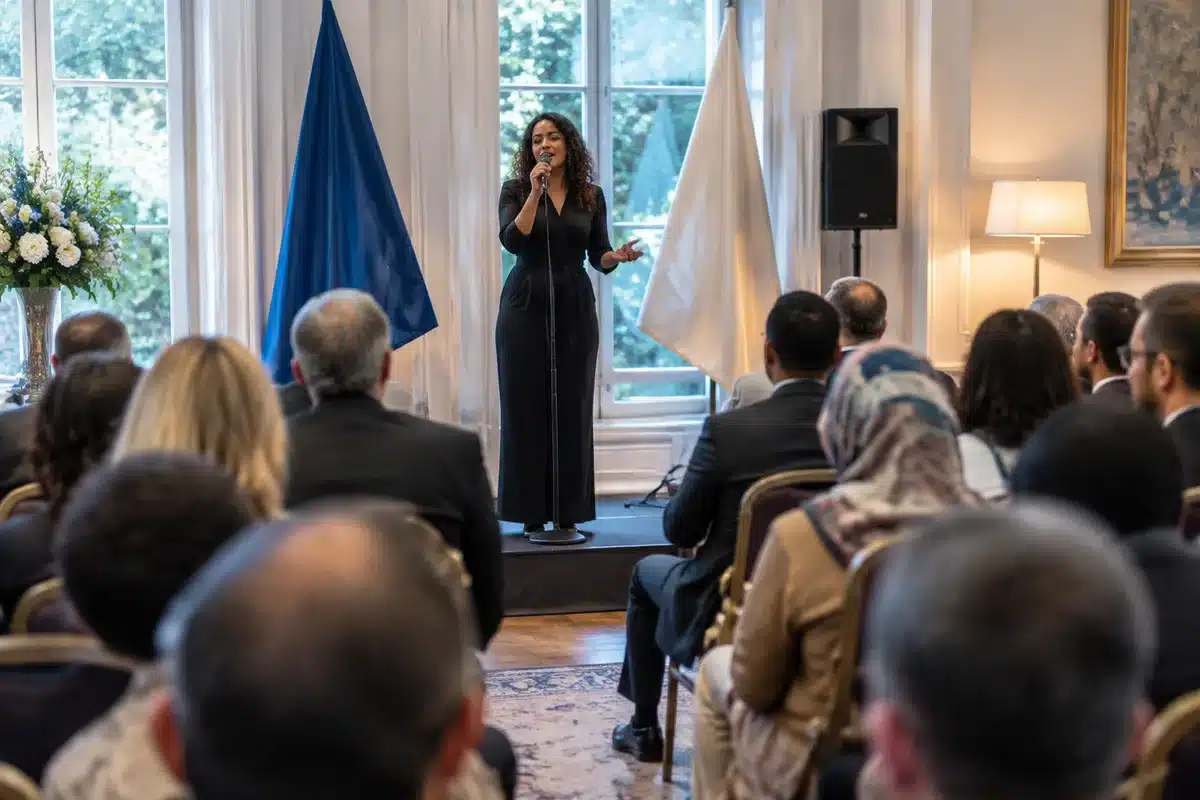
At a Republic of Korea National Day reception in Mumbai on Oct. 24, 2026, South Korean singer AOORA performed both the Korean and Indian national anthems — a moment he described as profoundly meaningful and emblematic of growing ties between the two nations. The dual performance caught attention not just for its symbolism but for what it signals about cultural exchange and the role of artists in diplomacy.
Music as a diplomatic bridge
The event at the Korean consulate drew a mixed crowd of diplomats, cultural figures and members of the Korean community in India. AOORA’s decision to render both anthems highlighted more than vocal skill: it underscored how shared cultural moments can reinforce bilateral relationships in ways formal talks sometimes cannot.
Somvati amavasya 2026: when it falls and quick rituals to mark it
Kashmir 30 years on: displaced communities recall the homes they left

For many in attendance, the performance offered a concise visual and auditory statement: cultural affinity matters in diplomacy. With both countries expanding cooperation in trade and technology, those softer signals of friendship help sustain public interest and goodwill.
Personal and public dimensions
AOORA has spent significant time in India and frequently references the country as a second home. Singing the two anthems back-to-back was a public acknowledgement of that connection, translating personal ties into a public symbol.

This mattered to the audience on two levels. To the Korean diaspora in Mumbai it was a reminder of home; to Indians present, it was an affirmation of respect and reciprocity. The combination of familiarity and novelty—hearing a Korean artist perform the Indian national anthem—made the moment memorable.
- Symbolic value: A single performance that communicated mutual respect between states and peoples.
- Cultural diplomacy: Reinforced how music and public events can complement formal diplomatic efforts.
- Community impact: Strengthened the sense of belonging for Koreans living in India and highlighted cultural openness among Indian audiences.
- Soft power: Added to South Korea’s cultural footprint in India beyond K-pop and film.
Events like this feed into broader narratives: they are small, tangible moments that help sustain longer-term engagement between societies. As governments pursue strategic partnerships, artists and cultural programs increasingly act as informal ambassadors.
What this means going forward
While a single performance won’t rewrite policy, it contributes to a climate in which collaboration is easier. Cultural exchanges lower barriers and create networks that can later support education, tourism, and business ties.
India and South Korea have already seen rising people-to-people contact — from joint film ventures to academic exchanges — and public ceremonies that blend traditions make those connections more visible. For audiences, the immediate outcome is emotional: a sense that two nations are listening to one another. For policymakers, such gestures can be a useful complement to formal agreements.
AOORA’s dual-anthem performance in Mumbai therefore resonates beyond the auditorium: it is a reminder that diplomacy is practiced not only in meeting rooms but also on stages where music and respect meet.