
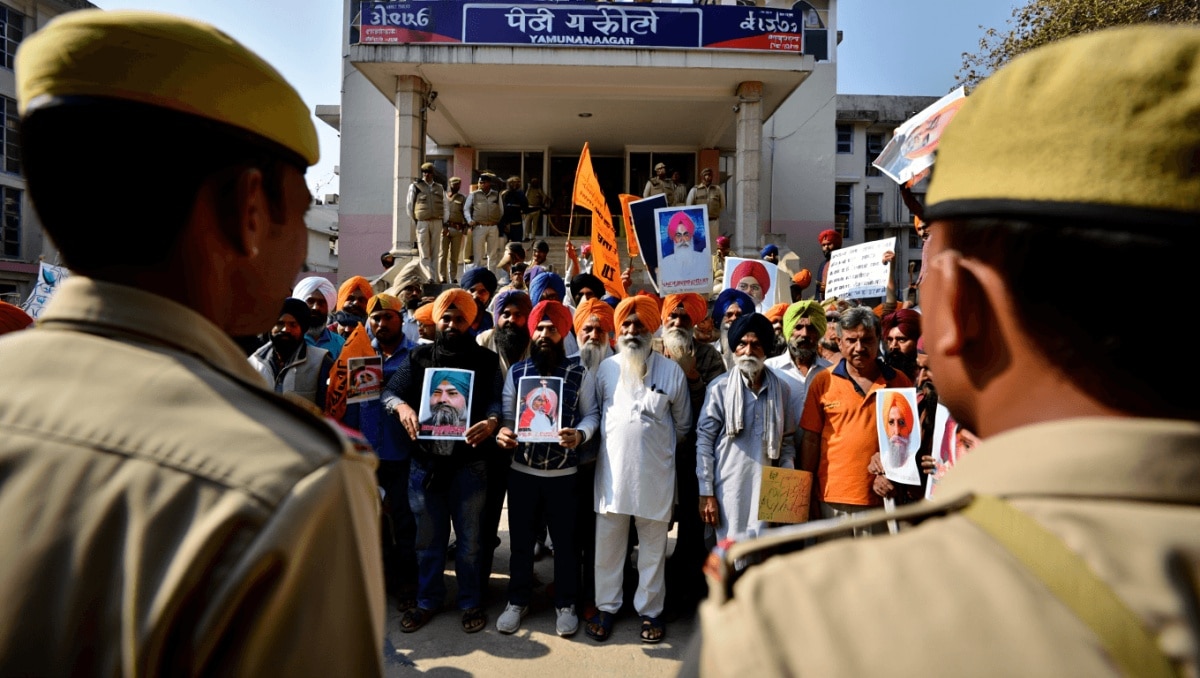
Yamunanagar police have launched a criminal probe after the manager of a local gurdwara complained that social-media posts mocking Sikh Gurus were being shared online. The case underscores how swiftly digital content can escalate into legal action when it is seen as threatening communal peace.
The complaint was filed on Tuesday by Ravinder Singh, who manages Gurdwara Sahib Patshahi Pehli Dasvin at Kapal Mochan. He took the matter to Superintendent of Police Kamaldeep Goyal after identifying posts on Facebook and other platforms that he said targeted religious sentiments and risked disturbing public order.
Authorities have named 24-year-old Yash Kumar as the accused. Following the complaint, the district cyber unit opened an inquiry and recorded a First Information Report under multiple criminal provisions. Investigators say they are preserving electronic evidence and seeking removal of the disputed material from online services while the probe continues.
Shah Rukh Khan used the name Abinav to ease in-law worries: Gauri adopted Ayesha during nikaah
Javed Akhtar hails Hindu festivals as cultural glue: throwback of atheist celebrating resurfaces
A police official confirmed the involvement of the local cyber cell, which will examine devices, digital accounts and transmission paths to establish how the material spread and who was responsible for circulating it.
The case was lodged under several sections of the new criminal code and information-technology law, covering acts that inflame religious feelings and spread hostile content. Key legal points in the FIR include:
– Bharatiya Nyaya Sanhita: Provisions invoked relate to outraging religious feelings, promoting enmity between groups, intentional insult and public mischief — charges that address different forms of communal harm.
– Section 67 of the Information Technology Act: Applied for publishing or transmitting obscene or offensive content in electronic form.
– Law-enforcement aims: Preserve digital evidence, trace the source and distribution chain, and request platform takedowns where necessary.
What happens next
– The cyber unit will carry out forensic analysis of devices and social accounts.
– Investigators may issue notices to platforms to remove content and to preserve logs.
– Depending on findings, the accused could face prosecution; the process will follow criminal-procedure norms, including evidence presentation and possible court hearings.
Why this matters now
Online posts travel fast; even a single shared item can reach thousands and shape public sentiment. Cases like this show how authorities are increasingly treating inflammatory digital content as a matter of public order, not only of individual speech—affecting both users who create content and those who circulate it.
Readers should note that allegations in the FIR are subject to legal process and that an accused person is entitled to due process. The investigation is ongoing, and police have indicated they will update the public as inquiries progress.