Show summary Hide summary
Speaking at the 100th anniversary of a prominent Hindu service organisation in Varanasi, Uttar Pradesh Chief Minister Yogi Adityanath framed the role of monks as custodians of both faith and national defence, saying spiritual leaders must never trade dharma for wealth and should be ready to pick up arms if the nation is threatened. The remarks, voiced at the centenary event, touch on long-running debates about religion, heritage and public life in India today.
From 1926 to a nationwide presence
The celebration marked a century since Swami Pranavanand founded the Kashi branch of Bharat Sevashram Sangha in 1926, when India remained under colonial rule. Yogi Adityanath noted the organisation’s evolution from a local spiritual and social service group into an institution with activities across the country and abroad, carrying what he described as Sanatan values and the rishi tradition.
Yogi Adityanath urges monks to take up arms if India goes to war
Vijayadashami procession to showcase tech and corporate floats: private institutions join on Oct 21

He recalled the Sangha’s early work in the independence era, saying its leaders travelled widely to promote a sense of national awakening. Today the group runs welfare programmes alongside religious work, a combination that its supporters say helps sustain its public profile.
Monastic duty, worship and defence
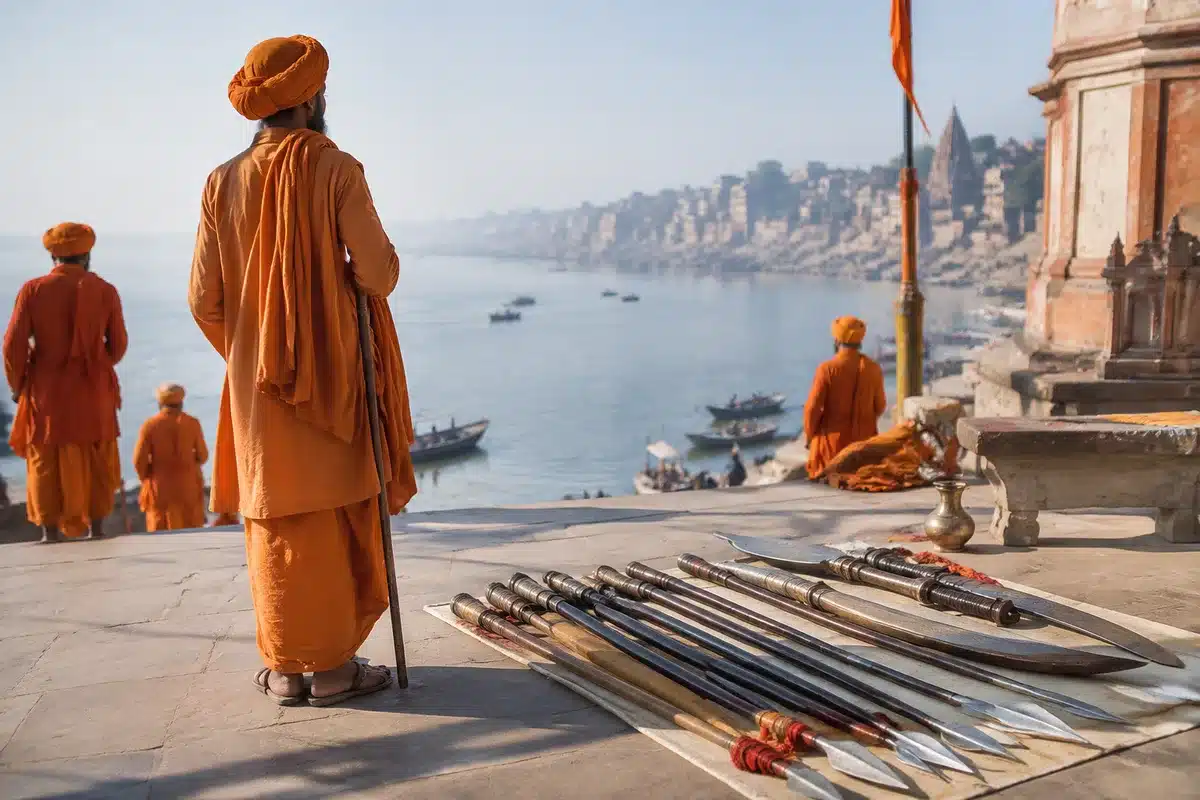
In Varanasi the chief minister urged that a monk’s ultimate commitment should be to uphold dharma rather than personal gain. He also spoke of worship practices that, in his portrayal, include reverence for weapons as symbols—and, if necessary, tools—of defence.
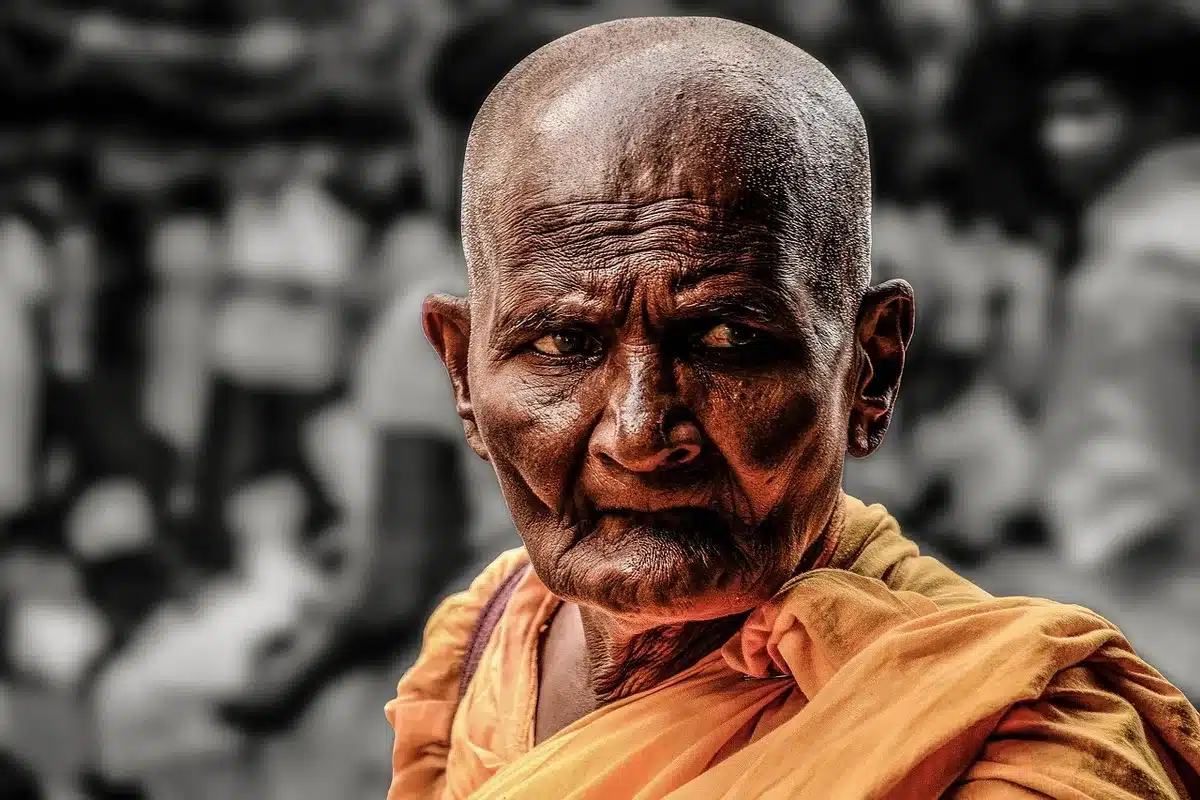
Those comments tied spiritual duty explicitly to readiness to defend national and religious interests. Yogi linked this stance to the protection of sacred sites, citing the Kashi Vishwanath Temple, Ram Janmabhoomi and Shri Krishna’s birthplace in Mathura when discussing threats to cultural heritage.
Political overtones and regional friction
The chief minister criticised the West Bengal government led by the Trinamool Congress, alleging that its treatment of Sangha monks resembled intimidation. He framed such conduct as symptomatic of political decline, and said Sangha members had initially kept their distance during public events before joining at his invitation.
While expressed in religious terms, those remarks carry clear political resonance given the Sangha’s public profile and ties to broader nationalist discourse.
- Centenary milestone: Kashi branch founded in 1926; now active nationally and overseas.
- Monastic role redefined: CM said monks should prioritise dharma and be prepared to defend the nation.
- Cultural protection: Temples and birthplaces were invoked as symbols of heritage that must be safeguarded.
- Regional tensions: The CM criticised West Bengal’s handling of Sangha monks, describing it as politically troubling.
- Social initiatives: The Sangha’s welfare activities, such as vocational support for girls, were highlighted and commended.
The event also highlighted the Sangha’s charitable work: distribution of sewing machines to girls from disadvantaged backgrounds was singled out by the chief minister as an example of ongoing public service. He urged that such programmes continue throughout the centenary year and suggested inviting prominent figures to participate.
Yogi Adityanath additionally noted that the organisation had influenced figures such as Dr Syama Prasad Mukherjee, tying the Sangha’s ethos to strands of modern Indian political thought.
These statements arrive amid wider conversations in India about the intersection of faith-based organisations, cultural heritage and political mobilisation. For readers, the immediate takeaway is twofold: the centenary reaffirms Bharat Sevashram Sangha’s place in public life, and its commemoration provided a platform for linking religious identity with national security themes.