Show summary Hide summary
The Allahabad High Court has ruled that the constitutional right to practise religion, including conducting funerary rites, does not automatically give a community the legal claim to a particular piece of government land for a cemetery. The decision, handed down on October 12 by a division bench, leaves the decision to allocate public land for burial grounds to the executive authorities rather than the courts.
What the court decided
A two-judge bench found that converting common or government land into a burial ground is an administrative act, not a judicial entitlement. In its judgment the court said there is no enforceable right for any group to demand that a specific parcel of non-public land be redesignated as public utility land for religious purposes.
High Court rules people cannot claim government land for cemetery use
Mysuru Dasara unites India: landmark celebration observed nationwide

The bench added a practical caveat: if there is a demonstrable shortage of space for burials, authorities must weigh that need and the broader public interest when considering allocation requests.
Case background
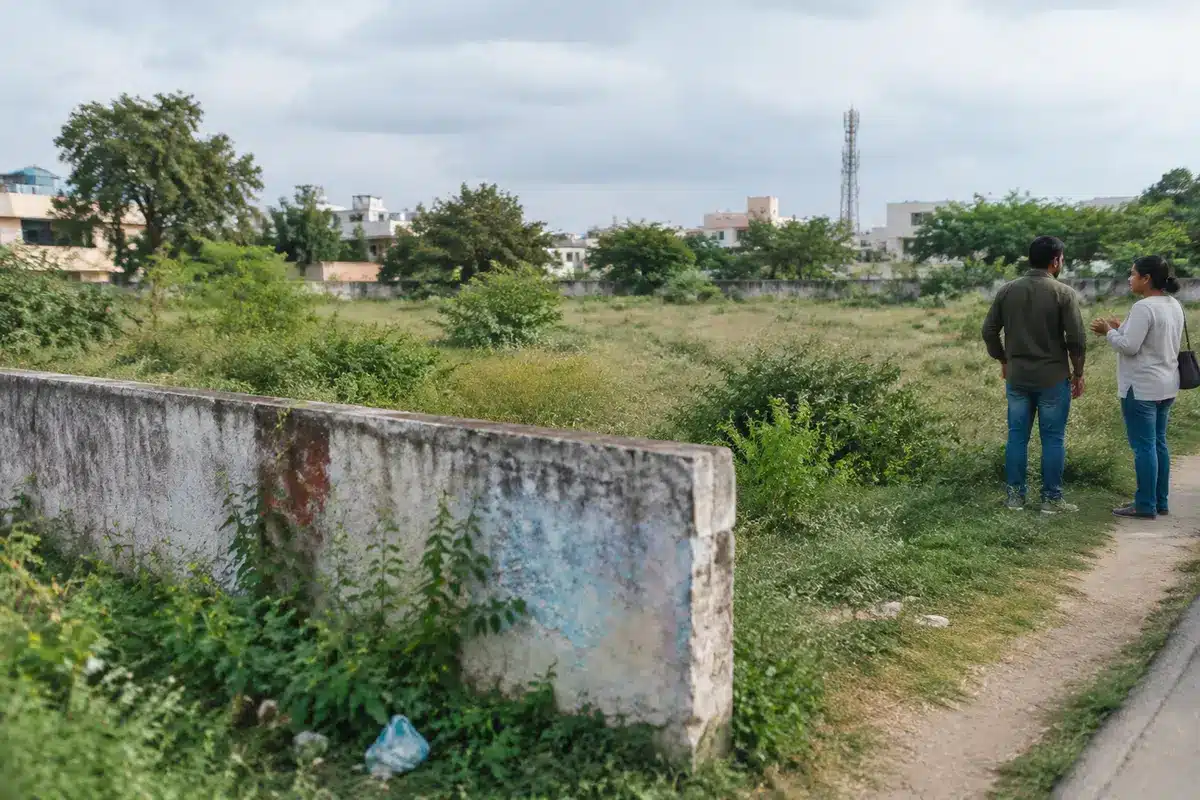
The petition was brought by the Christian Community Welfare Society, represented through its president, which sought permission to convert roughly 0.3420 hectares in Visokhar village, Modi Nagar tehsil, Ghaziabad, into a Christian cemetery. Local records described the plot as barren land.
Municipal officials had earlier passed a resolution in January 2018 proposing the allotment, and the society said a nearby cemetery at Begamabad Budana was nearing capacity, creating hardship for Christian families seeking to perform last rites.
Following directions from the high court in related proceedings, the additional district magistrate (administration) rejected the society’s request earlier this year under Section 77(2) of the Uttar Pradesh Revenue Code, 2006. That rejection was the subject of the present writ petition.
Authorities’ concerns and local context
District and sub-divisional reports noted the land was unused and not traditionally occupied as a graveyard. Officials also recorded applications from other local groups and warnings that granting exclusive rights to the plot could trigger communal tensions. The administration pointed out that a Christian cemetery already exists in the vicinity and is in active use.
- Bench: Justices JJ Munir and Indrajeet Shukla
- Judgment date: October 12
- Petitioner: Christian Community Welfare Society
- Land: 0.3420 hectare, Visokhar village (recorded as barren)
- Administrative action: Rejection under Section 77(2) of the UP Revenue Code
The court’s ruling underscores a separation between constitutional religious freedoms and entitlement to specific government property. In practice, the judgment shifts the burden of balancing competing local interests and potential communal sensitivities to civic authorities and district administrations.
What this means going forward
For communities seeking land for religious purposes, the ruling signals that courts will not routinely compel executive bodies to reserve particular plots. Instead, petitioners must build evidence of wider public need—such as verified shortages of burial space—and convince local authorities to act.
Administrations, for their part, face a duty to assess allocation requests with attention to public interest, local harmony and land records. Where scarcity of space is proven, the court indicated such requests deserve consideration rather than outright refusal.
At a broader level, the case illustrates how disputes over small parcels of municipal land can carry wider civic and communal consequences. The judgment will likely guide future petitions that seek judicial intervention in matters the court views as primarily administrative.