Show summary Hide summary
As Hindu communities spread across the world and debates around environment and public health shape end‑of‑life choices, traditional funeral practices are evolving. Understanding the rites—what they mean, how they are performed, and how they are adapting—helps both families observing them and outsiders who may attend a service.
What the rituals aim to do
At the heart of Hindu funerary practice is a doctrinal emphasis that death is a transformation rather than a final stop: the individual spirit, or atman, moves through cycles of life and death. Rituals that follow a death are designed to honor the person, ease the soul’s passage, and re-establish social and spiritual order for the living.
High Court rules people cannot claim government land for cemetery use
Mysuru Dasara unites India: landmark celebration observed nationwide

Those rites serve practical and emotional purposes. They provide a structured way for family and community to grieve, mark the change in household roles, and perform obligations believed to affect the deceased’s next stage.
Common elements of Hindu funeral rites
Although customs vary widely by region, community, and family, several elements often appear in Hindu death rites:
- Antyesti (last rites): The immediate ceremony after death, usually performed within a day or two.
- Preparation of the body: washing, simple clothes, and sometimes garlands or sandalwood paste.
- Funeral procession: family and friends accompany the body to the cremation ground or burial site.
- Cremation or burial: cremation is customary for many Hindu communities, while burial occurs in some traditions and for particular categories such as infants or renunciates.
- Collection and dispersal of ashes: ashes are often immersed in a river, symbolically returning remains to the elements.
- Mourning and ritual remembrances: a formal mourning period followed by rites such as shraddha aimed at sustaining the ancestor’s peace and the family’s duty.
Timing and the order of rites may differ by sect, caste, and local custom. Some communities observe a set of ceremonies that continue over several days; others preserve memorial rites at annual intervals.
Quick reference: traditional cremation versus alternatives
| Practice | Typical setting | Notes |
|---|---|---|
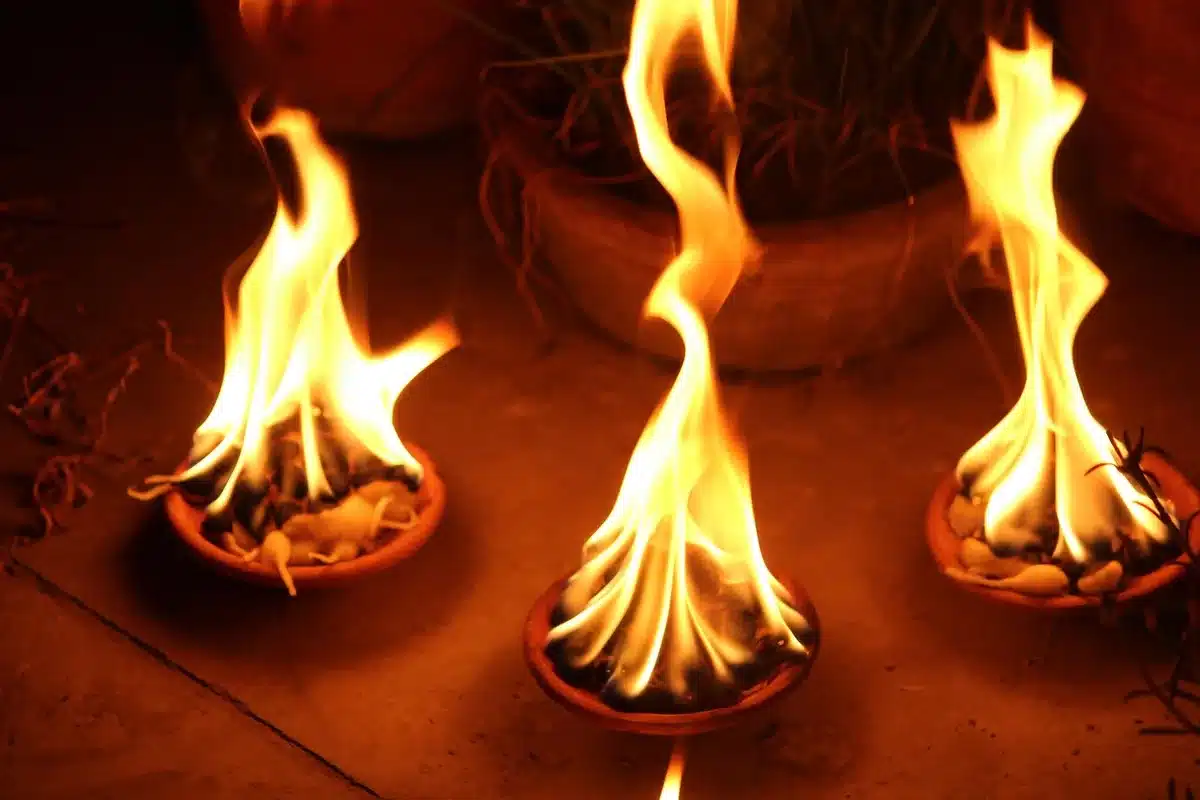
| Cremation | Open pyre or municipal crematorium | Most common across many Hindu communities; fire is viewed as a purifier. |
| Burial | Designated cemetery or family plot | Used by certain sects and in uncommon circumstances (e.g., children, ascetics). |
| Green / contemporary options | Eco‑crematoria, natural burial grounds | Growing interest in environmentally sensitive methods that still respect ritual aims. |
When you attend a Hindu funeral: practical guidance
If you are invited to a Hindu funeral or memorial, a few simple courtesies help show respect. Dress modestly and avoid loud colors or ostentation. In many settings, men and women sit separately; follow the host family’s lead.

Photography is sometimes discouraged, and close contact with the body may be limited. Condolence is often expressed through quiet presence and offers of practical help—bringing food, assisting with errands, or supporting post‑funeral arrangements can be more meaningful than words.
How practices are changing now
Today, practical constraints and personal values are prompting adaptations. Urbanization, diaspora life, and legal regulations influence where and how rites are carried out. Environmental concerns are prompting some families to seek lower‑impact options, and the pandemic has previously required temporary changes to attendance and timing.
At the same time, many communities retain core symbolic elements—rituals that affirm lineage and duty—even when the outward form shifts. That balance between continuity and change is a practical reality for contemporary Hindu families.
For anyone encountering these rites, the essential takeaway is that Hindu funerary customs combine theological meaning with community care. Knowing a few key terms and practices—such as the role of the atman, the significance of the antyesti, and the observance of shraddha—helps visitors participate respectfully and supports families navigating loss in a changing world.