Show summary Hide summary
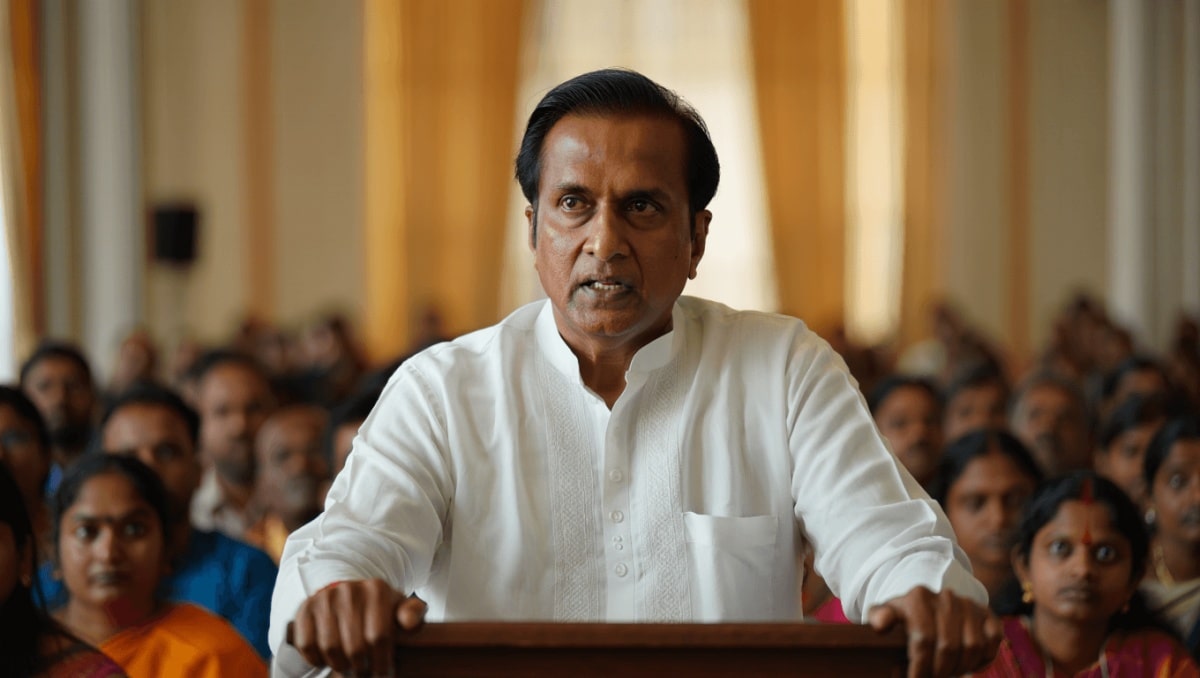
Speaking at a Mumbai conclave on Saturday, Carnatic vocalist and writer T M Krishna urged Indians to move beyond “the fear of the other,” framing pluralism as central to the nation’s identity and future stability. His keynote drew on historical symbols and modern constitutional values to argue that coexistence is not optional but foundational.
The event, organized by the Inter-Religious Solidarity Council and the Centre for Study of Society and Secularism with backing from about two dozen groups, took place at a five‑star hotel in Juhu and brought religious and civil-society voices together to reflect on shared civic responsibilities.
History and ideas in service of unity
Krishna drew connections across centuries of Indian thought, invoking emperors, poets, social reformers and the framers of the Constitution to underline recurring themes: non‑violence, social equality and a broad notion of belonging. He argued these strands are not merely historical artifacts but active resources for addressing today’s social fractures.
Shah Rukh Khan used the name Abinav to ease in-law worries: Gauri adopted Ayesha during nikaah
Javed Akhtar hails Hindu festivals as cultural glue: throwback of atheist celebrating resurfaces
Speaking on the occasion of Rabindranath Tagore’s birth anniversary, he reinterpreted Tagore’s portrayal of the nation as inclusive and composed rather than exclusionary. Krishna suggested that this image points away from narrow nationalism toward an embrace of cultural complexity.
What figures he referenced and why they matter
- Ashoka’s dhamma — cited as an early public admission that power must be tempered by compassion after violent conflict.
- Rabindranath Tagore — presented as an artist who imagined the nation in peaceful, non‑sectarian terms.
- Mahatma Gandhi — invoked for his commitment to ahimsa and non‑violent contestation of injustice.
- B R Ambedkar — referenced for advancing social equality and the idea of brotherhood within the constitutional framework.
- The word fraternity in the Preamble — highlighted as a constitutional promise that still needs social fulfillment.
Krishna emphasized that these references are useful not as nostalgia but as practical guides for civic behavior: admitting past mistakes, seeking restorative approaches, and maintaining institutional safeguards that protect minority rights and public harmony.
His remarks touched on a recurring question in public discourse: who has the primary claim to this land? Krishna proposed that answering this requires moving from contest to conversation and from assertion to apology where historical wrongs persist.
Implications for public life
For readers, the argument has immediate relevance: when public rhetoric sharpens differences, cultural leaders and institutions shape whether tensions escalate or cool. Krishna’s appeal points toward policies and social practices that prioritize dialogue, fault acknowledgment and legal protections for vulnerable groups.
Those attending the conclave heard a call to action that is both civic and cultural—encouraging educational curricula, community forums and interfaith initiatives to reinforce the practices of coexistence he championed.
As cities and institutions wrestle with polarized narratives, voices like Krishna’s serve as reminders that historical ideas of compassion and equality remain operational tools for public reconciliation. Whether they gain traction depends on sustained civic engagement and the willingness of leaders across sectors to translate words into concrete measures.