Show summary Hide summary
- The numbers that matter
- From seeing to staying: what’s different
- Who is travelling now?
- The rise of the experience economy
- Technology’s expanding role
- Key growth and risk areas
- The Simhastha Kumbh 2027 and what’s at stake
- How private initiatives fit in
- Balancing expansion and preservation
- What this means for readers
India’s pilgrimage scene is changing fast: short ritual visits are giving way to longer, participatory stays that blend devotion, heritage and leisure. A fresh KPMG–PHDCCI study released in June shows this shift has immediate consequences for local economies, infrastructure and how sacred sites are managed.
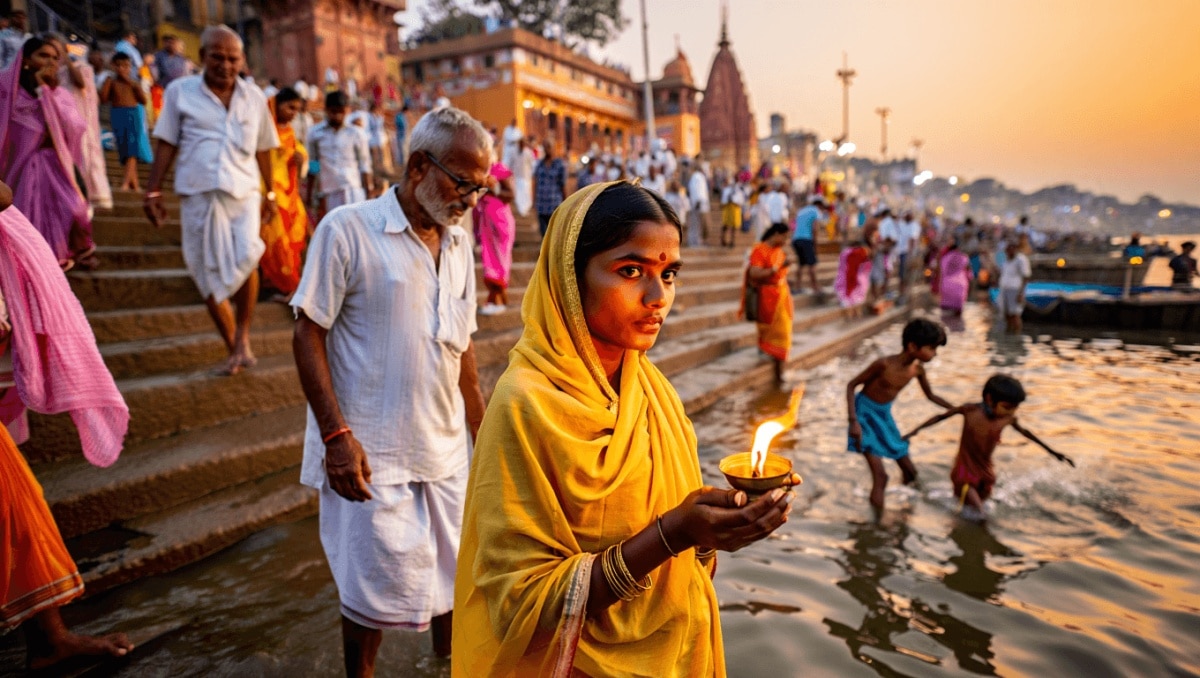
The report frames the change as a move from darshan — brief ritual viewing — to a fuller destination model, where travellers arrive to stay, learn and take part in the life of a place. That evolution matters now because it reshapes transport needs, hospitality, conservation priorities and the way communities host millions of visitors every year.
The numbers that matter
CAA urgency spikes after South Asia unrest: what citizens need to know
Glass shard in school snack sparks probe: book from another faith fuels parent outrage
The study places India’s religious tourism market well into the hundreds of billions of dollars and forecasts substantial growth over the next decade. Domestic footfall and spending are already reshaping whole cities — and they are expected to scale much further.
| Metric | Reported value / projection |
|---|---|
| Religious tourism market (FY2025) | ≈ USD 202.9 billion |
| Projected market (2035) | ≈ USD 441.2 billion |
| Domestic visits recorded (by Aug 2025) | 303 crore (about 60% faith-related) |
| Notable city visits | Kashi, Ayodhya and other hubs reported sharp year-on-year rises (see text) |
| Faith-tech sector | ≈ USD 58.6 billion; ~900 startups |
From seeing to staying: what’s different
Traditionally, pilgrims aimed for a quick moment of communion — to be in the presence of a shrine and return home. The new pattern favours immersion: multi-day visits, participation in rituals and programs, and activities that turn a shrine into the core of a lived itinerary.
That shift is visible in major centres. Reported visitor flows show large jumps in cities that have invested in access and events: pilgrimage hubs noted double- and triple-digit growth over recent seasons, while projects supported by heavy infrastructure spending have made formerly remote sites far more reachable.
Who is travelling now?
The report identifies several distinct visitor profiles that are reshaping demand:
- Experience seekers — drawn by rituals, architecture and curated storytelling rather than purely ritual obligation.
- Spiritual lifestyle travellers — people opting for extended stays focused on yoga, meditation and wellness practices.
- Younger, urban devotees — digitally connected, mixing online and offline participation and redefining devotional culture.
- Overseas visitors and NRIs — international interest in yoga, Ayurveda and Buddhist circuits is rising sharply.
The rise of the experience economy
Experience design is at the heart of the transition. Destinations are adding guided trails, evening programmes, immersive festivals and night-time attractions to extend visitor stays and spending.
Circuit-based travel — linking several shrines or related sites into one continuous pilgrimage — is re-emerging as a preferred format. These circuits encourage longer itineraries and create opportunities for interpretive guides, heritage walks and local enterprises to capture added value.
Technology’s expanding role
Digital tools are increasingly used to plan, personalise and preview journeys. The report notes a steep rise in AI-driven planning tools and highlights the growth of a distinct faith-tech industry, which offers services ranging from live darshan streams to tailored itinerary recommendations.
At the same time, analysts warn of downsides: information overload, platform-driven misinformation and the potential for technology to distract from the spiritual intent of a visit. The recommendation is clear — digital solutions should support reverence and understanding, not replace them.
Key growth and risk areas
Some headline points of consequence for planners and communities:
- Economic scale: Big spending boosts local jobs and investment, but requires robust supply chains and services.
- Infrastructure pressure: Fast-growing visitor numbers strain transport, sanitation and public safety systems.
- Environmental impact: High footfall has already raised ecological concerns at fragile sites and river systems.
- Heritage authenticity: Commercialisation risks diluting traditional practices unless carefully managed.
The Simhastha Kumbh 2027 and what’s at stake
Large-scale gatherings act as both catalyst and testbed. The report estimates the Simhastha Kumbh 2027 (Nashik–Trimbakeshwar) could draw more than 12 crore visitors and spur tens of thousands of jobs and tens of thousands of crores in economic and infrastructure activity. Hosting such events successfully will depend on crowd management, transport planning and environmental safeguards.
How private initiatives fit in
Several private players are designing circuits, extended-stay products and guide networks that align with the report’s three suggested pillars: experience design, integrated infrastructure and technology. These initiatives illustrate how commercial and civic actors are translating policy recommendations into on-the-ground services — but they also underline the need for oversight so that growth does not come at the expense of sanctity or sustainability.
Balancing expansion and preservation
The authors of the study emphasise a central tension: growing visitation can fund conservation and local development, yet it can also damage the very qualities that make a site meaningful. The prescribed approach combines careful capacity planning, community engagement, and design that reinforces, rather than replaces, religious practice.
Safety lessons are highlighted as urgent. Recent tragic incidents related to crowding, and environmental stresses at heavily visited circuits, show that more visitors without better systems equals greater risk.
What this means for readers
If you travel for faith, you can expect more curated options: longer programmes, immersive storytelling, wellness offerings and circuit-based itineraries. For communities and policy makers, the priorities are clear — invest in resilient infrastructure, protect natural and cultural assets, and ensure that technology amplifies reverence and understanding.
The KPMG–PHDCCI report, titled “From darshan to destination: The transformation of spiritual tourism in India” (June 2026), maps a fast-moving sector. Its conclusions will matter to planners, local leaders, pilgrimage operators and anyone who cares for the stewardship of sacred places.
Credit: KPMG in India in collaboration with the PHD Chamber of Commerce and Industry.