Speaking in Chennai on Saturday, former Supreme Court judge Abhay Shreeniwas Oka warned that religious customs are increasingly contributing to the pollution of rivers, lakes and coastal waters, and urged immediate public and legal responses. At a lecture titled “Environment — Rights or Duties Under the Constitution,” he tied ecological harm to the constitutional promise of social equity and called for a stronger public commitment to scientific reasoning.
Delivering the Rakesh Endowment Lecture at Valluvar Kottam, Justice Oka argued that environmental damage does not affect all communities equally. He said contamination of water and air disproportionately burdens the poorest citizens, who depend on local water sources for drinking and daily life, while wealthier populations can more easily avoid the consequences.
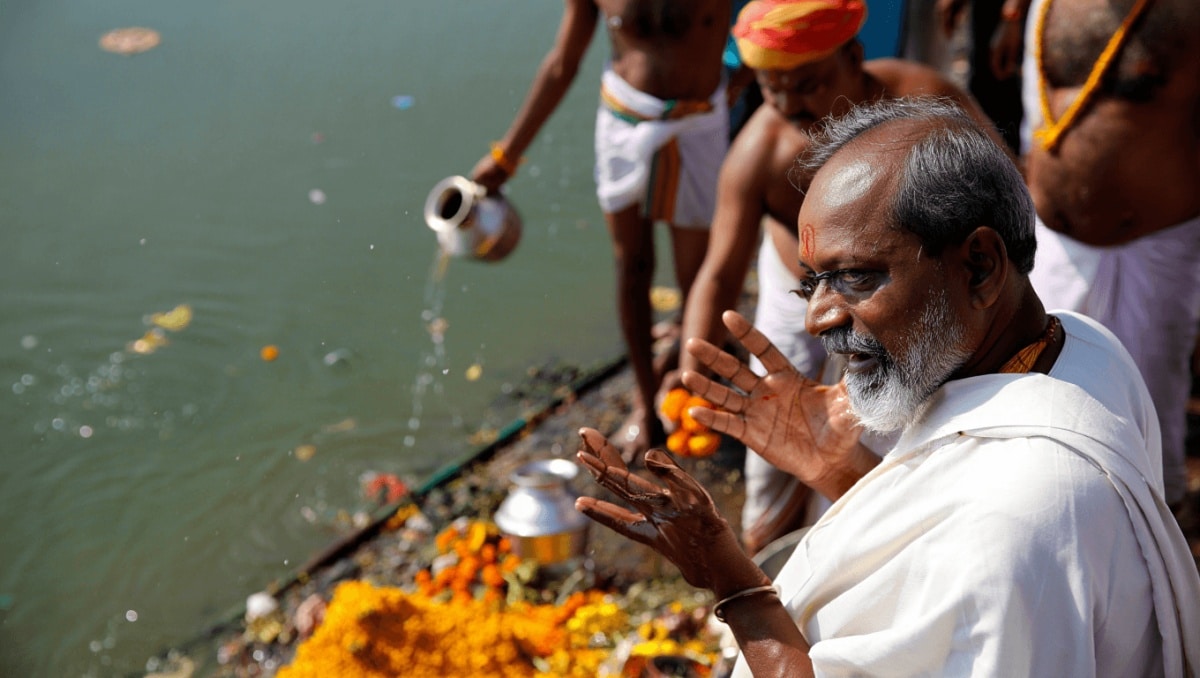
Pointing to large religious gatherings as a practical example, Justice Oka noted that mass ritual bathing — such as the congregational dips at the Kumbh Mela — can introduce substantial pollution into river systems. He urged greater awareness of the environmental cost of such practices and suggested that a more informed public might choose less harmful ways to observe faith traditions.
Shah Rukh Khan used the name Abinav to ease in-law worries: Gauri adopted Ayesha during nikaah
Javed Akhtar hails Hindu festivals as cultural glue: throwback of atheist celebrating resurfaces
Oka singled out a recent policy decision in Maharashtra — the planned removal of more than 1,000 trees in Nashik to make way for temporary housing for pilgrims attending a future Kumbh — as an illustration of how short-term event planning can have long-term ecological consequences. He warned that without corrective action, current choices will leave future generations with degraded air and contaminated water.
- Immediate risks: contamination of drinking water, loss of biodiversity, increased health burdens on vulnerable communities.
- Constitutional angle: environmental harm as a component of the unequal distribution of social justice protections.
- Practical triggers: large religious events, urban runoff, and event-related deforestation.
- Remedies suggested: promote scientific temper, integrate environmental safeguards into event planning, protect critical green space.
Why this matters now
Justice Oka’s remarks come amid growing public debate over how India balances cultural traditions with environmental protection. The issue has direct consequences for public health and livelihoods in rural and peri-urban areas, and it raises legal questions about how constitutional guarantees should shape environmental policy and enforcement.
Moderator N. Ram of The Hindu Group Publishing steered the session’s discussion toward how courts, lawmakers and civic institutions might respond. The lecture was presided over by former MP and senior advocate N. R. Elango.
Oka stressed that promoting a scientific temper is not an attack on faith but a practical tool to reduce harm. He framed environmental stewardship as both an individual responsibility and a collective duty under the Constitution: citizens must rethink certain practices, and institutions must ensure that development and event planning do not sacrifice natural assets.
He concluded with a sober reminder: if current patterns continue, the country risks bequeathing polluted air and water to the next generations — a loss that will magnify social inequality and undermine constitutional commitments to justice.