Show summary Hide summary
- 1. Jagannath Temple, Puri — the chariot ritual begins
- 2. Tirumala Venkateswara Temple, Tirupati — prosperity vows
- 3. Somnath Temple, Gujarat — seaside jyotirlinga
- 4. Banke Bihari Temple, Vrindavan — a rare reveal
- 5. Mahalakshmi Temple, Kolhapur — Shakti and abundance
- 6. Badrinath Temple, Uttarakhand — reopening the Himalayan doors
- 7. Mahakaleshwar Temple, Ujjain — Shiva’s southern face
- Why Akshaya Tritiya still matters
- Rituals to observe if you stay home
Akshaya Tritiya arrives this year on Sunday, April 19, 2026 — a date many Hindus treat as uniquely propitious for vows, charity and new beginnings. With the Tritiya tithi starting at 10:49 AM (Delhi) and the day’s prime puja window running from 10:49 AM to 12:20 PM, devotees across India are planning pilgrimages and rituals timed to this brief but powerful span.
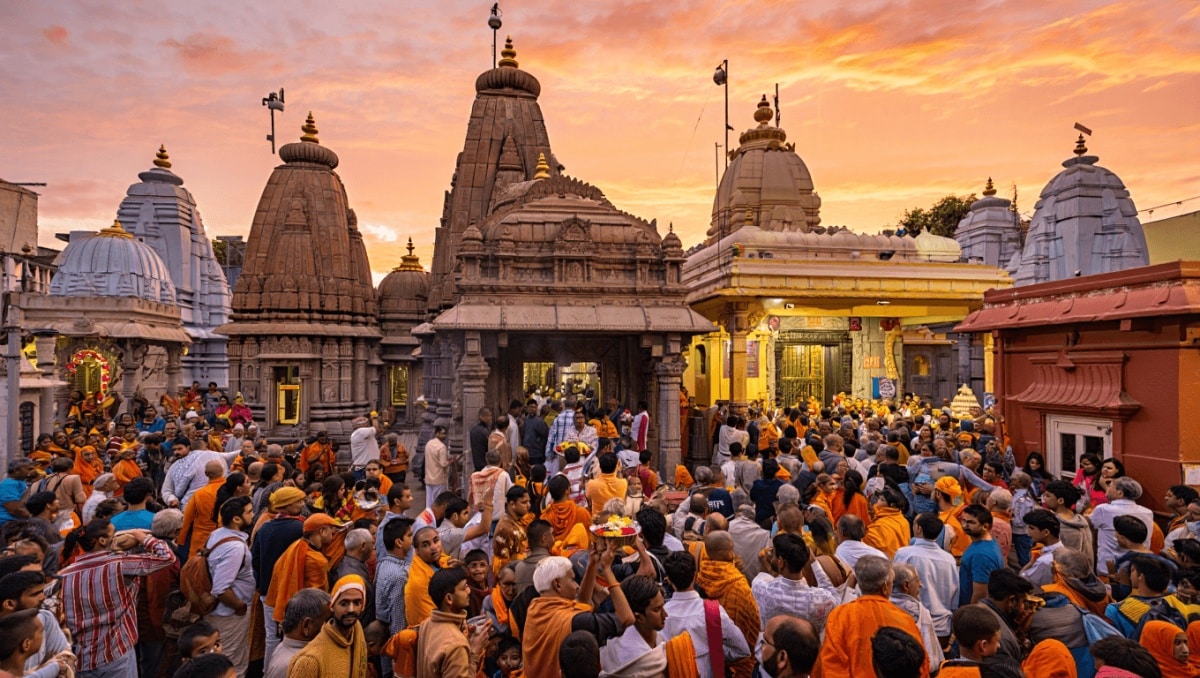
The Sanskrit term Akshaya translates roughly as “that which does not diminish,” and the tithi carries a long-held belief that merit accrued now has enduring effect. Below are seven temples where Akshaya Tritiya takes on distinct local meaning — from chariot-building rites in Puri to the season-opening ceremony at Badrinath — plus practical notes for visitors in 2026.
1. Jagannath Temple, Puri — the chariot ritual begins
Annamalai applauds Bhagwat’s message on Muslim inclusion in India
Navratri in Times Square goes viral: social media splits over Indian celebrations abroad
In Puri, Akshaya Tritiya marks the start of preparations for the annual Rath Yatra. Craftsmen assemble at the temple precincts to begin the ritual construction of the three towering chariots that will carry the deities months later.
The day features ceremonies such as Ankuraropana (sacred seed-sowing) and the fire rites that sanctify the timber and tools. Pilgrims come early for darshan and often head straight to the Ratha Khala to watch artisans at work.
Practical tip: Puri fills fast; staying near Grand Road reduces transit time. Note that non-Hindus cannot enter the inner sanctum, but rooftop vantage points give a clear view of many rituals.
2. Tirumala Venkateswara Temple, Tirupati — prosperity vows
Tirumala draws large crowds on Akshaya Tritiya as devotees seek blessings for material and spiritual well‑being. Special archanas and extended abhishekams are performed, and the temple’s signature laddu prasadam is distributed in higher quantities than on an ordinary day.
The tradition of thulabharam — devotees offering weight-equivalent amounts of gold, silver or food — is particularly common on this tithi. Availability of darshan slots is the limiting factor for many pilgrims.
Practical tip: Book Sarva Darshan or Special Entry slots through the TTD portal well ahead of time; arrive a day early if possible to account for crowds and security checks.
3. Somnath Temple, Gujarat — seaside jyotirlinga
Somnath’s history of destruction and reconstruction has long been read as an expression of resilience — a fitting setting for a festival that celebrates undiminished blessings. Akshaya Tritiya sees special abhishekams of the Jyotirlinga and ritual offerings for ancestors.
At sunset the aarti, framed by waves breaking on the shore, creates a dramatic sensory tableau: conches, lamps and bells against the Arabian Sea backdrop.
Practical tip: The nearest railhead is Veraval (7 km). Plan to time your day around the evening aarti for the most memorable experience.
4. Banke Bihari Temple, Vrindavan — a rare reveal
Vrindavan’s devotional intensity reaches a peak on Akshaya Tritiya at the Banke Bihari Temple, where a special Charan Darshan of the deity’s feet is sometimes permitted — an event devotees regard as exceptionally auspicious.
The town wakes before dawn with bhajans and processions; narrow lanes fill quickly and queues can stretch for hours. Photography inside the temple is not allowed.
Practical tip: Arrive at least two hours before scheduled darshan; leave cameras and phones at your lodging to ease the entry process.
5. Mahalakshmi Temple, Kolhapur — Shakti and abundance
Kolhapur’s Mahalakshmi shrine is one of the 51 Shakti Peethas and is associated locally with wealth and protection. On Akshaya Tritiya the goddess is elaborately adorned and women’s offerings of haldi-kumkum and bangles are prominent.
The temple’s west-facing image and long history give the site a distinct character compared with many other Devi shrines.
Practical tip: Kolhapur is well connected by rail from Maharashtra’s major cities; combine a visit with nearby Jyotiba Temple for a fuller pilgrimage itinerary.
6. Badrinath Temple, Uttarakhand — reopening the Himalayan doors
One immediate reason Akshaya Tritiya draws attention in the Himalayas is timing: the ceremonial reopening of Badrinath’s doors (Kapat Khulne) traditionally happens around this period, starting the summer pilgrimage season.
For devotees, witnessing the first aarti after winter — when the temple’s inner flame, the Akhand Jyoti, is revealed — carries deep significance.
Practical tip: High-altitude travel requires preparation: fitness checks, warm clothing and confirmed travel permits or helicopter bookings. Watch official streams if you cannot make the journey in person.
7. Mahakaleshwar Temple, Ujjain — Shiva’s southern face
Mahakaleshwar stands out among the Jyotirlingas as a south-facing (dakshinamukhi) manifestation of Shiva. On Akshaya Tritiya the temple runs special rudra pujas and the morning Bhasma Aarti takes on heightened ritual prominence.
Devotees in Ujjain often combine visits to nearby Shakti and Bhairav shrines and the banks of the Shipra River for a full-day pilgrimage experience.
Practical tip: Bhasma Aarti slots typically require advance booking through the temple’s official portal; Indore is the closest major airport (about 55 km).
Why Akshaya Tritiya still matters
Beyond specific temple customs, this tithi is woven into multiple strands of Hindu tradition: seasonal transitions in the pilgrimage calendar, mythic anniversaries, and narratives that link generosity with enduring reward. For many practitioners the day is valued as an opportunity to start projects, make charitable gifts, and renew spiritual vows.
- Timing to note: In 2026 the Tritiya tithi begins in mid-morning on April 19 and extends into April 20; the Delhi peak muhurat is 10:49 AM–12:20 PM.
- Common practices: temple puja, charitable donations, buying gold or silver, chanting, and household offerings of sweet dishes.
- Travel advice: popular temples manage large crowds; confirm accommodation and darshan bookings in advance and check official temple websites for any special entry rules.
Rituals to observe if you stay home
If you cannot travel, traditional observances are straightforward to follow and carry wide currency across regions:
- Wake before dawn and perform a cleansing bath; add a few drops of Ganga water if available.
- Conduct a Lakshmi‑Narayan puja during the peak muhurat period.
- Donate food, clothes or money — local shelters and temples will often list needs and collection points.
- Chant or listen to the Vishnu Sahasranama or recite “Om Namo Bhagavate Vasudevaya” 108 times.
- Prepare a simple sweet offering (kheer or halwa) to share with family and neighbours.
Akshaya Tritiya’s appeal lies less in fixed rules than in its framing of a single day as a moment for durable commitments — to generosity, to fresh starts, and to spiritual practice. Whether you join a crowd at one of the temples above or mark the tithi in your home, the customs of the day are designed to translate intention into action with long-term resonance.