Show summary Hide summary
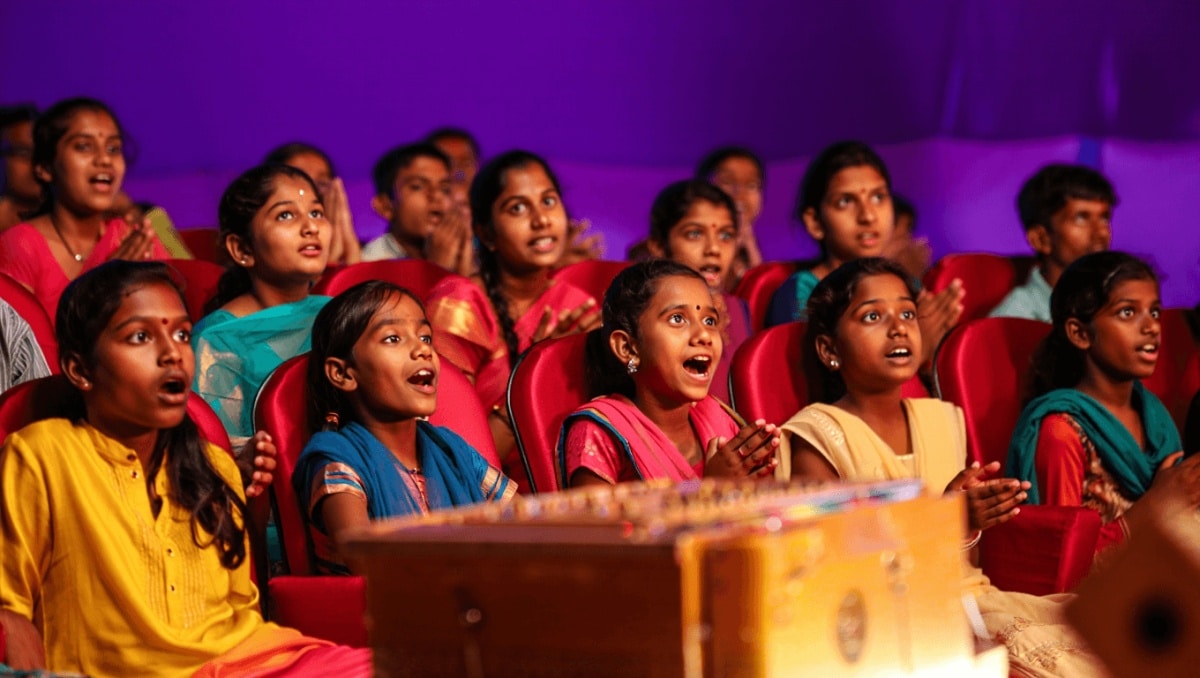
Last weekend a photo from a south Mumbai auditorium landed in my inbox: a violet-lit stage, a harmonium at center, and an audience far younger than the usual satsang crowd, singing along to live devotional music. The picture captures more than a moment — it points to a quiet cultural shift unfolding across Indian cities.
What used to read as an ironic mash-up of indie-night aesthetics and traditional worship now feels purposeful. A generation raised inside social media and therapy culture is turning toward communal practices that demand presence, repetition and shared rhythm — in other words, ritual.
Where this is showing up
The signs are visible and concrete. Ticketed devotional music nights are filling halls; tarot and astrology bookings are moving from fringe wellness festivals into everyday calendars; weekend markets sell crystals next to chai stalls. These behaviors are not limited to older spiritual seekers — they come from people in their twenties and thirties, often juggling career changes and digital burnout.
Annamalai applauds Bhagwat’s message on Muslim inclusion in India
Navratri in Times Square goes viral: social media splits over Indian celebrations abroad
- Kirtan and bhajan sessions in commercial venues, with crowds who stay for the communal experience, not just the aesthetics.
- Tarot and horoscope appointments scheduled weeks in advance by young professionals navigating life decisions.
- Crystal or ritual pop-ups that act as both market and low-stakes space for emotional exchange.
- Apps for astrology and ritual-reading used alongside — sometimes before — job alerts and social feeds.
Not just a trend for the Instagram feed
It would be easy to dismiss these scenes as another layer of lifestyle content: pretty props, shareable moments, spiritual practice reduced to a backdrop for personal branding. That reading captures part of the story, but it misses the experiential core. When large groups chant together or participate in a shared rite, people report measurable relief from isolation and a stronger sense of belonging — effects that feel immediate, not performative.
The key distinction is that many participants are not borrowing practices from a marketing playbook; they are reclaiming practices that were already present in domestic and community life, but which younger people often found awkward or embarrassing growing up. The shame attached to public devotion has eased, and that has allowed older forms of collective meaning-making to re-enter contemporary life.
Why this matters now
The cultural moment helps explain the appeal. We are a generation unusually fluent in the mechanics of distraction — prime users of what is often called the attention economy. Algorithms train us to live in a perpetual state of near-satisfaction: notifications that almost fill the space but never completely do. Ritual offers the opposite: a bounded, deliberate experience that demands focus and returns a sense of completion.
There are broader implications to watch for:
- Social health: Regular communal practices can reduce loneliness and provide social scaffolding outside digital networks.
- Mental well‑being: Repetitive, embodied activities — singing, prayer, ceremony — can help regulate stress and anxiety in ways that talk therapy or apps sometimes do not.
- Markets and culture: Businesses and artists are adapting: venues, events, and products are monetizing these forms while also making them more accessible.
- Cultural continuity: The re-emergence of local traditions reshapes how younger people connect to heritage, often on their own terms rather than through institutional channels.
None of this is uniform. Adoption varies by city, community and personal history. Some participants are more interested in the social scene or the aesthetic; others treat these gatherings as a serious source of comfort. What unites them is a search for experiences that feel whole rather than fragmented.
For readers, the practical takeaway is simple: the return to communal ritual is not just nostalgia or commodified spirituality. It’s a response to the conditions of modern digital life — and it is remaking how a generation finds meaning, support and continuity. Whether you join a chanting night, book a reading, or simply notice how these forms enter public spaces, this cultural turn is likely to reshape social life in Indian cities for years to come.