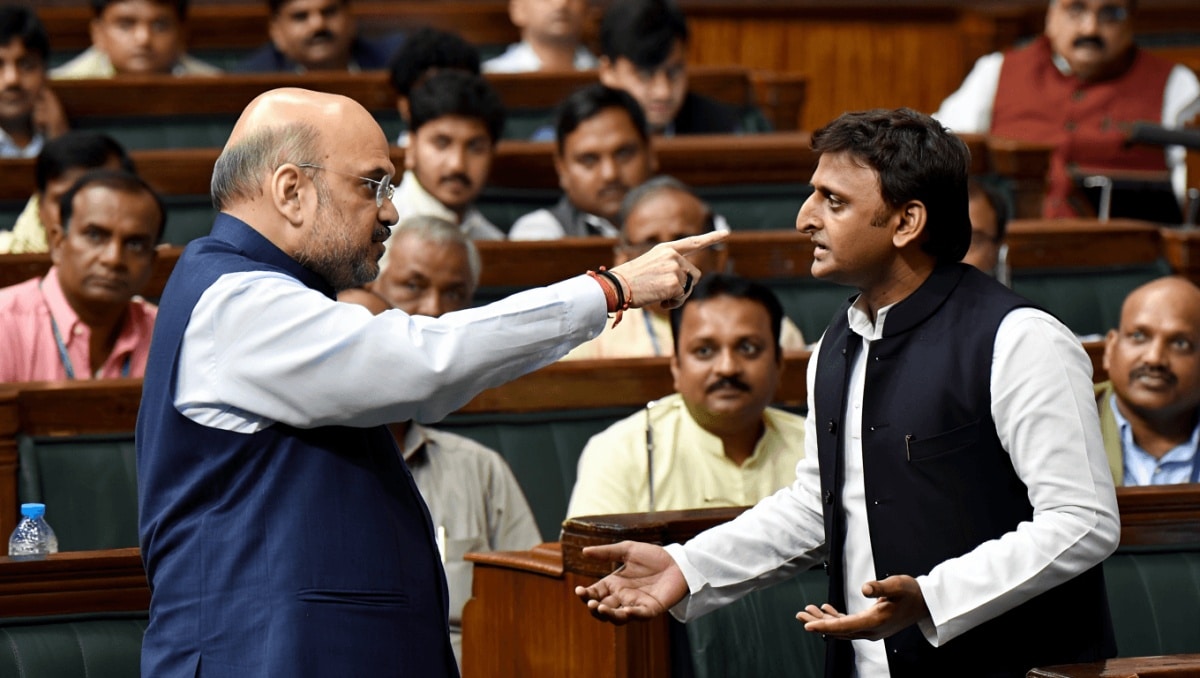
A sharp confrontation broke out in Parliament on Thursday as lawmakers debated a package of bills tied to constituency redrawing and a proposed quota for women. The clash — led by Home Minister Amit Shah and Samajwadi Party leader Akhilesh Yadav — focused on the timing and methodology of a plan that could reshape representation ahead of the next general election.
The core of the dispute is the proposed Women’s Reservation Bill and the broader delimitation exercise accompanying it. The government says the measures are needed to implement quotas for women and to rebalance seats, while opponents warn the move relies on outdated population data and sidesteps demands for a fresh, caste-based census.
Yadav pressed the ruling party over what he described as a rush to push through women’s reservation without first completing an updated population count. He argued that any major reallocation of political representation should follow a new enumeration that includes social group data, not precede it.
Shah Rukh Khan used the name Abinav to ease in-law worries: Gauri adopted Ayesha during nikaah
Javed Akhtar hails Hindu festivals as cultural glue: throwback of atheist celebrating resurfaces
Responding in the Lok Sabha, the home minister countered that the census cycle is already underway and that a caste-related count will follow the current house-listing stage. He framed the exercises as sequential steps in a nationwide process and defended the government’s timetable.
The exchange turned sharper when constitutional limits on reservation were raised. The home minister reiterated the position that religiously based quotas would conflict with the Constitution, while the opposition probed whether provisions would leave certain groups — including Muslim women — outside existing reservation ceilings.
The Speaker, Om Birla, intervened repeatedly, asking members to keep to parliamentary decorum as the debate escalated.
- What the amendment seeks: Increase the maximum size of the Lok Sabha from 543 to up to 850 seats to accommodate reserved constituencies for women.
- Delimitation basis: Redrawing of parliamentary and assembly boundaries would use the 2011 Census as the baseline for population-linked seat distribution.
- Government claim: Census operations, including house-listing, are in progress and a caste enumeration is planned subsequently.
- Opposition concerns: Relying on 2011 data risks misrepresentation; demands for a fresh caste-based census before delimitation remain unresolved.
- Legal and political stakes: The move could prompt constitutional challenges and reshape party strategies ahead of the 2029 general election.
Under the proposed framework, constituency boundaries would be revised and the number of seats in state assemblies and Parliament could change significantly. That has immediate consequences for political parties planning candidate selection and for voters in regions likely to gain or lose representation.
Critics say anchoring a major overhaul to the 2011 figures will fail to reflect demographic shifts of the past decade plus, potentially skewing representation toward areas with slower population growth. Proponents argue that delimitation is a necessary procedural step to operationalize women’s reservation and to refresh constituency maps.
The debate leaves several practical questions hanging: the exact timeline for carrying out a caste enumeration, whether any increase in Lok Sabha seats will be phased in before 2029, and how courts might rule on challenges to religion-based reservation claims. Parliament resumed detailed discussion on the amendment, but consensus remains distant.
For voters and political observers, the outcome matters now because it determines how constituencies will be configured and who gains priority access to nominations — decisions that will shape the electoral battlefield well before the next general election.