Show summary Hide summary
- Dates and muhurat at a glance
- The origin: what the bonfire commemorates
- How Holika Dahan is typically performed
- Safety and eco-conscious practices
- What Holi teaches: spiritual themes
- Braj Holi 2026: schedule for the region (Vrindavan, Barsana, Mathura and nearby)
- Mantras often recited at Holika Dahan
- Quick FAQs
Holi 2026 is approaching, and this year’s observances combine ancient ritual, regional pageantry and practical safety concerns for participants. Below you’ll find the confirmed dates, the traditional timing for Holika Dahan, guidance on rituals and mantras, the full Braj Holi calendar, and sensible tips for celebrating responsibly.
Dates and muhurat at a glance
Officially, the bonfire ritual known as Holika Dahan falls on the evening of March 2, 2026, and the main day of colors—often called Rangwali Holi or Dhulandi—takes place on March 3, 2026. Exact ceremonial hours depend on local tithi and sunrise/sunset calculations.
Annamalai applauds Bhagwat’s message on Muslim inclusion in India
Navratri in Times Square goes viral: social media splits over Indian celebrations abroad
| Date (2026) | Event | Notes |
|---|---|---|
| March 2 (Mon) | Holika Dahan | Performed after sunset during Pradosh Kaal when Phalguna Purnima is in force; avoid Bhadra period |
| March 3 (Tue) | Rangwali Holi / Dhulandi | Main festivities, colors and social gatherings |
Why this matters now: With travel picking up and large gatherings returning to pre-pandemic levels, planning ahead—timings, safety measures and local rules—matters for everyone who wants to take part in Holi 2026.
The origin: what the bonfire commemorates
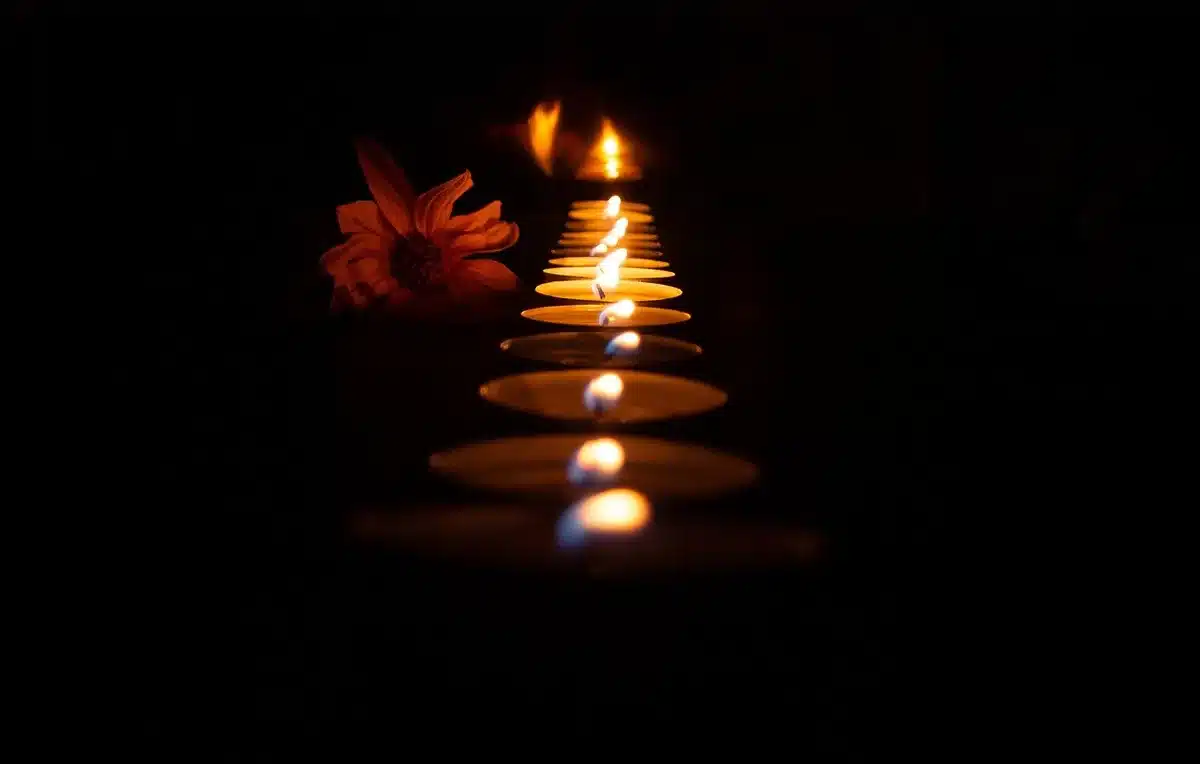
The Holika bonfire marks a Puranic episode in which unwavering devotion is vindicated against tyranny. A prince who refused to renounce his faith survived an attempt by a fire‑protected relative to destroy him.
The upshot of the story: rituals surrounding the fire symbolize the collapse of ego and harmful tendencies while celebrating the protection afforded to genuine devotion. Communities light the fire to mark that moral and spiritual victory.
How Holika Dahan is typically performed
Local customs vary, but the ritual sequence follows a familiar pattern across regions.
- Assemble the pyre: dry wood, cow dung cakes or compatible offerings form the base.
- Construct a symbolic effigy or place an icon representing Holika.
- Offerings commonly include raw coconut, wheat, chana (gram), mustard seeds and turmeric—each offered with a short prayer.
- Devotees circumambulate the fire three or seven times, praying for the removal of negativity and obstacles.
- Many families collect a pinch of the cooled ash the next morning as a protective token.
Important timing note: perform the ritual during Pradosh Kaal on Phalguna Purnima and avoid any ceremony during the Bhadra interval; consult a local Panchang for precise muhurat.
Safety and eco-conscious practices
Modern Holi blends celebration with safety and environmental responsibility.
- Prefer plant-based colors—turmeric, beetroot powder, multani mitti and floral powders such as palash or tesu.
- Protect skin and hair: apply coconut oil or a light barrier oil; wear cotton, long-sleeved clothing.
- Avoid chemical hues and plastic water balloons; minimize water use where possible.
- Respect consent and personal boundaries: never force color on someone or exploit intoxication.
What Holi teaches: spiritual themes
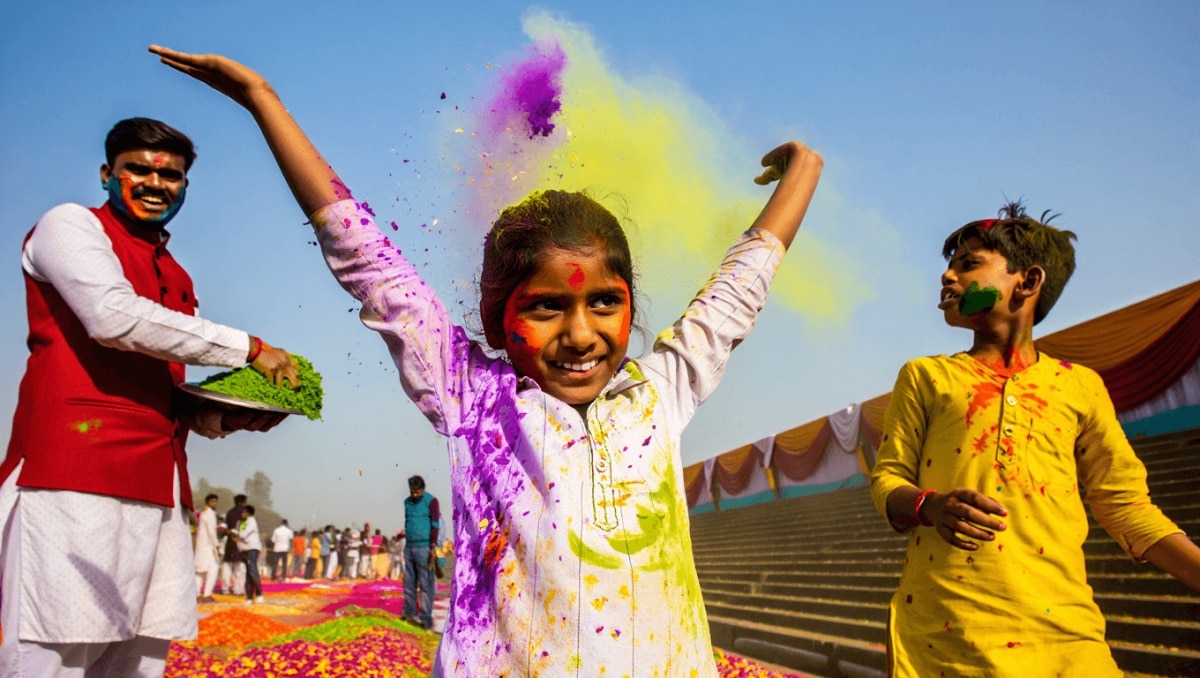
Beyond its social exuberance, Holi carries several layered messages. The bonfire invites participants to examine their internal obstacles—pride, jealousy, resentment—and let them go. Playing with color is a ritual equalizer: when faces are streaked with pigment, visible markers of status and division fade, if only briefly.
The festival is also a season for reconciliation—repairing relationships, seeking forgiveness and starting anew as the landscape turns to spring.
Braj Holi 2026: schedule for the region (Vrindavan, Barsana, Mathura and nearby)
Braj’s celebrations are long and distinctive, rooted in the legends of Radha and Krishna. The region’s calendar draws pilgrims and photographers from across India and the world. Below is a compact schedule of key events; times and small local variations are common.
| Date | Event | Place |
|---|---|---|
| Feb 25 (Wed) | Laddu Holi | Barsana (Radha Rani Temple) |
| Feb 26 (Thu) | Lathmar Holi | Barsana |
| Feb 27 (Fri) | Lathmar (return) | Nandgaon |
| Feb 28 (Sat) | Phoolon ki Holi / Widows’ Holi | Vrindavan (Banke Bihari area) |
| Mar 1 (Sun) | Chadimar Holi | Gokul |
| Mar 2 (Mon) | Raman Reti Holi; Holika Dahan (evening) | Gokul; Mathura / Vrindavan (bonfires) |
| Mar 3 (Tue) | Dhulandi (Rangwali Holi) | Mathura & Vrindavan |
| Mar 5–6 | Huranga Holi / Baldev festivities | Baldev / Dauji Temple |
Travel tips for Braj Holi: expect heavy crowds, secure lodging well ahead, protect electronics and follow local temple and civic guidelines for safety and traffic.
Mantras often recited at Holika Dahan
Many devotees recite Vishnu-related mantras and protection hymns while lighting or circling the fire. Common chants include:
ॐ प्रह्लादाय विद्महे

हिरण्यकशिपु ध्वंसाय धीमहि

तन्नो विष्णुः प्रचोदयात् ॥
ॐ नमो भगवते वासुदेवाय ॥
उग्रं वीरं महाविष्णुं

ज्वलन्तं सर्वतोमुखम्।

नृसिंहं भीषणं भद्रं

मृत्युर्मृत्युं नमाम्यहम्॥
Recitation is commonly done in counts of 11, 21 or 108, depending on local custom and personal practice.
Quick FAQs
- When is Holi 2026? Rangwali Holi is on March 3, 2026; Holika Dahan is on the evening of March 2, 2026.
- What is Holika Dahan? A ceremonial bonfire that symbolizes the destruction of wrongdoing and the triumph of devotion.
- Why burn an effigy? The ritual recalls the Puranic episode where devotion survived an attempt to extinguish it; the fire represents the end of ego and malice.
- Are the colors symbolic? Yes—colors stand for joy, unity and the breaking down of social distinctions; in Krishna devotion they echo divine play (leela).
- Is Holi only religious? While rooted in Hindu scripture, Holi has wide cultural resonance and is observed by many as a social festival of renewal.
As Holi 2026 approaches, plan ahead, be mindful of others and favor sustainable choices. The festival’s core invitation—release what harms you and embrace renewal—remains relevant for individuals and communities alike.