Show summary Hide summary
Few medieval poets have crossed centuries with as much moral force as Narsinh Mehta. The 15th‑century Gujarati saint-poet turned intimate devotion into a public ethic that challenged caste hierarchies and spoke to later leaders — a legacy that still matters where debates over inclusion, faith and cultural memory are active today.
From silence to song
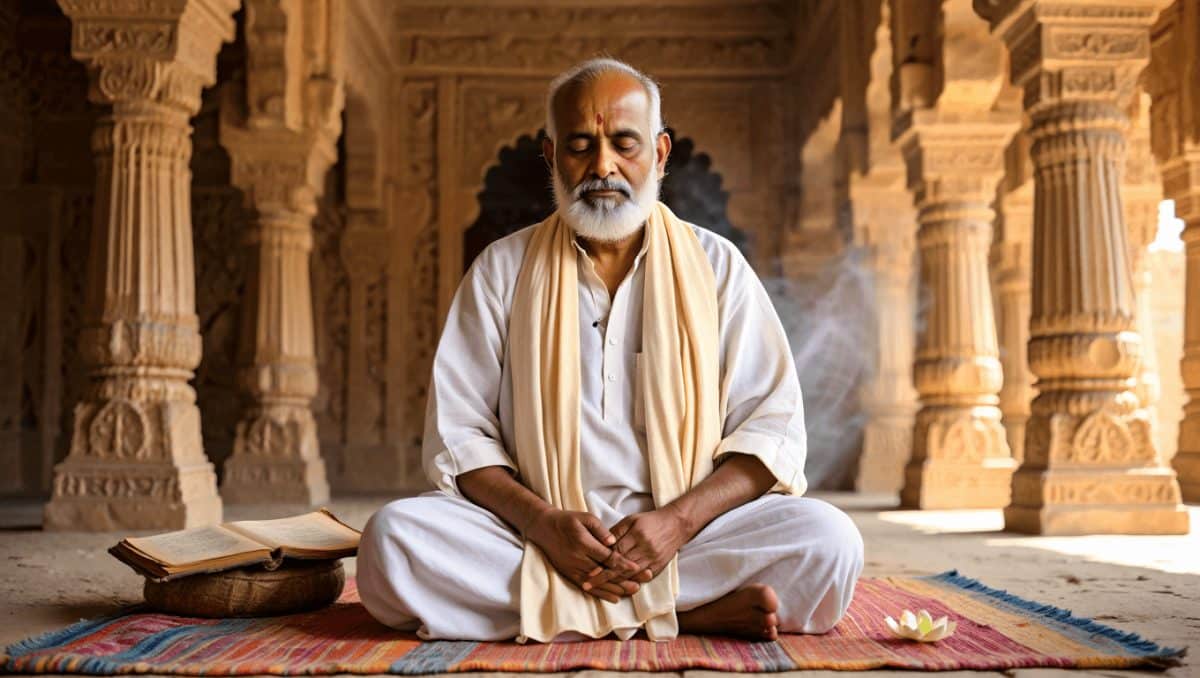
Born into a respected Nagar Brahmin family in western India, Narsinh Mehta’s childhood is wrapped in both scarcity of records and abundance of legend. Accounts say he lost his parents early, was raised by his grandmother, and did not speak until an encounter with a wandering ascetic prompted him to chant the names of Krishna. That moment is traditionally cast as the start of a lifelong devotion.
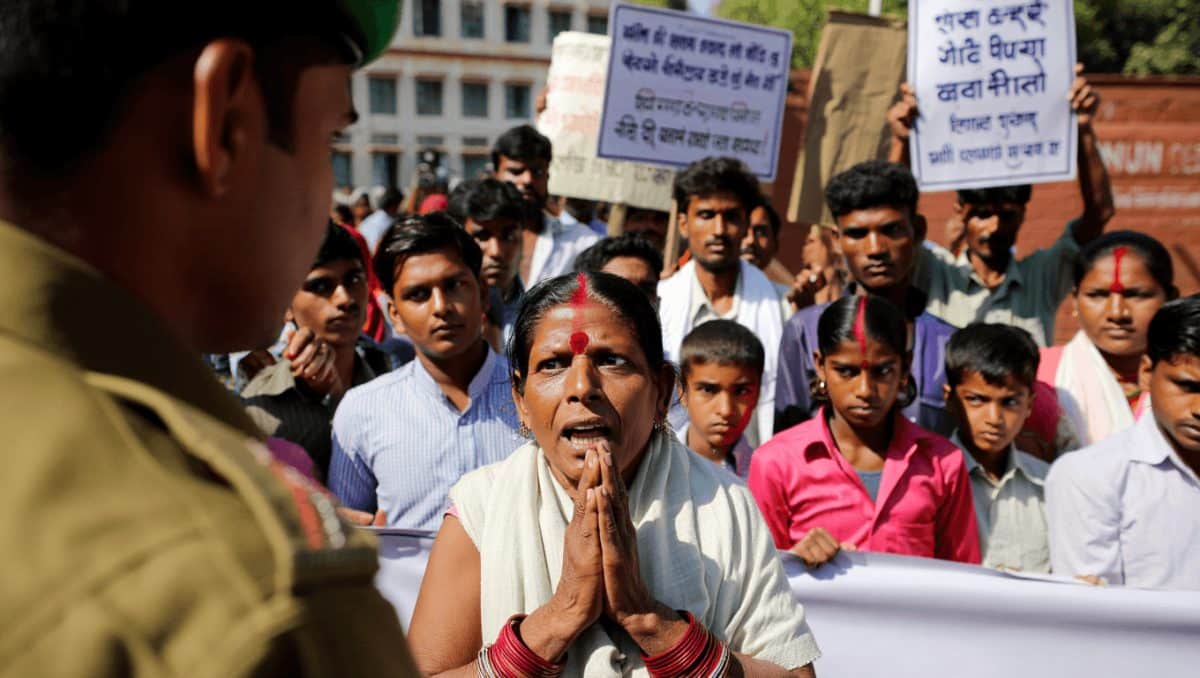
Pakistani Hindu refugees fight for rights and stability in India decades later
UCC push: Madhya Pradesh CM Mohan Yadav urges one-spouse rule across faiths
Rather than becoming a recluse, Mehta combined inward piety with public expression. He composed in the common tongue of his region so his poems and hymns could be sung and remembered by ordinary people — an intentional turn toward accessibility that helped his work spread beyond narrow ritual circles.
Devotion that refused social boundaries
Mehta’s writings radiate an inclusive spirituality. His songs celebrate a personal, intense love of the divine — often framed through the imagery of the rasa lila, the ecstatic circle dance of Krishna and his devotees — while also honoring broader, formless notions of the sacred. He did not elevate one theological school above another; his repertoire includes praise for Shiva alongside his Krishna devotion.
Because he welcomed devotees of varied backgrounds to sing and dance together, Mehta repeatedly provoked the ire of elite religious figures who equated birth status with spiritual worth. The poet’s response was never polemical. His practice and poetry emphasized shared humanity and the spiritual potential in every person.
- The wedding miracle: Facing social snubs and the prospect of humiliation at his son’s marriage, Mehta is said to have returned with sudden, miraculous abundance — a story told to illustrate that devotion, not wealth, secures dignity.
- The garland test: When a king demanded proof of Mehta’s saintliness, legend holds that his persistent singing finally compelled the deity to place a garland around the poet’s neck, reversing royal contempt into contrition.
- Feast and humility: After priestly opponents excluded him from a communal meal, those same hosts are said to have found their food spoiled until they invited Mehta back — a parable about pride and social exclusion.
Why these stories endured
Mehta’s songs are short, direct and meant to be performed, which made them durable in oral cultures and adaptable over generations. They convey ethical claims — compassion, truthfulness, respect for women and the poor — inside devotional language, allowing spiritual practice to double as social teaching.
His best‑known hymn, often translated as Vaishnava Jana, outlines the qualities of a true spiritual person in terms that transcend Hindu doctrine: empathy, humility, nonviolence and inner pilgrimage. Those lines became part of the repertoire of Mahatma Gandhi, who kept Mehta’s songs in his ashram prayer book and cited the poet as a moral resource during India’s struggle for independence.
Scholarship and reception
Modern historians and literary scholars note that Mehta’s biography mixes verifiable facts with devotional storytelling. Yet that blend is itself revealing: the stories functioned as moral exemplars, modeling an ethic that listeners could reproduce in their own lives. Scholar Neelima Shukla‑Bhatt, among others, argues that the saint-poet’s emphasis on voluntary poverty and empathy offered Gandhi both a personal example and a rhetorical toolkit for public life.
Across Gujarat and the Indian diaspora, Mehta remains a touchstone for debates about faith and social equality. His songs are still sung in communal prayer meetings, festivals and political gatherings where cultural memory is invoked to support contemporary ideals.
What this means for readers now
At a time when questions of inclusion, religious pluralism and cultural heritage are prominent in public conversation, Mehta’s story offers a historical example of devotional practice used as a force for social equality. His legacy suggests that spiritual language can be enlisted in defense of dignity — and that accessible forms of culture, like vernacular song, can reshape who belongs in the public sphere.
Whether encountered as literature, religious history or social lesson, Narsinh Mehta’s life invites a simple test: do our spiritual commitments widen or narrow our circles of care? The answer he modeled — that devotion should expand compassion — helps explain why his voice still resonates across centuries.