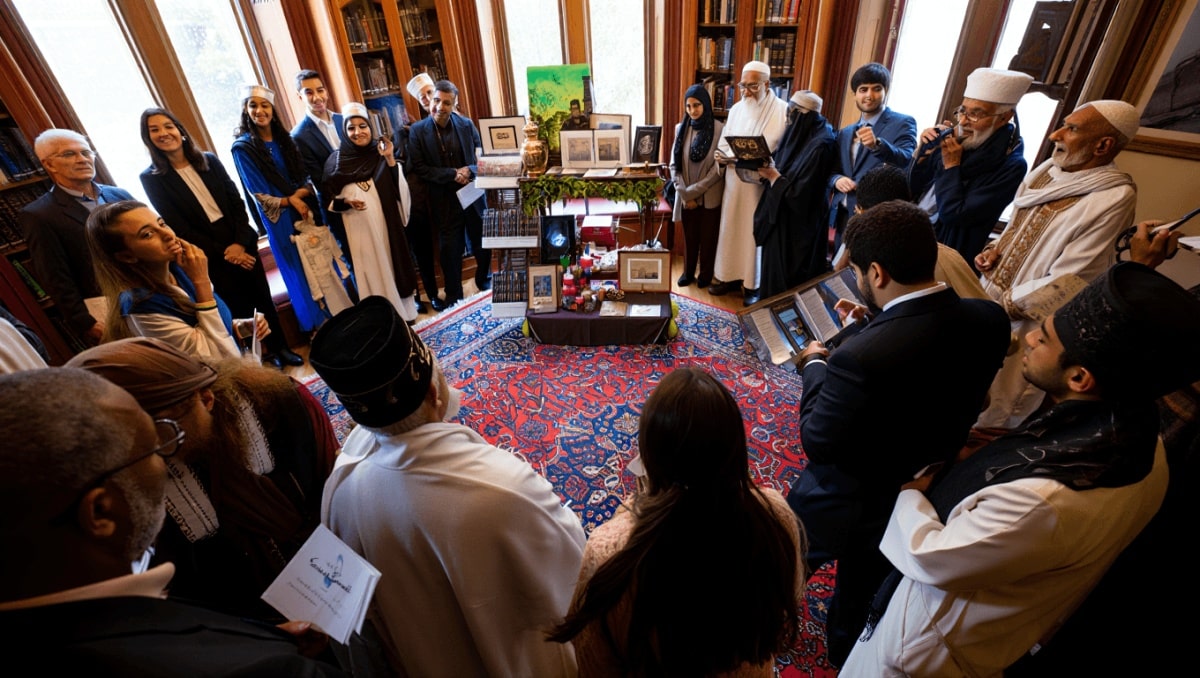
On October 10–11, 2025, the Zoroastrian Association of Houston marked the 25th anniversary of its community library with two days of talks, performances and archival showcases — an event that underscored how cultural memory is shifting from paper to pixels. The celebration highlighted both the library’s growth into a major North American repository and urgent questions about how small heritage collections should adapt to the digital age.
The ZAH Library began as a personal project and has expanded into a resource widely used by scholars and community members. Founded by Aban Rustomji, the collection now holds more than 1,600 volumes and related items and is considered one of the largest Zoroastrian-focused libraries on this continent.
Guests at the anniversary were reminded that the library’s work goes beyond shelving books: its stated purpose is to assemble materials on Zoroastrian religion, history and culture so they remain accessible to future generations. That mission framed a weekend program organized under the theme From Scroll to Screen: Archiving Zoroastrian Manuscripts in the Digital World.
Annamalai applauds Bhagwat’s message on Muslim inclusion in India
Navratri in Times Square goes viral: social media splits over Indian celebrations abroad
A crowd gathered for an opening benediction by a young Ervad, speeches by community leaders and a short film featuring committee members reflecting on what the library means to them. A gala dinner closed the first evening; a slate of academic talks filled the second day.
- Date: October 10–11, 2025
- Location: Zarathushti Heritage and Cultural Center, Houston
- Collection size: More than 1,600 books and materials
- Founding figure: Aban Rustomji
- Speakers: Dr. Dan Sheffield (Princeton) and Dr. Afshin Marashi (University of Oklahoma)
- Partnerships: FIRES/FEZANA, Museum of Fine Arts Houston, Rice University oral history project
Dr. Dan Sheffield opened Saturday’s program with a talk that examined what scholars mean when they use the word manuscripts. He challenged simple definitions — a recipe book, a liturgical scroll, or a printed pamphlet can all count depending on context — and mapped the variety of Zoroastrian documentary forms researchers rely upon. Sheffield also raised practical questions about organizing the metadata that accompanies these materials, suggesting that new tools, including machine learning, could play a role in indexing and discovery.
After lunch, Dr. Afshin Marashi traced how Parsi communities in India helped revive interest in Iran’s classical past through print culture and philanthropy in the 19th and early 20th centuries. His talk framed historical preservation as an international, technological and social process: steam-era travel, print networks and charitable funding all reshaped how communities remembered and reclaimed their heritage.
The presentations sparked a lively Q&A. Attendees probed issues that will determine the library’s next phase: digital accessibility, copyright and how to prioritize which materials get digitized first. Several longtime volunteers noted the emotional value of handling fragile items in person, even as younger researchers pressed for remote access.
Longtime supporters were recognized during the program. Early donors helped secure the library’s physical home in 2000 as part of a second phase of development at the heritage center. The library has also become the regional hub for FIRES (FEZANA Information, Research and Education System), which aims to centralize Zoroastrian scholarly materials in North America.
Collaboration with cultural institutions was another theme. Representatives described ongoing work with the Museum of Fine Arts, Houston, and an oral history initiative with Rice University that is documenting community stories — projects that expand the library’s reach beyond bookshelves into public memory.
The weekend mixed scholarship with celebration: musical performances and communal meals reinforced that the library functions as both research center and social space. Organizers emphasized stewardship — conserving fragile items, improving cataloguing and making collections discoverable online — as priorities for the coming years.
What this means for readers and researchers: access will likely improve if digitization moves forward, but decisions about selection, funding and technical platforms will shape who benefits. The debate is timely because small cultural libraries nationwide face similar choices as digitization becomes standard practice.
As the ZAH Library looks toward its next quarter-century, organizers say their objective remains the same: protect and share Zoroastrian heritage while adapting to changing technologies and audience needs. For a community institution that began with a few donated volumes, the anniversary was both a retrospective and a call to plan for a digital future.