Show summary Hide summary
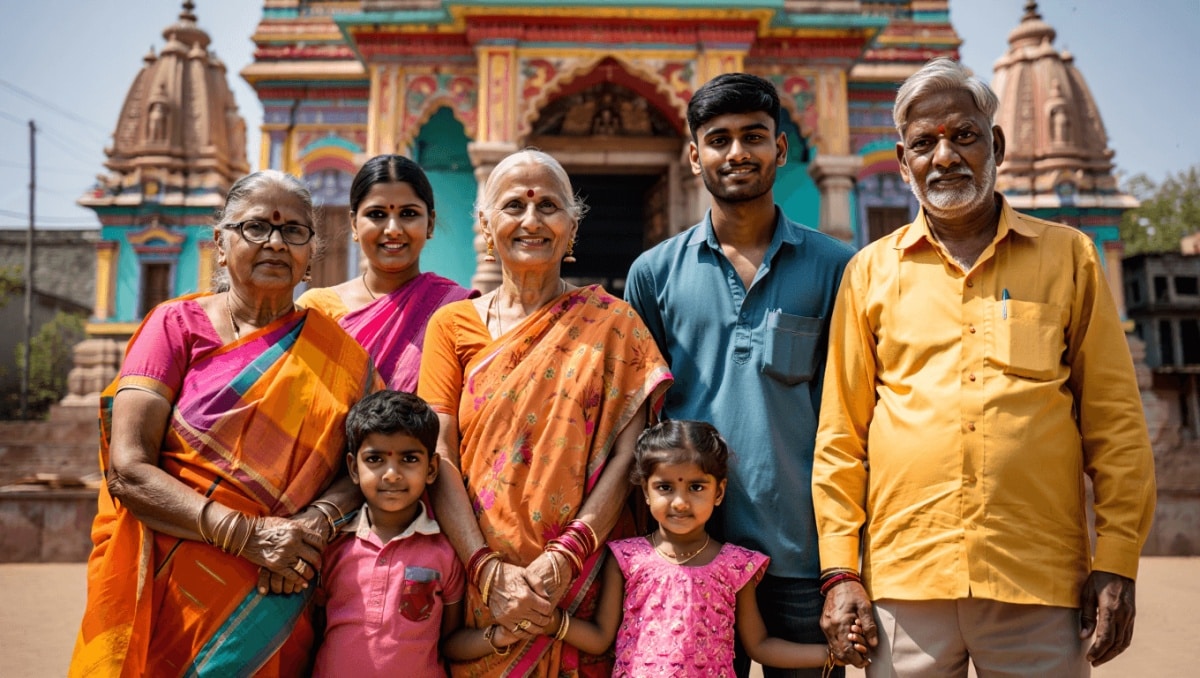
A 155-member family recently spent two weeks touring Gujarat, combining temple pilgrimage with sightseeing and structured family learning. Their trip—spanning four generations and a wide mix of rituals, games and conversations—illustrates how multigenerational travel is being used today to preserve traditions, transfer practical skills and reinforce emotional support networks.
What began as a promise within one branch of the Pallod family has become a recurring decades‑long practice: organized journeys that move between sacred sites and civic landmarks, where young children and octogenarians travel, pray and learn together.
Roots, ritual and practical purpose
The outings trace back to a commitment to visit Badrinath and have since expanded to cover temples across India. On the most recent trip, the group left Baroda and visited Ektanagar to see the Statue of Unity, then continued through a mix of temple darshans, aartis, museums and factory tours. The itinerary was deliberately balanced—spiritual stops alongside educational visits that stretched conversations beyond family lore.
Annamalai applauds Bhagwat’s message on Muslim inclusion in India
Navratri in Times Square goes viral: social media splits over Indian celebrations abroad
Family elders played a central role. Their stories and practices supplied the thread that connected generations: religious faith and Sanskrit chanting, commercial know‑how, civic awareness and a habit of listening that younger members say they still emulate. In turn, the younger adults introduced contemporary tools and topics such as basic financial literacy to the teens, a pragmatic session framed as mentoring rather than formal instruction.
How the trip worked on the ground
Travel logistics were kept simple: shared buses, communal meals and nightly gatherings where the family rotated activities to suit each age group—word games for the oldest generation, card games for middle‑aged relatives, bluffing games among teens and playful role‑play for the little ones. Those long travel hours doubled as informal classrooms and relationship‑building time.
- Group size: 155 relatives across four generations, ages ranged from three to 81.
- Duration: About 10 days of organized visits, plus travel time to and from the home city.
- Key stops: Ektanagar and the Statue of Unity, several Gujarat temples commonly grouped as a regional dargah/dham circuit, plus museums and an industrial visit.
- Activities: Daily darshan and aarti, intergenerational panels, skill‑sharing sessions, evening entertainment and communal reflections.
These elements combined to produce what family members described as an emotional and practical education—an exchange of values and know‑how that formal schooling rarely provides.
What younger family members gained
For adolescents and recent adults, the trip offered more than nostalgia. Mentoring sessions covered mental wellbeing and community service, while financial discussions gave basic exposure to saving, investing and handling money—topics parents and grandparents found important to pass on. One new member of the family said that the close ties with grandparents helped ease the blending of two families after an engagement, underscoring how longstanding family routines smooth social transitions.
The presence of elders also served as a living example: blessings became moments of reflection for younger relatives, not merely ritual. Several attendees reported returning home with renewed resolve to sustain family connections and continue the exchange of practical skills.
Family networks as social infrastructure
Beyond the immediate pleasures of shared meals and collective prayer, the trip highlighted the role of extended families as a form of social insurance. Members described mutual support during celebrations and crises alike—shared grief is shouldered collectively, and successes are celebrated as group achievements. Those intangible benefits—emotional steadiness, a sense of belonging—are growing in significance as families navigate economic and social change.
The Pallod gatherings also function as a conduit for cultural transmission. Values, rituals and workplace savvy moved across the age groups: grandparents handed down principles and stories; middle generations conveyed civic awareness and the nuts and bolts of daily life; younger adults supplied contemporary skills and frameworks.
Takeaways for other families
The Pallods’ model is not prescriptive, but it offers adaptable lessons for households that want closer ties without a huge budget or complicated planning. Small, regular practices—shared meals, a monthly visit to a relative, or a short weekend trip—can achieve many of the same outcomes the large pilgrimage produced.
- Prioritize mixed‑age activities that invite participation from all generations.
- Combine cultural or spiritual time with practical sessions (finance, wellbeing, civic topics).
- Use travel or shared rituals as structured opportunities for mentorship and storytelling.
- Keep logistics simple: shared transport, communal meals and predictable daily rhythms reduce friction.
For communities and regional tourism planners, these kinds of multigenerational trips also matter: they sustain interest in pilgrimage circuits and local attractions while supporting services that cater to wide age ranges.
The Pallod family’s most recent trip was, by their account, a renewal as much as a continuation—another chapter in an ongoing practice that stitches private memory to public place. Whether through a two‑week pilgrimage or a simple family dinner, the underlying lesson is similar: regular, intentional contact between generations strengthens ties and passes on the skills families need to navigate today’s world.
Ira Sharda is a first‑year undergraduate in Biomedical Engineering at McMaster University, Canada.