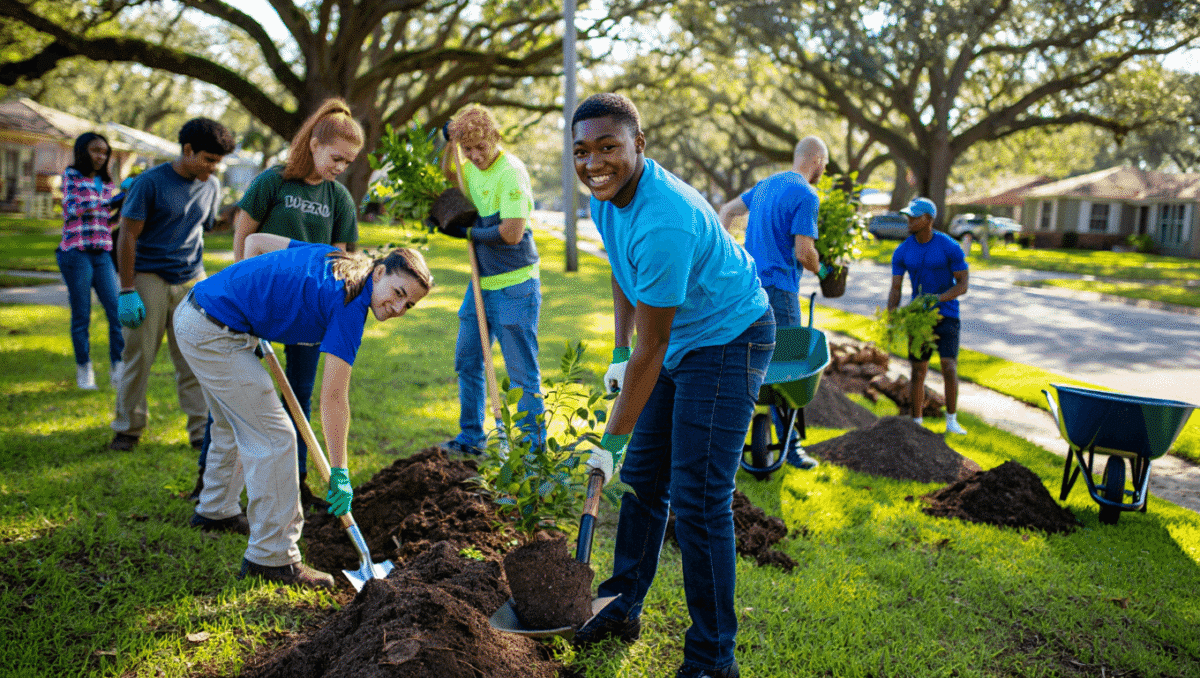
On Feb. 21, 2026, volunteers in Houston’s Alief neighborhood set the ground for a larger effort to tame rising local temperatures: more than 100 people planted 202 native trees along Dairy Ashford Road as part of a multi-year campaign that began in early 2025 to install roughly 1,000 trees across the district. The work aims to blunt the effects of hotter streets and make cooling more accessible for the area’s most vulnerable residents.
The event, organized by Sewa International and supported by the Alief Super Neighborhood Council, focused on three-gallon native saplings donated by Trees for Houston. City environmental specialists and municipal staff were on hand to advise on spacing, soil preparation and mulching, while an on-site Houston Police officer helped ensure safety during the two-hour push.
Students and neighborhood volunteers carried out the planting, digging holes, setting root balls and spreading mulch under the supervision of experienced team members. The choice of local species reflects a deliberate strategy: native trees are better adapted to Houston’s climate, need less supplemental water once established and typically require lower maintenance over time.
Pakistani Hindu refugees fight for rights and stability in India decades later
UCC push: Madhya Pradesh CM Mohan Yadav urges one-spouse rule across faiths
Why this matters now
Alief has registered higher daytime temperatures than many other parts of greater Houston, a pattern experts link to the urban heat island effect. Those heat disparities have tangible consequences: increased health risks for children and older adults, higher energy bills for households without reliable cooling, and greater strain on public services during heat waves.
Planting trees addresses several of these pressures simultaneously. A maturing street canopy provides shade that lowers surface and air temperatures, reduces energy demand for nearby buildings, and improves pedestrian comfort. Municipal budgets can also benefit from lower mowing and landscape-management costs when tree cover replaces large expanses of turf.
- Immediate gains: shade, community engagement, and reduced surface temperatures at planting sites
- Medium-term benefits: lower cooling demand for nearby homes, improved air quality and stormwater interception
- Long-term outcomes: expanded canopy cover, reduced municipal maintenance costs and increased neighborhood resilience to extreme heat
Organizers report that the Feb. 21 planting was part of Sewa’s ongoing Day of Service programming and one milestone in a campaign that aims to reach the 1,000-tree mark. The 202 trees were installed in about two hours, a logistical effort that included soil prep, planting and cleanup.
Beyond environmental returns, volunteers said the event fostered local connections and offered hands-on learning for younger participants. City staff and environmental advisers will monitor the new plantings to ensure proper establishment during the critical first seasons.
For Alief residents, the project is a small but tangible step in addressing neighborhood heat disparities. As the canopy grows, officials and community leaders say they expect measurable relief on the hottest streets and incremental savings for households and the city alike.