Show summary Hide summary
On May 1, 2026 the full moon of Vaishakha will illuminate an event observed across Asia: Buddha Purnima, also known as Vesak. The date matters now because the lunar timing, historic sites, and public gatherings bring together religious observance, pilgrimage travel, and local festivals at a moment when many communities will mark the life, teaching, and passing of the Buddha.
The calendar details that govern the day
The lunar day or Purnima connected to Vaishakha begins the night before. This year the tithi starts at 9:12 PM on April 30 and formally ends at 10:52 PM on May 1, but observance typically follows the tithi that is in effect at sunrise — the Udaya Tithi. For observers, that rule determines which day’s rites are performed.
Annamalai applauds Bhagwat’s message on Muslim inclusion in India
Navratri in Times Square goes viral: social media splits over Indian celebrations abroad
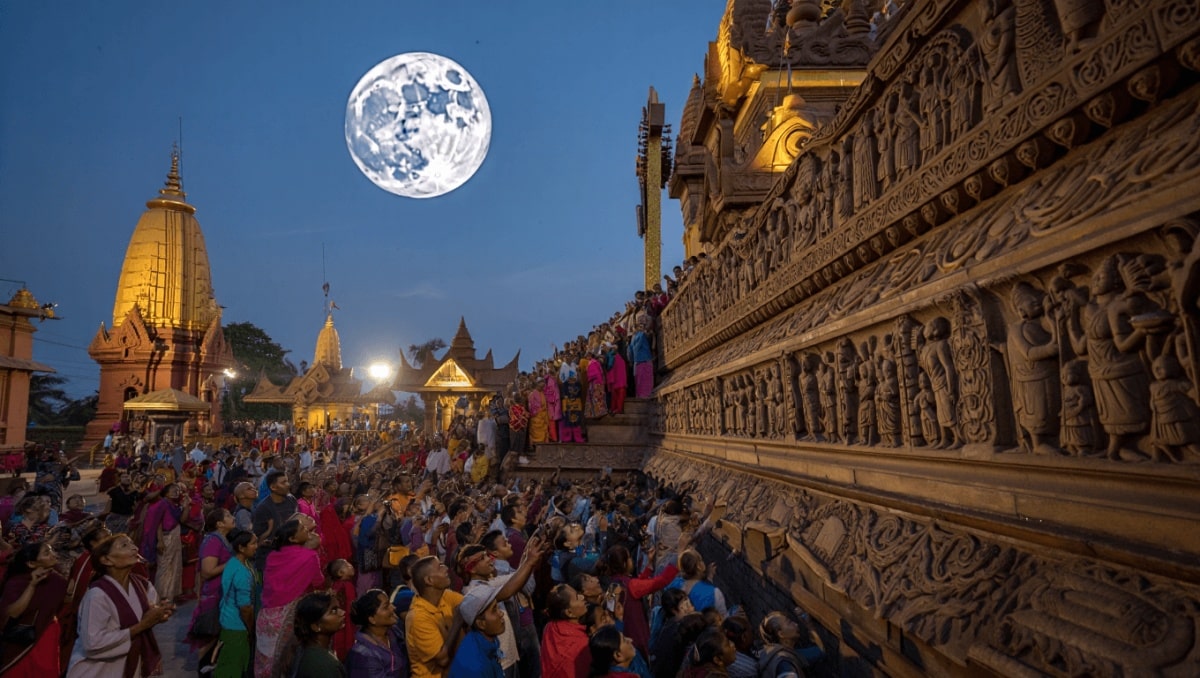
Practical times for May 1, 2026: the full moon will rise around 6:52 PM and remain visibly full through the night, setting about 5:32 AM on May 2. Those hours are when temples and monasteries tend to be busiest, and when many lay practitioners schedule rites or extended meditation.
Sacred meaning across traditions
For Buddhists, Vesak commemorates three linked events in the Buddha’s life: his birth at Lumbini, his awakening beneath the Bodhi tree at Bodh Gaya, and his final passing (Mahaparinirvana) at Kushinagar. Tradition holds that these occurred on the same Vaishakha full moon day, folding separate decades into a single liturgical observance.
Many Hindus also observe the day. In parts of the Sanatan tradition, the Buddha is honoured as an avatar of Vishnu, and Vaishakha Purnima overlaps with other observances such as Kurma Jayanti and rituals invoking Vishnu’s names. In practice this creates overlapping ceremonies — puja, recitation, and bathing rites — often conducted in the same region and sometimes at the same shrines.
Siddhartha’s turning point
The outline of the Buddha’s life is familiar but striking in its psychological drama. Born into privilege around the sixth century BCE, Siddhartha Gautama spent his early years sheltered from suffering. He left the palace after encountering age, sickness, death and a contemplative wanderer — an experience that redirected his life.
He tried scholarly training and extreme asceticism, but neither satisfied his inquiry. At Bodh Gaya he accepted basic nourishment, took a seat beneath a sacred fig, and resolved to remain until he had solved the problem that had driven his search: what causes human suffering, and how can it stop? By the following dawn, under the light of a Vaishakha full moon, he came to the insight that set the foundations of his teaching.
What he taught, simply put
At the heart of his message were a compact set of observations and a practical path. The Buddha identified a condition of pervasive dissatisfaction; named its primary driver as craving; asserted that this condition can end; and described a systematic course of practice that leads to release.
These are commonly summarized as the Four Noble Truths and the Noble Eightfold Path. Far from abstract dogma, the Eightfold Path — including dimensions of view, intention, speech, action, livelihood, effort, attention, and concentration — is presented as a way of reordering daily life and attention so that the mind’s habit of clinging loosens.
Pilgrimage sites people still visit
Buddhist tradition highlights four principal places tied to the Buddha’s life. They lie within a few hundred kilometres of each other in modern Nepal, Bihar and Uttar Pradesh and form a compact circuit frequently visited at Vesak.
- Lumbini (Nepal) — The site of Siddhartha’s birth, with the Mayadevi shrine and an Ashokan pillar; visitors often note a quiet, contemplative atmosphere in the gardens.
- Bodh Gaya (Bihar) — Where awakening occurred; the Mahabodhi Temple and the descendant of the Bodhi tree are focal points for dawn chanting and overnight meditation on Purnima nights.
- Sarnath (near Varanasi) — The place of the Buddha’s first public teaching; the Dhamekh stupa marks where the early sangha gathered.
- Kushinagar (Uttar Pradesh) — Traditionally identified as the site of his Mahaparinirvana; the reclining Buddha image and surrounding shrines draw pilgrims who reflect on mortality and compassion.
Ways to mark Buddha Purnima at home
Not everyone can travel, and devotional practice has always accommodated inward observance. Below are accessible practices drawn from both Buddhist and Hindu observances; they are practical and non‑sectarian.
- Morning quiet — Wake before sunrise and spend a short period in stillness or gentle meditation during the Brahma Muhurta, when attention is naturally more lucid.
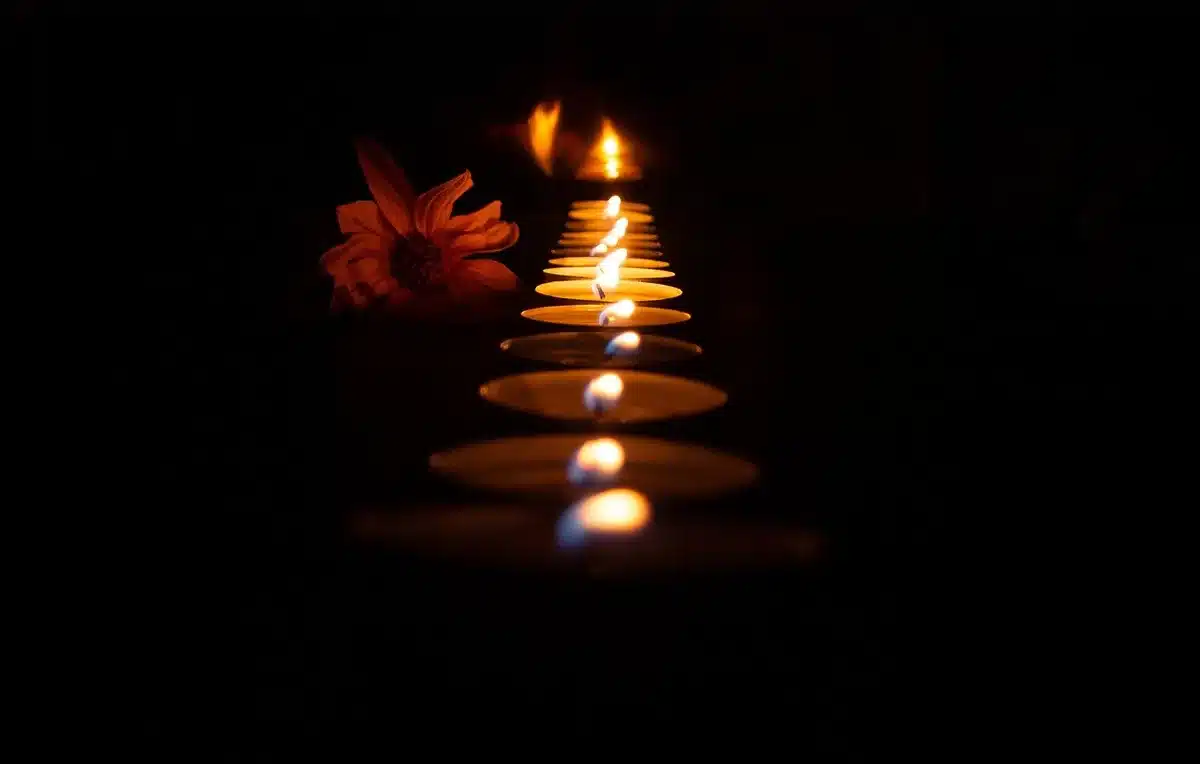
- Light a lamp — Lighting a single lamp at sunrise and again at moonrise is a simple symbolic gesture linking to the image of the lamp of the dharma.
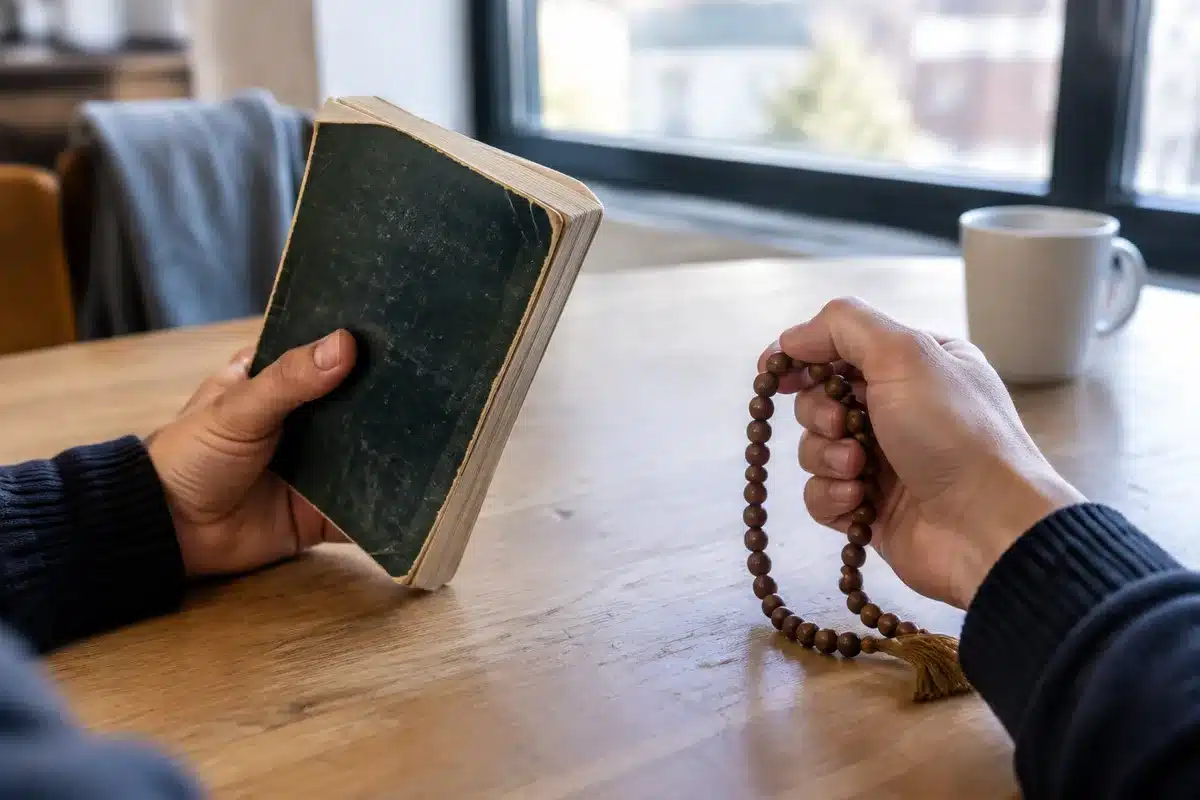
- Read or listen — Short passages from the Dhammapada, or select verses from devotional texts, can anchor reflection. Even a few minutes focus on a single passage can shape the day.
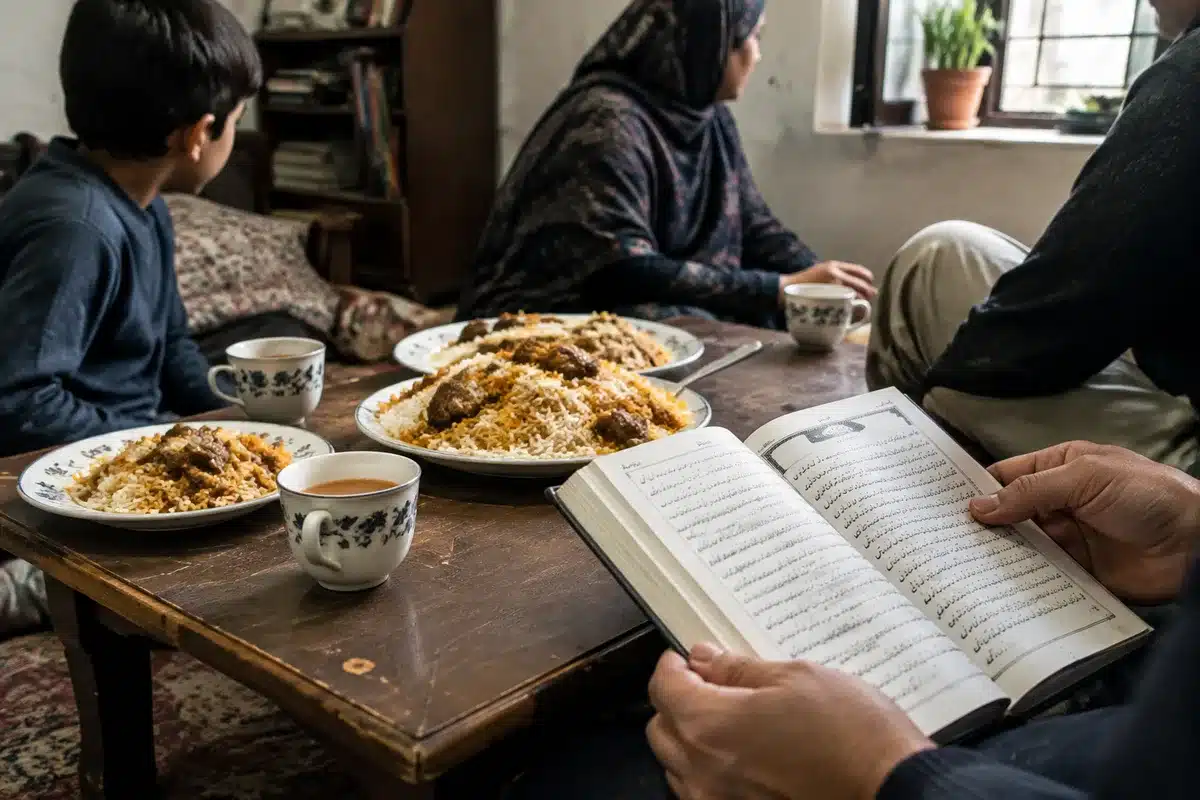
- Simple food — Choose fresh, vegetarian meals prepared with care. In many traditions, milk-rice (kheer) is offered in remembrance of the meal that sustained the Buddha before his final sitting.
- Generosity — Acts of giving — donating food, time, or attention — are central; charity is itself considered a practice, not merely a ritual.
- Mindful speech — Consciously avoid harsh or careless words for the day and practice listening more fully.
- Evening meditation — If possible, sit or meditate when the full moon rises (about 6:52 PM local time), alone or with a group, and allow the night to lengthen the practice.
Why this matters now
In an era dominated by distraction, Vesak offers a seasonal pause. The Buddha’s diagnosis — that much of our suffering arises from cravings and aversions — still maps onto contemporary life: the technologies and economies that fragment attention only intensify the patterns he pointed to.
Observing Buddha Purnima need not be doctrinaire. It can be a single disciplined day: a lamp lit at dusk, a deliberate act of generosity, a few measured moments of silence. Those small practices create an opportunity to test the claims the Buddha made — that attention can be trained, that craving can be loosened, and that a different quality of life is possible.
As the Vaishakha moon rises on May 1, 2026, it will be visible to millions who will choose to mark the night in prayer, meditation, study or quiet watching. Regardless of background, the festival offers an invitation: to stop, to look, and to consider whether a moment of attention might change the shape of a life.