Show summary Hide summary
- Origins and the poets who reshaped devotion
- From scattered songs to an enduring canon
- Theology made tangible
- Where the Divya Desams sit — a quick survey
- Five emblematic shrines and what they reveal
- Ritual practice and temple life
- Pilgrimage patterns and practicalities
- Festivals that animate the shrines
- Architectural and iconographic features
- Contemporary pressures and conservation
- What this means for readers
Across South Asia, a network of 108 sanctuaries dedicated to Vishnu shapes religion, architecture and pilgrimage for millions — and their relevance is resurging as devotees return to temples and conservation debates intensify. Understanding the Divya Desams today helps explain how medieval devotional poetry, ritual practice and regional politics continue to influence living faith and heritage management.
Origins and the poets who reshaped devotion
From roughly the 6th to the 9th century CE, a group of Tamil poet-saints transformed the landscape of Vaishnava devotion. Their hymns turned specific shrines into centers of liturgical memory and public worship, creating a canon that would orient centuries of pilgrimage.
Pakistani Hindu refugees fight for rights and stability in India decades later
UCC push: Madhya Pradesh CM Mohan Yadav urges one-spouse rule across faiths
The twelve singer-saints — commonly grouped under the name of the Alwars — came from varied social backgrounds and together produced the corpus that mapped these sacred sites. Their verses were later collected into what Sri Vaishnavas regard as the Tamil Veda.
- Poigai Alwar
- Bhoothath Alwar
- Pey Alwar
- Thirumazhisai Alwar
- Nammalwar
- Madhurakavi Alwar
- Kulasekara Alwar
- Periyalwar
- Andal
- Thondaradippodi Alwar
- Thiruppaan Alwar
- Thirumangai Alwar
From scattered songs to an enduring canon
In the 10th century a key figure compiled the hymns into a single collection that became central to Sri Vaishnava identity. The resulting text — the Naalayira Divya Prabandham — is the source that designates the 108 Divya Desams: a mix of temples, cosmic locales and transcendent abodes celebrated in the verses.
Why the number 108 matters
The figure is not arbitrary. In Hindu cosmological and liturgical thinking, 108 recurs — in astronomical, textual and devotional systems — and so the set of Divya Desams is read as a symbolic map of completeness: a full expression of Vishnu’s visible and metaphysical presence.
Theology made tangible
Within Sri Vaishnavism, Vishnu is conceived in several theological registers — transcendent, incarnate, immanent and iconic. Temples usually foreground the Archa aspect: consecrated images that mediate the divine to worshippers.
The shrine network thus functions on multiple levels: doctrinal signpost, liturgical stage and lived devotional environment.
Where the Divya Desams sit — a quick survey
Tamil Nadu is the primary terrain: roughly 80–85 of the sanctuaries are located there, clustered in historic regions such as Chola and Pandya country. The remaining sites are spread across other Indian states and one in Nepal, reflecting medieval movement and the cross-regional reach of the tradition.
- Tamil Nadu — the core cluster (largest concentration)
- Andhra Pradesh — major pilgrim centers including Tirumala
- Karnataka, Gujarat, Uttar Pradesh, Uttarakhand — individual Divya Desams
- Nepal — one Himalayan site linked to sacred stones
Five emblematic shrines and what they reveal
Srirangam (Tiruchirappalli)
Often described as the epicenter of Sri Vaishnava life, this vast complex combines multiple historical layers — Chola, Pandya and later expansions — and remains a hub for large-scale festivals and continuous liturgy.
Tirumala (Tirupati)
One of the most visited and resource-rich temples in the world, Tirumala presents a high-intensity ritual calendar and a theology that frames the deity as protector and benefactor in the present age.
Kanchipuram
The ancient city hosts a remarkable group of Divya Desams — several dozen shrines within close proximity — and periodically draws mass pilgrim flows for rare festivals that occur only once in many decades.
Badrinath
High in the Himalaya, Badrinath links the Divya Desam network to Vedic and pan-Indian temple traditions. Seasonal opening and harsh weather give this sanctuary a distinct ritual rhythm compared with lowland counterparts.
Muktinath (Nepal)
Associated with sacred river stones and regarded as a site of liberation, this shrine illustrates how the Divya Desams sometimes overlap with broader ideas of soteriological geography.
Ritual practice and temple life
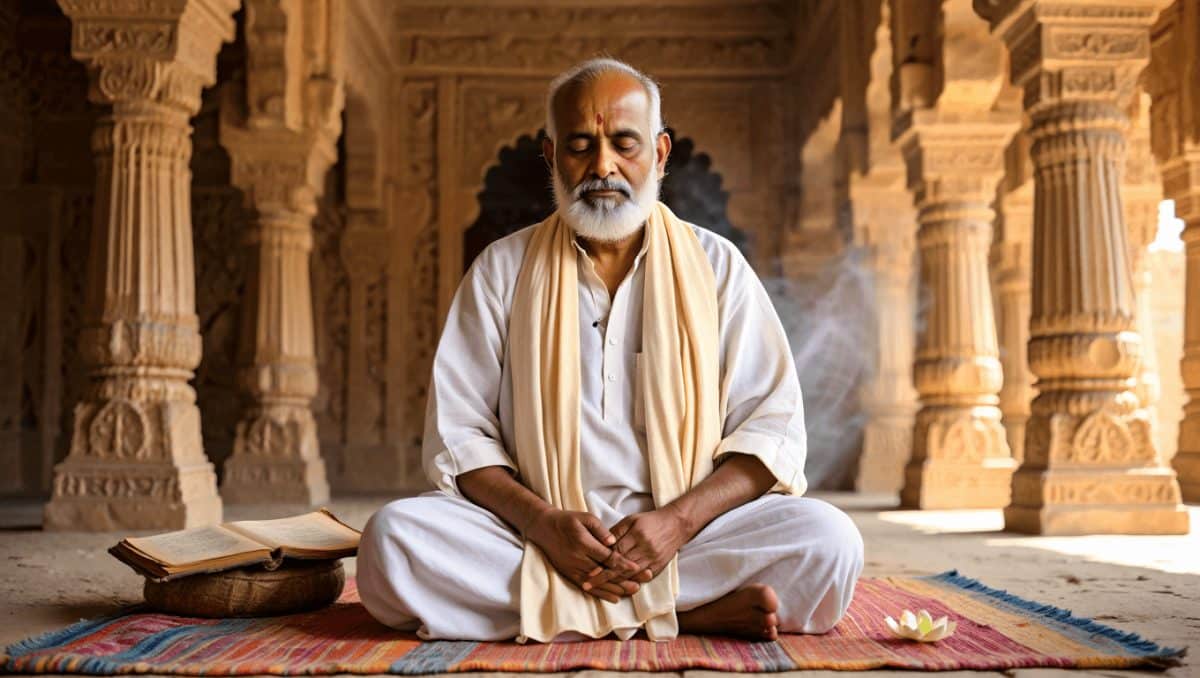
Most temples follow one of two liturgical systems: the Pancharatra or the Vaikhanasa Agamas. Both prescribe a sequence of daily services — dawn hymns, dressing and decoration of the deity, offerings, evening lamps and nightly repose — but local custom shapes precise procedures and music.
- Typical daily sequence: dawn awakening, alankara (decoration), archana (invocation), naivedya (food offering), deeparadhana (lamp worship), sayana seva (rest ritual)
- Liturgical elements include Vedic chant, Tamil hymn recitation and sacred music.
Pilgrimage patterns and practicalities
For many devotees, visiting even one Divya Desam is spiritually significant; for others, completing a circuit of the earthly shrines is a lifelong vow. Pilgrimage durations vary widely — from short regional circuits to months-long itineraries for those attempting the full set.
- Short regional tour: several days
- Comprehensive Tamil Nadu circuit: a few weeks
- Full pilgrimage to all terrestrial Divya Desams: several months, depending on logistics
Festivals that animate the shrines
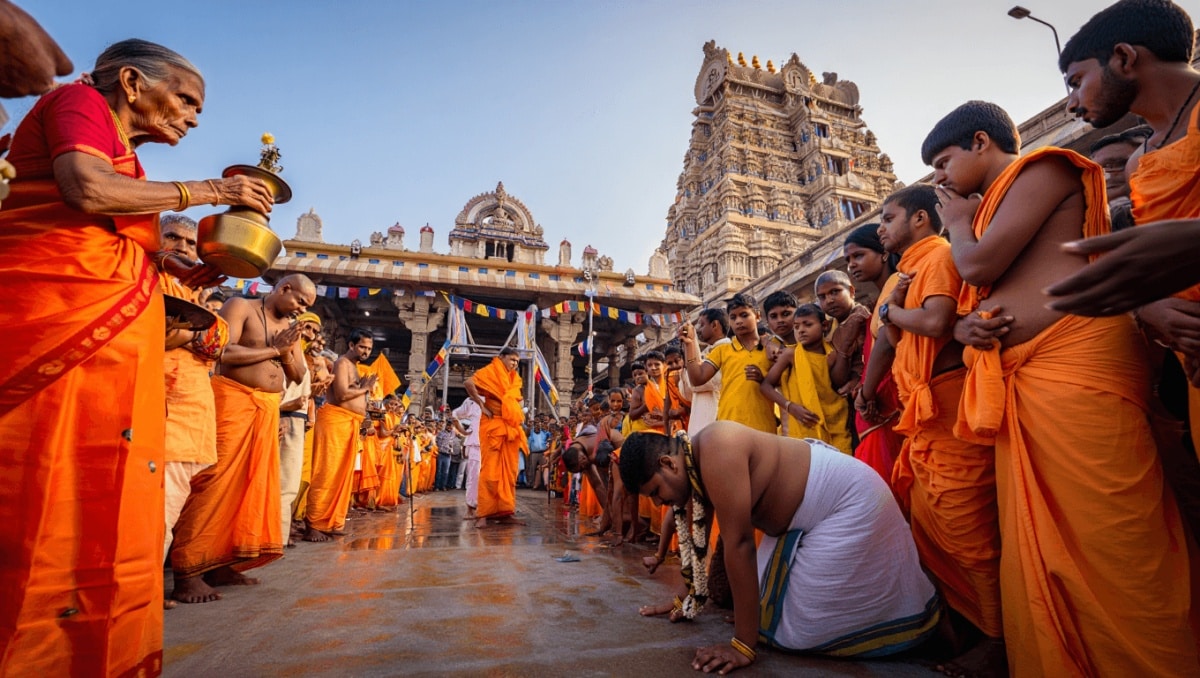
Annual celebrations such as Vaikunta Ekadasi and Brahmotsavam draw large crowds and are also moments when temple traditions — music, processions, communal feeding — are publicly amplified. Each site preserves its own calendar and ritual emphases.
Architectural and iconographic features
Most Divya Desams display regional Dravidian traits: towering gopurams, pillared mandapas and concentric enclosures. Iconography varies too — standing, seated, reclining and walking forms of Vishnu each reflect theological nuance and ritual use.
Contemporary pressures and conservation
These living monuments face modern challenges: urban development near temple precincts, uneven funding for upkeep, pressures from tourism and the need to sustain ritual expertise across generations.
At the same time, renewed interest from pilgrims, heritage agencies and scholars has led to targeted restoration projects and debates about how to balance conservation with worship.
What this means for readers
Whether you follow the tradition or study religious architecture, the Divya Desams are a case study in how textual memory, ritual practice and built space intersect to sustain a millennium-old spiritual geography. Current discussions around preservation and pilgrimage logistics make this an unexpectedly timely topic for anyone interested in cultural heritage and living faith.
Key terms to note: Divya Desams (the sanctified shrines), Alwars (the poet-saints), Naalayira Divya Prabandham (the hymn corpus) and Sri Vaishnavism (the theological tradition that centers these sites).