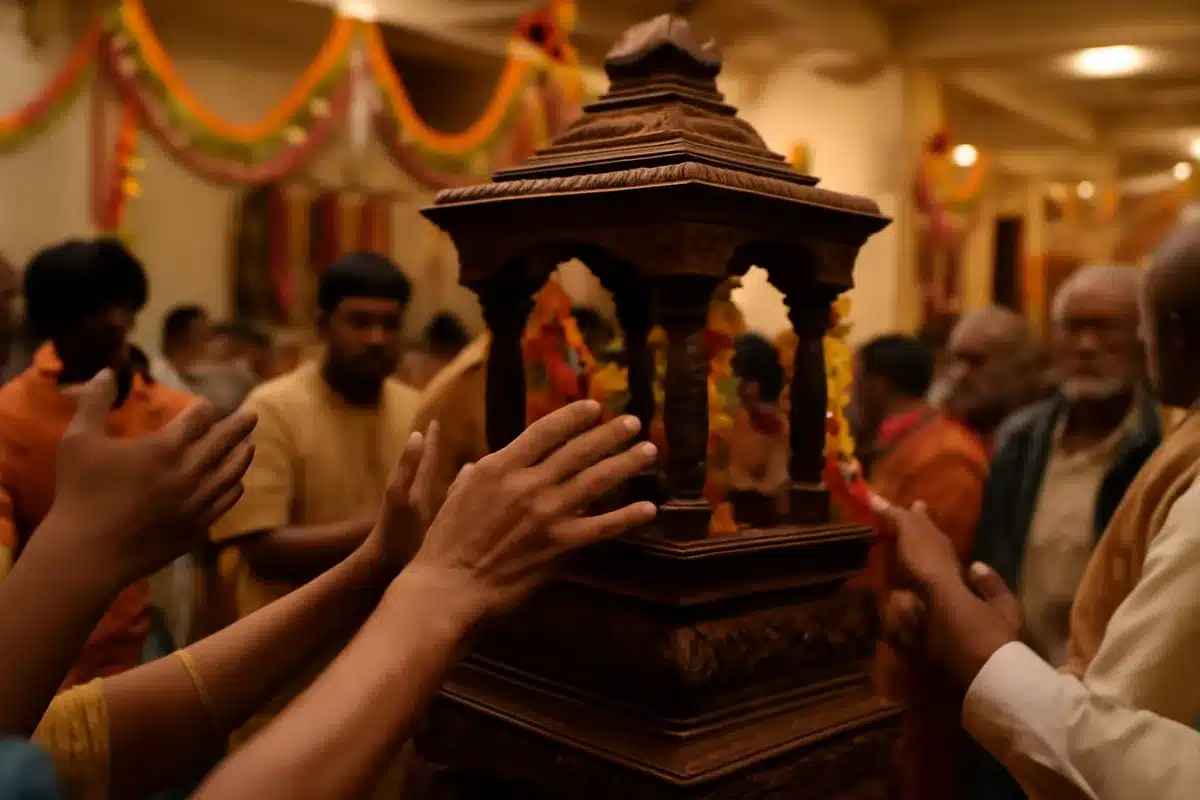
About 150 people from Indian communities in Japan, alongside Japanese and Sri Lankan guests, gathered at the Indian Embassy in Tokyo this week for a ceremonial Rath Yatra organized by the Shree Jagannath Society Japan. The event brought together diplomats, local officials and community leaders for a compact but traditional procession and rituals that highlighted Odisha’s cultural heritage abroad.
The ceremony took place on the embassy auditorium stage, where devotees and visitors were invited to pull a handcrafted chariot after a short ritual program. The three deities — Lord Jagannath, Lord Balabhadra and Devi Subhadra — had been transported from the Ibaraki temple, which hosted their pran pratistha earlier this year.
Leading the ceremonial duties, India’s ambassador, Nagma Mohamed Mallick, joined Sri Lankan ambassador Pivithru Janak Kumarasinghe and other dignitaries to perform the traditional chhera pahanra rite. Pandit Munindra Panda conducted the puja, and the gathering included representatives from ISKCON, local Shri Ram Mandirs and several Indian community organizations across Japan.
Annamalai applauds Bhagwat’s message on Muslim inclusion in India
Navratri in Times Square goes viral: social media splits over Indian celebrations abroad
Event snapshot
- Where: Embassy of India, Tokyo — Vivekananda Culture Centre auditorium
- Attendance: ~150 people from Odia and broader Indian communities, plus Japanese and Sri Lankan guests
- Chariot dimensions: 91 cm (length) × 91 cm (width) × 180 cm (height)
- Crafted by: Local carpenter Hirata under the guidance of SJSJ member Pallavi Mishra
- Ritual lead: Pandit Munindra Panda; chhera pahanra performed by diplomats and civic representatives
- Publication: A souvenir for Shree Jagannath Yatra–2026, edited by Pallavi Mishra and Tushar Jena
The small wooden chariot was made in Japan by SJSJ volunteers with local craftsmanship; it served as the focal point for the procession, allowing attendees to experience the chariot-pulling ritual typically seen in Puri. Organisers said the format aimed to balance authenticity with the constraints of an indoor embassy venue.
A vegetarian meal was provided by an Odia entrepreneur who also serves as an adviser to the Shree Jagannath Society Japan, underscoring the communal and culinary aspects of the festival. A commemorative booklet released at the event carries messages from the Indian ambassador to Japan, Odisha Chief Minister Mohan Charan Majhi and Puri’s traditional ruler, Gajapati Dibya Singha Deb.
Beyond Tokyo, the society helps stage Rath Yatra observances in other parts of Japan — including Kasugai in Aichi Prefecture and two locations in Ibaraki Prefecture — keeping the festival alive for expatriates and promoting cultural exchange with local communities.
Why this matters now: such gatherings sustain religious traditions among the diaspora and create opportunities for intercultural dialogue. For attendees and hosts alike, the event reinforced ties between India and Japan while offering a visible reminder of Odisha’s living heritage outside India’s borders.