Show summary Hide summary
- What is Ram Navami?
- Date, tithi and the key puja window for 2026
- Why this year’s observance is notable
- Rituals, practices and public celebrations
- Ayodhya in 2026: what visitors should expect
- Notable temples and pilgrimage circuits
- The Surya Tilak: an intersection of optics and ritual
- Ritual details and customary etiquette
- Why Ram Navami still resonates
- Quick FAQ
Ram Navami in 2026 arrives on Thursday, March 26 — a date that matters beyond ritual calendars because it aligns with Thursday, traditionally linked to Lord Vishnu and the planet Jupiter, and follows the recent completion of the Ayodhya Ram Mandir. For pilgrims and observers, this year’s festival mixes age-old rites with high-profile public events, including the planned noon sunlight ceremony at the temple.
What is Ram Navami?
Ram Navami commemorates the birth of Lord Rama, the central figure of the Ramayana, celebrated across the Indian subcontinent as an embodiment of duty, compassion and moral rectitude. The festival closes the nine days of Chaitra Navratri and is observed with prayers, readings, fasting and public processions.
Annamalai applauds Bhagwat’s message on Muslim inclusion in India
Navratri in Times Square goes viral: social media splits over Indian celebrations abroad
Date, tithi and the key puja window for 2026
Timing matters to devotees because the most powerful rituals are performed during the midday birth-hour traditionally associated with Rama.
| Item | Detail |
|---|---|
| Date | Thursday, March 26, 2026 |
| Navami tithi begins | March 26, 2026 — 11:48 AM |
| Navami tithi ends | March 27, 2026 — 10:06 AM |
| Madhyahna muhurat (preferred puja time) | 11:13 AM to 1:41 PM (Exact midday moment: 12:27 PM) |
| Hindu calendar | Chaitra Shukla Navami, Vikram Samvat 2083 |
Why this year’s observance is notable
Two developments make Ram Navami 2026 especially relevant: the festival falls on a Thursday, connected in tradition to Vishnu and the teacher planet Jupiter, and Ayodhya is staging its third Ram Navami since the temple’s consecration, following the temple’s formal completion in late 2025. Those factors combine to raise public interest, media coverage and attendance — and to make planning and logistics more important for visitors.
Rituals, practices and public celebrations
Observed rituals vary by region but share common elements centered on the midday birth moment. Many households and temples perform abhishek, sing bhajans and read passages of the Ramayana.
Common observances include:
- Fasting — forms range from strict (nirjala) to fruit-and-dairy-based (phalahar); many break fast after the Madhyahna puja.
- Akhand paath — continuous recitation of the Ramayana in temples or homes, often concluding on Ram Navami.
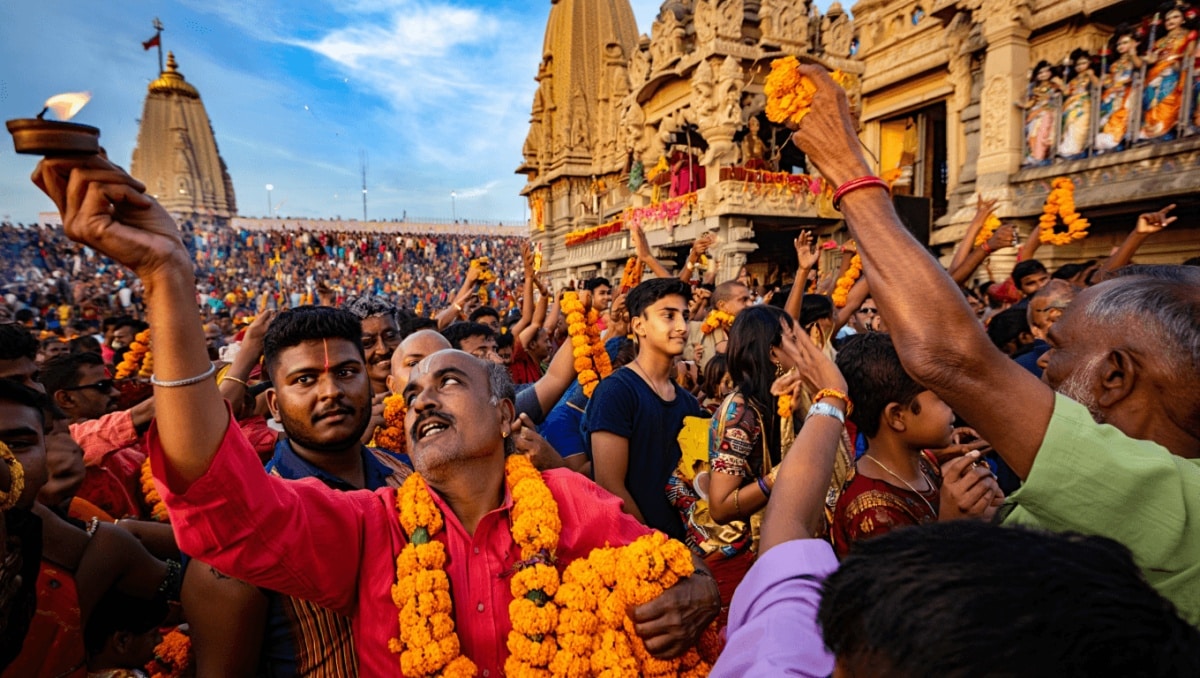
- Rath and Shobha yatras — chariot processions carrying idols of Rama, Sita, Lakshmana and Hanuman through town centres.
- Local customs such as Sita-Rama weddings in South India and community feasts in other regions.
Ayodhya in 2026: what visitors should expect
Ayodhya remains the festival’s focal point. Authorities anticipate a major influx of pilgrims during the Ram Navami mela, and the Ram Mandir will be central to ceremonies throughout the day, especially at midday.
Key practical points for anyone travelling to Ayodhya:
- Plan to arrive at least one day early to manage accommodation and darshan arrangements.
- Secure Sugam Darshan e-passes via the official Shri Ram Janmabhoomi Teerth Kshetra portal; slots are released in advance and typically sell out quickly.
- Expect restricted vehicle access near the temple on the festival day; choose lodgings within walking distance if possible.
- Carry water and sun protection—late March temperatures can climb by afternoon.
- Nearest airport: Maharishi Valmiki International Airport (AYJ), about 10–12 km from the temple; rail and road links are also available.
Notable temples and pilgrimage circuits
While Ayodhya draws the largest gatherings, Ram Navami is celebrated across India. A few major centres to consider:
- Varanasi — Tulsi Manas and Sankat Mochan temples, with intensified bhajan and Ramayana recitations and a heightened Ganga aarti experience.
- Rameswaram — Ramanathaswamy Temple, linked in tradition to Rama’s pre-Lanka worship of Shiva.
- Bhadrachalam — famed for the Sita Rama Kalyanam, a ceremonial wedding rite drawing large crowds.
- Hampi — landscapes connected to Kishkindha and Hanuman lore; local rituals and cultural events accentuate the epic’s setting.
- Nashik, Sitamarhi, Chitrakoot and Mathura-Vrindavan — each offers region-specific observances tied to episodes of the Ramayana.
The Surya Tilak: an intersection of optics and ritual
One of the most discussed additions to recent Ram Navami ceremonies is the so-called Surya Tilak at the Ayodhya temple — a system that channels sunlight onto the Ram Lalla idol’s forehead at noon.
Engineers and scientists from institutions including the Central Building Research Institute (CSIR-CBRI), Roorkee, and the Indian Institute of Astrophysics (IIA), Bengaluru, helped design and calibrate the optical assembly. The setup uses mirrors and lenses and includes heat-protection measures; designers say the mechanism is adjusted on a multi-year cycle to account for the sun’s shifting position. In previous years the moment has lasted a few minutes around midday and is expected to be broadcast live again in 2026.
Ritual details and customary etiquette
Devotional practice often centers on the midday window. Typical elements that devotees and visitors will encounter include:
- Puja vidhi with a decorated image or idol, Panchamrit abhishek and a five-wick lamp.
- Community bhajans, recitation of the Sundara Kanda and other sections of the Ramayana.
- Distribution of prasad such as sweet drinks and simple sattvic dishes; many temples avoid non-vegetarian offerings on the day.
Why Ram Navami still resonates
Beyond its ceremonial aspects, Ram Navami continues to function as a moment for collective reflection on ethical priorities — duty, truth, and restraint. The recent completion of the Ayodhya temple and associated infrastructure projects has also made the festival more visible to national and international audiences, prompting renewed interest in the traditions and logistics that surround it.
Quick FAQ
- When is Ram Navami 2026? Thursday, March 26, 2026 (Navami tithi: 11:48 AM March 26 to 10:06 AM March 27).
- Best time for puja? The Madhyahna muhurat: 11:13 AM–1:41 PM; exact midday moment 12:27 PM.
- Is fasting required? No; fasting is optional and varies by personal or regional custom.
- How to attend darshan at Ayodhya? Book Sugam Darshan e-passes through the official trust website; carry valid ID.
- What is the Surya Tilak? A planned optical ceremony directing sunlight onto the Ram idol’s forehead around noon at the Ayodhya temple, engineered with scientific input.
For anyone observing or traveling for Ram Navami 2026, the combination of tradition, public-scale events and upgraded infrastructure means both richer experiences and greater need for advance planning. Whether attending a local puja or joining the crowds in Ayodhya, the festival remains an occasion to reflect on values that many find enduringly relevant.