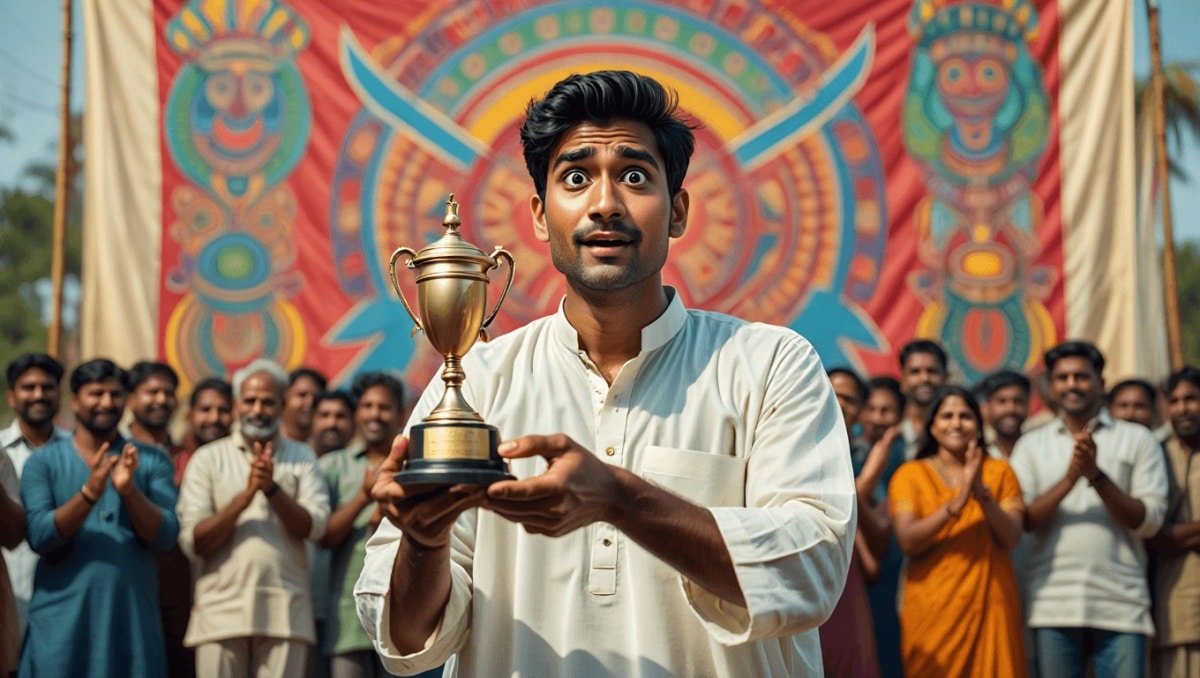
A film that documents the disappearing art forms of a Maharashtra tribe took home the top prize at the recent Lucknow International Film Festival, standing out from more than 3,500 submissions representing over 40 countries. The win has put a spotlight on cultural preservation at a time when many traditional practices are under pressure from urbanisation and changing livelihoods.
Directed by Arun Shekhar, the documentary Thakar Folk Arts was singled out by the festival jury for its measured visual language and its effort to record rituals and craft traditions linked to the Thakar tribe. Organisers praised the film’s balance of artistry and ethnographic attention, noting how it places endangered practices in a wider cultural conversation.
The award was handed over during the closing ceremony by filmmaker Rahul Rawail, alongside Padma Shri recipients Anil Rastogi and Vidya Bindu Singh. In his acceptance remarks, Shekhar dedicated the accolade to the Thakar community and described the project as an attempt to create a lasting archive of customs he fears may otherwise fade.
Kashi to Kedarnath costs revealed: how much a Sawan pilgrimage will set you back
Hinduism gains ground in Africa: new communities reshape culture and commerce
What the recognition means
Festival jurors emphasised that documentaries like this serve as bridges between generations — tools that can make younger people more aware of the histories embedded in local arts. For the filmmakers, the trophy brings increased visibility, which often translates into further festival invitations, distribution opportunities and interest from cultural institutions.
- Film: Thakar Folk Arts
- Director: Arun Shekhar
- Festival: Lucknow International Film Festival
- Entries: Over 3,500 films from 40+ countries
- Presenters: Rahul Rawail; Padma Shri awardees Anil Rastogi and Vidya Bindu Singh
- Focus: Documentation and preservation of Thakar tribal art forms
Beyond the prize itself, the outcome underscores two broader trends: a growing festival appetite for culturally rooted documentaries, and renewed attention to small communities whose traditions are rarely captured on film. For the Thakar people, prominence on an international stage may bring resources and partners interested in conservation, recording and public exhibition.
As festivals continue to champion work that combines artistic rigour with social purpose, films such as Thakar Folk Arts are likely to shape conversations about how audiovisual media can act as both witness and repository for vanishing cultural practices.