Show summary Hide summary
The annual Char Dham pilgrimage opened in the Himalayas in April 2026 — but this year’s journey comes with a set of administrative changes and new controls that significantly alter how devotees will travel, worship and plan. These steps, announced quietly over the spring, aim to manage crowds, improve safety at high altitude and reshape the encounter between pilgrim and shrine.
Why the four shrines matter
The Char Dham sites are located where the major rivers of northern India begin. Visiting them is as much about reaching headwaters as it is about ritual: the shrines sit at source points that feed the plains below, and the traditional clockwise route mirrors the rivers’ flow upstream.
Annamalai applauds Bhagwat’s message on Muslim inclusion in India
Navratri in Times Square goes viral: social media splits over Indian celebrations abroad
Yamunotri marks the emergence of the Yamuna; Gangotri is at the Bhagirathi’s glacier-fed origin; Kedarnath overlooks the Mandakini and one of the principal Shaiva shrines; and Badrinath stands above the Alaknanda near a site long associated with Vishnu. The geographic and spiritual logic of the circuit explains why changes at these temples have wide implications for pilgrims and local communities alike.
What’s new in 2026
Officials have introduced several measures this season that are already affecting planning and on-the-ground experience. The aim, authorities say, is crowd control, safety and the protection of sacred spaces — but the practical consequences are immediate.
- Mandatory registration: Every traveller must register on the Uttarakhand tourism portal and carry a QR-coded Yatra Pass checked at multiple points, including Sonprayag and Pandukeshwar.
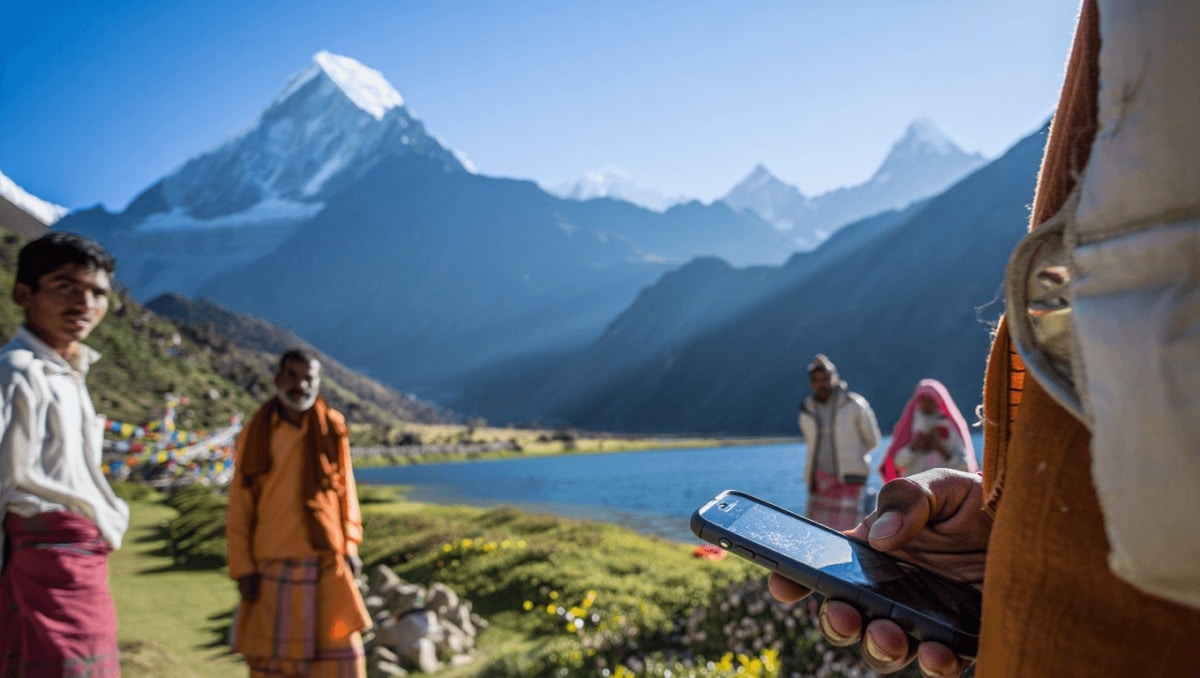
- Device restrictions: Phones and cameras are banned inside the temple compounds at Kedarnath, Badrinath and Gangotri (Yamunotri remains unrestricted).
- Medical fitness proof: Pilgrims older than 60 are required to submit a recent medical fitness certificate before proceeding into higher-altitude legs of the yatra.
- Visitor conditions: Entry rules at three dhams now include conditions that can affect non-Hindu visitors; Yamunotri has not adopted those limits.
- Helicopter bookings centralized: Kedarnath helicopter services are now routed through the IRCTC heliyatra portal to reduce fraud; unofficial agents should be avoided.
These operational changes are in effect for the 2026 season and will be enforced at checkpoints. Offline counters exist at major gateways but are prone to long queues during peak weeks, and popular travel windows — particularly May and June — are booking up quickly.
What the phone ban is trying to do
Among the new rules, the restriction on cameras and phones at three shrines has provoked the most debate. Critics say the rule interrupts how modern pilgrims document and share their experience; supporters argue it restores space for focused devotion and reduces crowding caused by content creators.
The change interrupts a recent pattern in which photography and filming often redirected attention away from the altar and toward staged shots. Administrators cite crowd management and preservation of ritual atmosphere as the immediate motives; cultural observers point out a deeper consequence: the policy nudges visitors toward single-pointed attention — being present without a device between them and the deity.
Whether this will alter visitors’ behaviour long term is uncertain, but for this season many devotees will have to approach darshan without recording devices in hand.
A practical itinerary under the new rules
Below is a broadly used 12-day routing that reflects checkpoints, altitude and the status of restrictions this year. Timelines vary widely depending on fitness, mode of travel and helicopter use.
Day 1–2: Enter via Haridwar or Rishikesh. Complete online registration if not done earlier. Carry a printed copy of the Yatra Pass; some checkpoints still prefer paper.
Day 3–4 — Yamunotri: Drive to Barkot/Janki Chatti then trek or ride the six-kilometre approach. Yamunotri’s thermal kund and accessibility make it more flexible for elderly pilgrims.
Day 5–6 — Gangotri: Travel through Uttarkashi. Note the device restriction inside the temple precincts; plan communications accordingly.
Day 7–9 — Kedarnath: Checks at Sonprayag are strict. From Gaurikund the trek rises sharply (16–18 km uphill); oxygen is thinner and rest days are advisable. Helicopter lifts — now routed via IRCTC — offer an alternative for those unable to walk.
Day 10–11 — Badrinath: Approach via Joshimath and Pandukeshwar checkpoint. Road access is close to the temple; the hot spring beside the shrine remains a customary stop.
Day 12: Return through Rishikesh or Haridwar. The full route can be shortened with helicopter segments or extended for a slower, foot-focused pilgrimage.
Who should reconsider or adapt plans
High-altitude pilgrimage carries medical and logistical risks that are now being acknowledged administratively. Consider delaying the journey or choosing lower-altitude alternatives if any of the following apply:
- Known cardiac disease, uncontrolled hypertension, or significant respiratory conditions.
- Age over 70 without a recent medical evaluation — discuss helicopter options or visit winter abodes where the deities are housed.
- Pregnancy at any stage; the strain of altitude is a real hazard.
- Families with infants or very young children who may not tolerate cold and uphill trails.
These precautions are not a barrier to devotion but a practical attempt to reduce preventable medical emergencies on the route.
A shifting balance between ritual and regulation
This year’s measures represent a substantive recalibration: administrators are balancing preservation of ritual space, visitor safety and the environmental pressures of mass pilgrimage. The result is a pilgrimage that asks more of visitors before they set out — paperwork, health checks, and a commitment to leave devices outside sanctums.
For many pilgrims that will feel like an intrusion; for others it will be a corrective step that restores the contemplative core of the yatra. Practically speaking, the season’s new rules mean planning earlier, carrying documentation, and allowing extra time at checkpoints.
The Char Dham remains both a route through dramatic terrain and a sequence of ritual encounters. In 2026 the route has been tightened by rules intended to protect both people and place. How that tightening changes the quality of devotion — whether it restores focused encounters or simply shifts crowd dynamics — will be one of the most closely watched aspects of this season.
Travelers should check the official Uttarakhand tourism portal for the latest registration and checkpoint information before departing, and plan with contingency time for checks and restrictions at the shrines.