Show summary Hide summary
- What Chaitra Navratri means this year
- Why March 26, 2026 stands out
- Day-by-day observances, colors and common offerings
- Ritual mantras and daily practice
- Fasting: permitted foods and common restrictions
- Ram Navami 2026: timing and observances
- The Ayodhya Surya Tilak
- Where pilgrims and observant families often go
- How to set up Ghatasthapana at home
- Quick answers — common questions
Chaitra Navratri 2026 has drawn attention across India because an unusually rare alignment concentrated several major observances into a single day. The festival began on Thursday, March 19 and closed with post-fasting rites on March 27, but the striking moment came on March 26 when Durga Ashtami and Ram Navami coincided — amplifying religious significance and altering customary timings for worship and fasting.
- Festival period: March 19–27, 2026
- Ghatasthapana (Kalash installation) muhurat: 6:52 AM – 7:43 AM, March 19
- Abhijit muhurat: 11:20 AM – 12:09 PM, March 19
- Notable convergence: March 26 — Durga Ashtami, Sandhi Puja window, Annapurna Ashtami and Ram Navami
- Ram Janma muhurat: 11:13 AM – 1:41 PM, March 26 (exact madhyahna moment: 12:27 PM)
- Navratri Parana (fast-breaking): March 27 after 10:08 AM
Annamalai applauds Bhagwat’s message on Muslim inclusion in India
Navratri in Times Square goes viral: social media splits over Indian celebrations abroad
What Chaitra Navratri means this year
Chaitra Navratri marks the springtime festival devoted to the nine manifestations of the Goddess Durga, and it traditionally ushers in the Hindu New Year in many North Indian calendars. Devotees observe a mix of rituals — from the planting of barley sprouts and keeping a Kalash, to daily pujas, specific mantras and dietary restrictions — over the nine tithis of the lunar cycle.
This edition is notable because the arrival of spring aligned with the tithi of Lord Rama’s birth, so devotional energy and temple activities were intensified. For households and temples planning ceremonies, the overlap changed the most auspicious windows for key rites and made March 26 a focal point for collective observance.
Why March 26, 2026 stands out
On a single Thursday — March 26 — multiple high-value observances fell together. That convergence is rare and is traditionally interpreted as increasing the spiritual merit of prayers, donations and vows undertaken on that day.
- Durga Ashtami — the principal warrior-aspect day of Navratri
- Sandhi Puja — the critical junctional worship between Ashtami and Navami (11:24 AM – 12:12 PM)
- Annapurna Ashtami — honoring the goddess of nourishment
- Ram Navami — the accepted birth day of Lord Rama, with the most auspicious window centered around midday
Day-by-day observances, colors and common offerings
Each day highlights one of the nine Durga forms (Navdurga). Families and temple committees often mark the day with a specific color, simple offerings and a short mantra recital. Below is a concise guide to each day’s focus, suggested color and a customary offering.
- Day 1 — March 19: Shailaputri
Color: yellow. Meaning: the mountain-born manifestation symbolizing foundational spiritual strength. Common offering: desi ghee.
- Day 2 — March 20: Brahmacharini
Color: green. Meaning: austerity, steadfastness and disciplined devotion. Common offering: sugar or mishri.
- Day 3 — March 21: Chandraghanta
Color: grey. Meaning: bravery tempered with composure. Common offering: milk or kheer.
- Day 4 — March 22: Kushmanda
Color: orange. Meaning: source of cosmic energy and creation. Common offering: malpua.
- Day 5 — March 23: Skandamata
Color: white. Meaning: motherly protection and wisdom. Common offering: banana.
- Day 6 — March 24: Katyayani
Color: red. Meaning: the fierce form who defeats obstacles. Common offering: honey.
- Day 7 — March 25: Kalaratri
Color: deep blue. Meaning: the destroyer of fear and ignorance. Common offering: jaggery (gur).
- Day 8 — March 26: Mahagauri (also Ashtami & Ram Navami)
Color: pink. Meaning: purity and calm after battle; the most potent day this year due to the combined events. Common offering: coconut.
- Day 9 — March 27: Siddhidatri
Color: purple. Meaning: fulfillment and spiritual accomplishment. Parana (breaking of fast) permitted after 10:08 AM. Common offering: sesame (til).
Ritual mantras and daily practice
Devotees customarily recite short Durga mantras and, when possible, portions of the Durga Saptashati over the nine tithis. Two widely used chants are the universal Durga mantra and the Durga Gayatri; their recitation is intended to focus the mind and invoke protective energy.
Universal Durga Mantra (transliteration): Om Aim Hreem Kleem Chamundayai Vichche
Durga Gayatri (transliteration): Om Katyayanaya Vidmahe Kanyakumari Dhimahi Tanno Durgih Prachodayat
Fasting: permitted foods and common restrictions
Fasting rules vary by region and household, but the basic principle is sattvic simplicity. Many devotees follow a fruit-and-milk–based pattern or prepare vrat-specific dishes using non-cereal flours.
- Allowed: fruits, milk and dairy, sabudana (tapioca), kuttu (buckwheat) and singhara (water chestnut) flours, potatoes, samak (barnyard millet), rajgira (amaranth), dry fruits, rock salt (sendha namak).
- Avoid: ordinary grains (rice, wheat), lentils, onion and garlic, non-vegetarian foods, alcohol, tobacco and processed snacks.
Common fasting styles include strict nirjala (no food or water for a set day), phalahari (fruit-and-vrat foods) and a moderated partial fast used by the elderly, pregnant women or those with medical needs.
Ram Navami 2026: timing and observances
Ram Navami fell on March 26, 2026, and the tithi made that date especially significant for devotees performing home puja or attending temple events.
- Navami tithi: begins 11:48 AM, March 26 and ends 10:06 AM, March 27
- Most auspicious Ram Janma muhurat: 11:13 AM – 1:41 PM on March 26
- Exact madhyahna moment: 12:27 PM on March 26
Typical home observances include an early bath, puja with Panchamrit, recitation of passages from Ramcharitmanas (Balkand describes the birth), and a midday celebration at the prescribed birth moment — often marked with a small cradle ritual, aarti and distribution of prasad.
The Ayodhya Surya Tilak
One of the visually striking rituals associated with Ram Navami at the Ayodhya temple is the so-called Surya Tilak: a carefully engineered passage of sunlight that falls on the Ram Lalla idol around midday, producing a natural tilak on the forehead. Architects and temple authorities have noted how timing and alignment recreate this effect on the birth tithi.
Where pilgrims and observant families often go
Devotees travel to both Devi shrines and Rama temples during Chaitra Navratri. Popular destinations span regions and traditions.
- North India: Vaishno Devi, Vindhyavasini (Vindhyachal), Naina Devi and Jwala Devi in the Himalayas; major Ram Navami observances in Ayodhya.
- West & Central: Ambaji (Gujarat) and Mahalaxmi (Kolhapur), with large regional gatherings.
- South: Chamundeshwari (Mysuru), Kanaka Durga (Vijayawada) and Meenakshi Amman (Madurai) host expansive rituals and processions.
How to set up Ghatasthapana at home
- Place clean soil in a pot or on a plate and sow barley or similar seeds so they can sprout over the nine days.
- Use a copper or brass Kalash filled with water; add a coin, betel nut and rice grains; arrange five mango leaves at the rim.
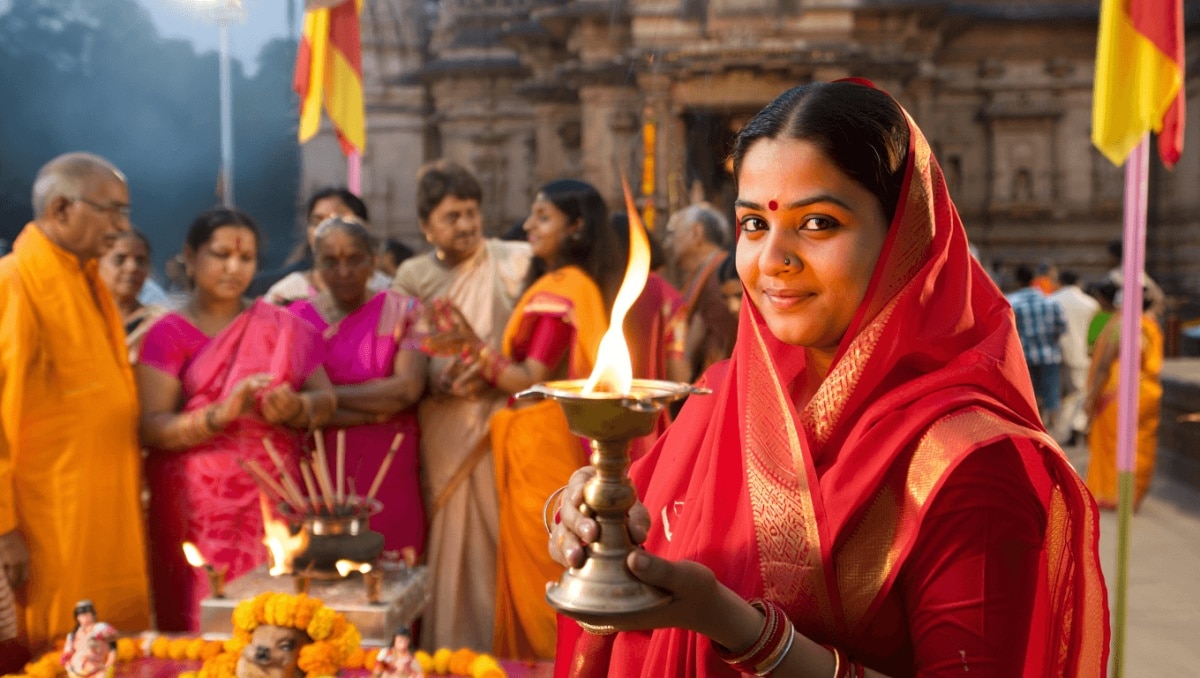
- Cover the Kalash with a coconut wrapped in a red cloth and light a diya and incense to invite the presence of the Goddess.
- Perform daily offerings of flowers, chant the day’s Navdurga mantra and keep the Kalash tended; the sprouts are usually distributed as prasad on the final day.
Quick answers — common questions
Is Navratri nine days this year? The lunar observances span nine tithis, but because Durga Ashtami and Ram Navami fell on the same calendar date (March 26), many communities found the public schedule condensed into eight calendar days of concentrated ritual.
When can I break a Navratri fast? For Chaitra Navratri 2026, parana was observed on March 27 after 10:08 AM, following the end of the Navami tithi.
Can I begin worship after Day 1? Yes. Tradition prizes sincerity; starting mid-cycle with proper ritual focus is widely accepted.
As this festival concluded, temple records and household diaries from across regions reflected the unusual intensity of celebrations around March 26 — a reminder that small shifts in the lunar calendar can have outsized effects on communal worship and timing-sensitive rites.