The Gayatri mantra remains a central touchstone of Vedic tradition, valued for its ritual role and for the protection it is said to confer on those who recite it with devotion. As debates over cultural continuity and religious practice surface in South Asia and the diaspora, understanding this short, dense prayer—and how it functions in ritual life—matters for anyone following or studying Hindu rites today.
In classical sources, the Gayatri is presented not as a hymn to be performed like a song but as a concentrated chant: its power lies in careful recitation, carried out with attention and reverence. Practitioners and many texts describe recitation as an act of devotion and mental focus rather than musical performance.
Formally, the mantra is compact but deliberately organised. It comprises 24 syllables, grouped into three equal parts—each often described as a “foot” of eight syllables. Because of this three-part structure it is frequently referred to as the Tripada Gayatri, and each segment has been associated with one of the three principal Vedas in traditional exegesis.
Annamalai applauds Bhagwat’s message on Muslim inclusion in India
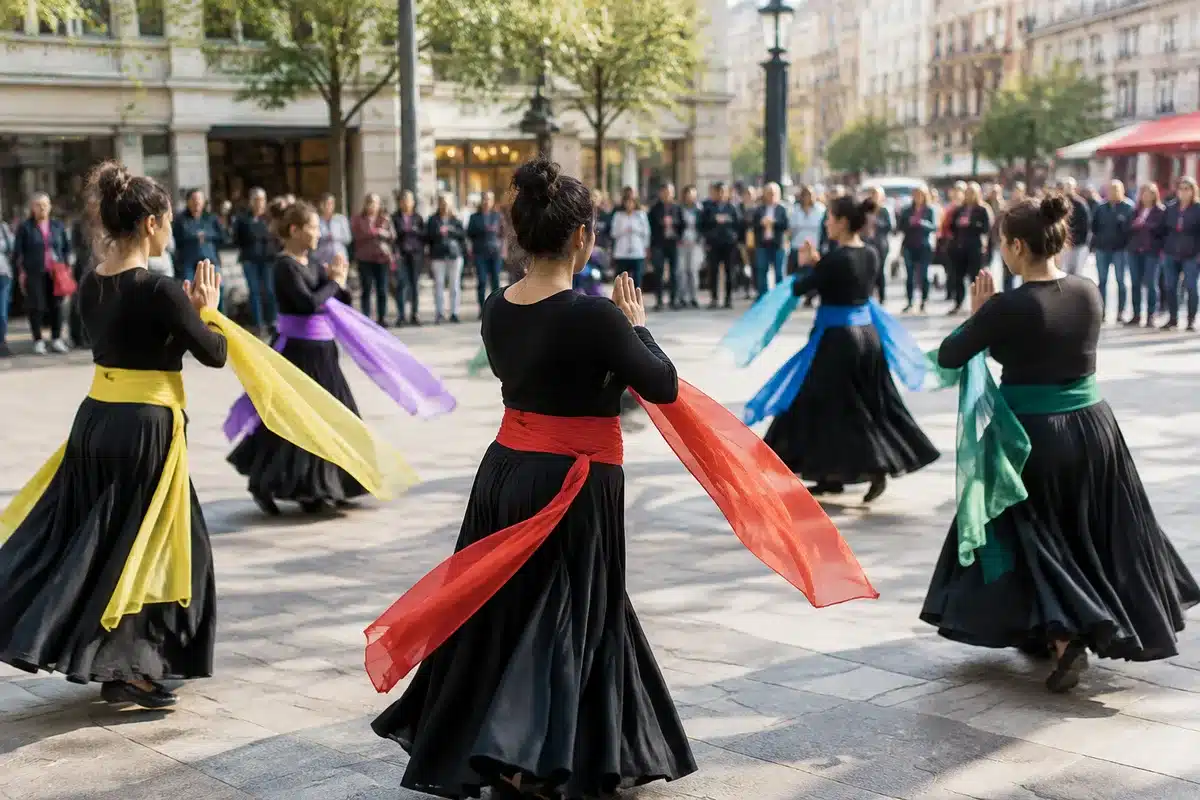
Navratri in Times Square goes viral: social media splits over Indian celebrations abroad

| Feature | Detail |
|---|---|
| Syllable count | 24 syllables in total, arranged in three feet of eight |
| Vedic relation | Tradition links each foot to one of the three main Vedas (Ṛg, Yajur, Sāma); the Atharva Veda has its own variant |
| Ritual role | Central to daily rites and many sacral ceremonies; often required by classical ritual manuals |
| Instructional requirement | Learning certain versions or interpretations has historically been tied to formal initiation rites such as upanayana |
What the tradition calls the Gayatri is often described as the distilled essence of Vedic wisdom. Several authoritative ritual texts treat it as foundational for Vedic chanting—so much so that abandoning the mantra would, in that framework, be seen as abandoning a core element of the tradition.

For modern readers and observers, a few practical implications stand out:
- Because the mantra is short but layered, commitment to proper recitation emphasizes continuity of oral practice and transmission.
- Its role in rites means changes in who learns and recites the Gayatri can affect how communities perform traditional ceremonies.
- Conversations about access to instruction—who may be taught which versions—remain relevant where ritual authority and social norms intersect.
Scholars of religion and practitioners alike stress that the mantra’s meaning and value depend on context: the devotional attitude of the reciter, the ceremonial setting, and the interpretive traditions that have preserved and explained it. That ongoing transmission—how people learn, intone and interpret the Gayatri—continues to shape how the mantra functions in contemporary religious life.
Whether encountered in daily practice, academic study, or intergenerational teaching, the Gayatri’s compact structure and ritual weight make it a key point of continuity between ancient Vedic injunctions and present-day devotional practice.