Show summary Hide summary
January 15 marks the traditional birthday of Tiruvalluvar, the Tamil sage behind the compact moral handbook known as the Tirukkural. Its terse couplets—each delivering a single pointed truth—have shaped South Indian ethical conversation for centuries and remain central to debates about cultural identity today.
Who was Tiruvalluvar?
We know remarkably little with certainty about the poet himself. Early Tamil literature preserves a handful of legends: that he lived in Mylapore (modern Chennai), that his household included a wife celebrated for virtue, and that popular memory later attached varied social origins to him. Scholars disagree on specifics; his life is mostly reconstructed from references in other works rather than a contemporary biography.
Annamalai applauds Bhagwat’s message on Muslim inclusion in India
Navratri in Times Square goes viral: social media splits over Indian celebrations abroad
Over time, different groups have claimed him as their own — a reflection of the text’s broad appeal rather than conclusive evidence about the author’s personal beliefs. What is clear from the poem itself is an engagement with ethical and social questions shared across South Asian intellectual traditions.
What the Tirukkural contains
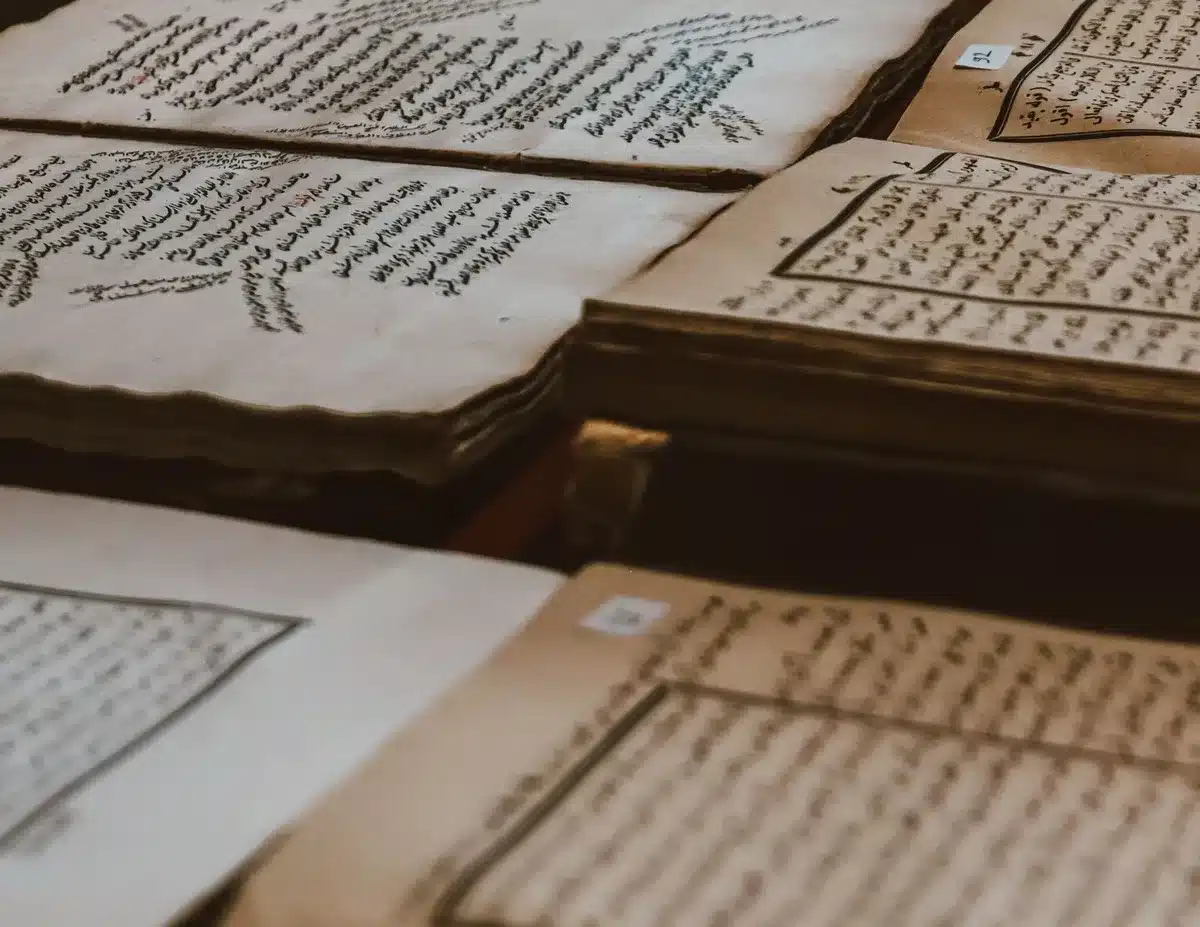
The Tirukkural is a compact manual of public and private conduct: 1,330 couplets organized into 133 chapters. Each chapter offers ten couplets on a single theme.
- Structure: 133 chapters, 1,330 couplets.
- Three major divisions: aram (virtue), porul (public life and prosperity), and kamam (love and personal pleasure).
- Dating: Estimates vary widely; some place it as early as the last centuries BCE, while other scholarship favors a date no later than the early centuries CE—one firm anchor is a verbatim citation in the Sangam-era text Manimekalai.
- Themes: moral conduct, governance, household life, speech, gratitude, and renunciation.
- Religious language: Multiple verses allude to Vedic concepts, duties associated with brahmins, and figures such as Indra and Lakshmi, indicating affinities with the broader Hindu cultural vocabulary of the time.
Although the work does not systematically address metaphysical liberation, it treats renunciation and inner detachment as valid paths within an ethical life.
Text, tradition and later claims
Debates about Tiruvalluvar’s religious identity have been alive for decades. Some modern movements have portrayed him as a follower of non-Vedic traditions or as a secular humanist; others emphasize the Vedic resonances in his couplets. Rather than producing a decisive verdict about the poet’s personal faith, the poem itself demonstrates an intellectual world in which multiple strands of South Asian thought overlap.
Historical images and early printed representations frequently pictured him in forms consistent with Hindu iconography, especially before these identities acquired contemporary political significance. That visual record, together with textual references, makes it difficult to separate the Tirukkural entirely from the cultural matrix often labeled Sanatana Dharma, even if the work’s ethical prescriptions remain remarkably universal.
Short translations and takeaways
The Tirukkural’s power lies in its brevity. Here are a few couplets rendered into fresh, modern phrasing and a short note on why they still resonate.

- On speech: Better to offer kind words than cutting ones—choosing warmth over sharpness is like preferring ripe fruit over something still green. (A reminder about civility in public conversation.)
- On gratitude: Faults in practice may be forgiven, but ingratitude is a lasting stain. (A strong cultural emphasis on thanking benefactors.)
- On verbal harm: Wounds of fire may close, but the marks left by cruel words endure. (A caution about the long-term damage of slander.)
- On learning: Master what you study, and let your behavior reflect that knowledge. (An argument for integrity between learning and conduct.)
- On social identity: Ritual titles mean little without proper conduct; moral worth depends on behaviour, not merely on birthright. (A line that has been variously interpreted across time.)
Opening chapter: a brief paraphrase of the first ten verses
The Tirukkural begins with verses that praise a transcendent source. Below is a concise paraphrase of the opening ten couplets, conveying their main affirmations rather than a literal line-for-line translation.
- The first letter marks the origin of language; likewise, the eternal source is the origin of the world.
- Learning without reverence for the wise or the divine yields little advantage.
- Those who rest their trust on a compassionate, inner presence will enjoy well-being and longevity.
- To fix the mind on the untroubled, desireless principle protects one from suffering.
- Praise of that principle dispels the darkness that produces both merit and fault.
- Those who abandon sensory cravings and follow the faultless path prosper.
- Only those united to the incomparable can find relief from deep anxiety.
- Without surrender to that guiding truth, moral progress and release are hard to achieve.
- Crossing the great ocean of rebirth is possible only for those who cling to that ultimate refuge.
- A head that fails to honour that transcendent ground is like a sense without function—an organ without perception.
These opening lines set a devotional tone while simultaneously linking devotion to practical ethics and social life—an axis that helps explain the text’s enduring status in Tamil culture.
Why this matters now: the Tirukkural continues to be quoted across political and social debates because its counsel is both concise and adaptable. In an era of fast digital exchanges and polarized discourse, its insistence on measured speech, gratitude, and conduct offers a compact ethical toolkit that travels beyond language and religion.