Show summary Hide summary
As the United States marks its 250th year, the religions that began on the Indian subcontinent—Hinduism, Buddhism, Jainism and Sikhism—offer a lived example of religious pluralism that still matters in diverse societies today. Their long history of shared ideas, symbols and celebrations sheds light on how distinct faiths can coexist and shape public life in immigrant-rich democracies.
Common roots, different expressions
What links these traditions is less a single creed than a family of ideas and practices that developed alongside one another over centuries. Rather than claiming exclusive access to truth, many teachers and texts within these streams treat spiritual goals as reachable by multiple paths adapted to particular times and communities.
Annamalai applauds Bhagwat’s message on Muslim inclusion in India
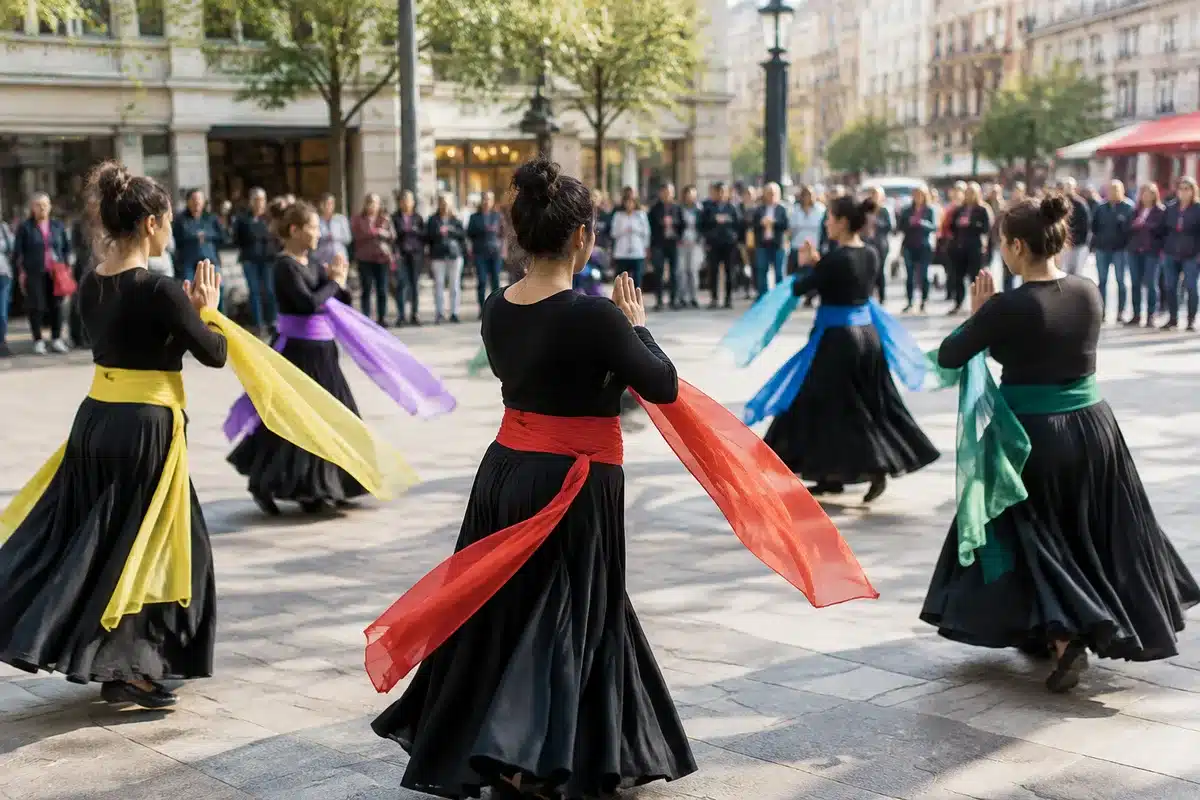
Navratri in Times Square goes viral: social media splits over Indian celebrations abroad
That openness is reflected in the vocabulary used across these traditions: terms like karma, samsara and moksha appear in various forms and with varying emphases, but they create a common framework for thinking about action, rebirth and liberation.
How distinct schools emerged
The classical period around the fifth century BCE saw several reform movements that challenged ritual-heavy practice and emphasized personal insight and ethical living. Buddhism and Jainism came from that milieu, offering alternative answers to long-standing spiritual questions.
Sikhism arose many centuries later during a wave of social and religious renewal, combining devotion with critique of empty ritual and advocating a direct relationship with the divine. Across eras, the encounters among these traditions fostered debate and adaptation rather than rigid separation.
Shared concepts that shape everyday life
At the level of belief, the overlap matters: ideas about moral cause and effect, cycles of life and the aim of liberation produce similar ethical priorities—compassion, nonviolence, self-discipline—even when each tradition locates the final goal differently. That philosophical neighborhood makes interfaith exchange practical as well as theological.
Common signs: the ashtamangala and more
- Parasol — a symbol of protection against spiritual danger and ignorance.
- Golden fishes — represent safety and the courage to navigate life’s uncertainties.
- Treasure vase — stands for abundance in wisdom, health and spiritual resources.
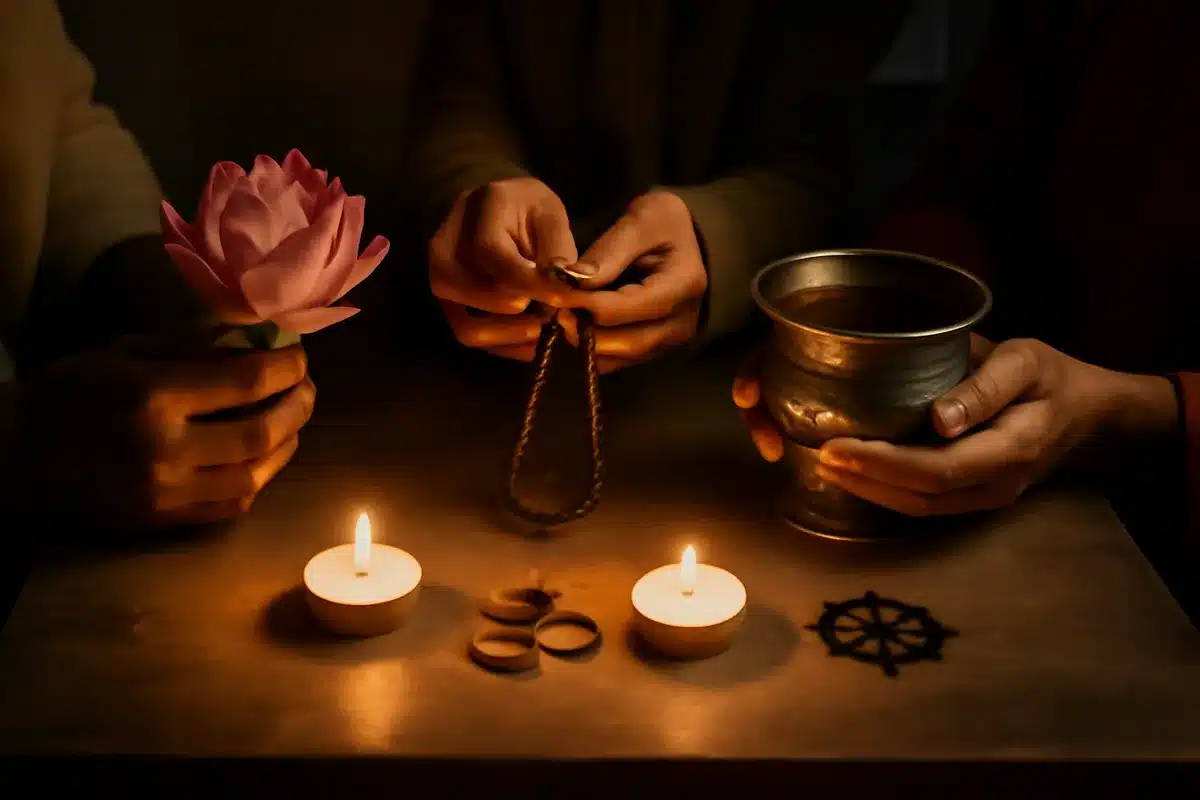
- Lotus — a reminder of purity: rising above attachment while living in the world.
- Conch — the resonant call to awaken to ethical and spiritual clarity.
- Endless knot — an emblem of interdependence, linking compassion with insight.
- Banner of victory — victory over internal obstacles such as ignorance and hatred.
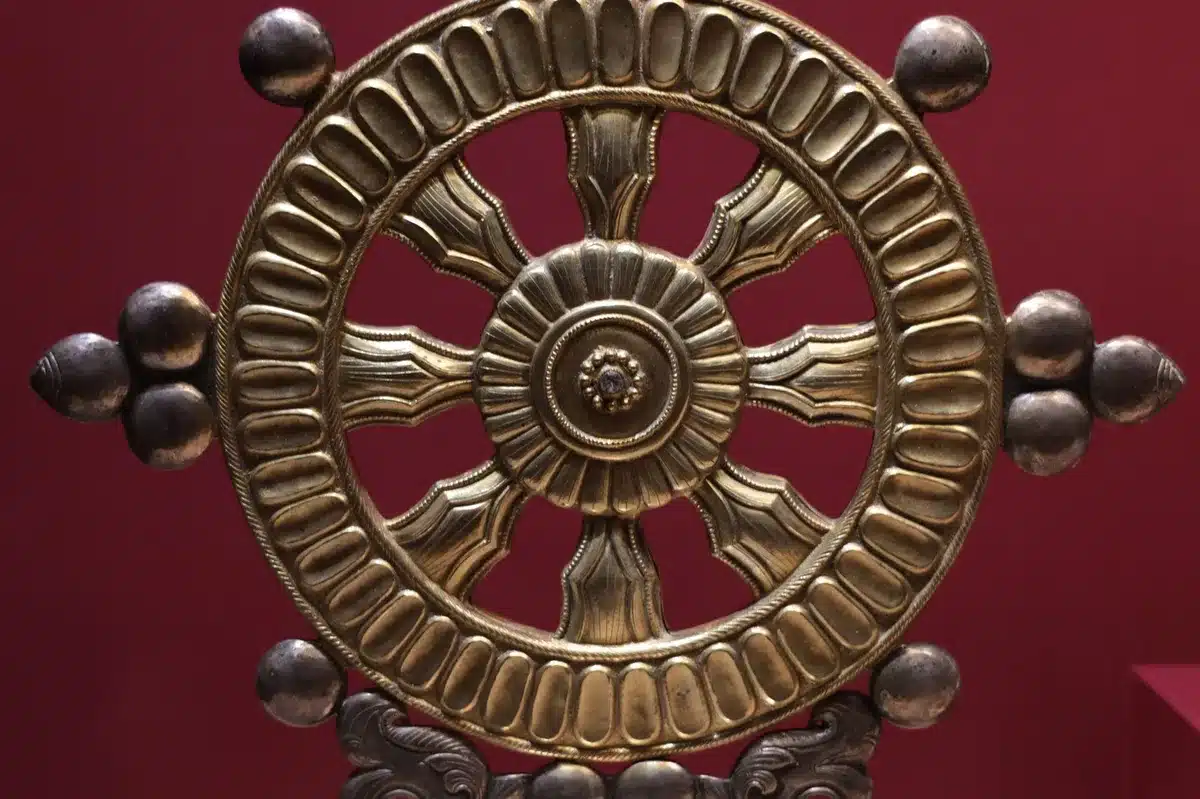
- Wheel of dharma — the continuity and universality of teaching and practice.
Another ancient motif often found across these traditions is the swastika, a geometric sign with multiple local meanings—from cosmic order to stages of life—long predating its appropriation in the 20th century. Context matters: within these faiths the symbol functions as a reminder of life’s larger patterns, not as a political emblem.
Interwoven families and shared practices
Religious identity in the Indian context has frequently been porous. Households may incorporate rites, festivals and devotional practices drawn from more than one tradition, blurring neat boundaries that are often assumed in Western categories of religion.
Regional histories reinforce this blending. In parts of northern India, for example, Hindu and Sikh communities have long-standing cultural and social ties that shape family rituals and public commemorations.
Festivals as public bridges
Many festivals illustrate how these faiths intersect in daily life. Events tied to seasonal cycles—like harvest celebrations—or to the theme of spiritual renewal draw participants from different religious backgrounds.
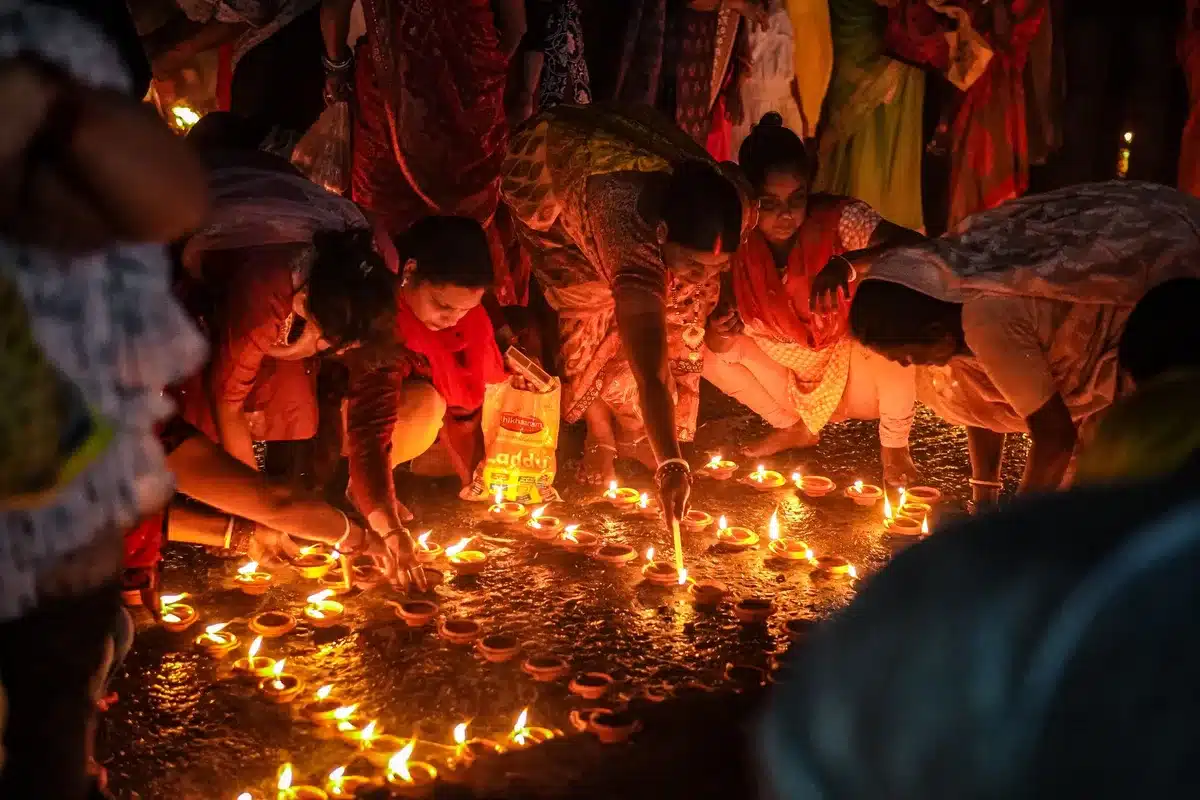
Diwali, with its themes of light triumphing over darkness, is one of the clearest examples: observed across Hindu, Jain, Sikh and even some Buddhist communities, the holiday functions as a civic as well as a religious occasion in many places. Similarly, celebrations such as Holi, Makar Sankranti and regional new-year observances encourage shared participation.
There are also observances that are traditionally associated with a single tradition but receive cross-community recognition. Buddhists’ Vesak and Sikhs’ Guru Nanak Jayanti, for instance, are often acknowledged and attended by people from neighbouring faiths, reflecting mutual respect and historical interdependence.
What this means now
For plural societies facing questions about how to integrate diverse religious communities, the Indian experience offers practical lessons: overlapping traditions, shared symbols and joint festivities can become resources for social cohesion rather than fault lines. As migration reshapes civic life in countries around the world, these patterns of accommodation and dialog remain relevant.
Seen through this lens, the dharmic traditions are not isolated relics but living practices that model how difference and common purpose can coexist—an idea that resonates as nations consider what it means to be both diverse and united.