Show summary Hide summary
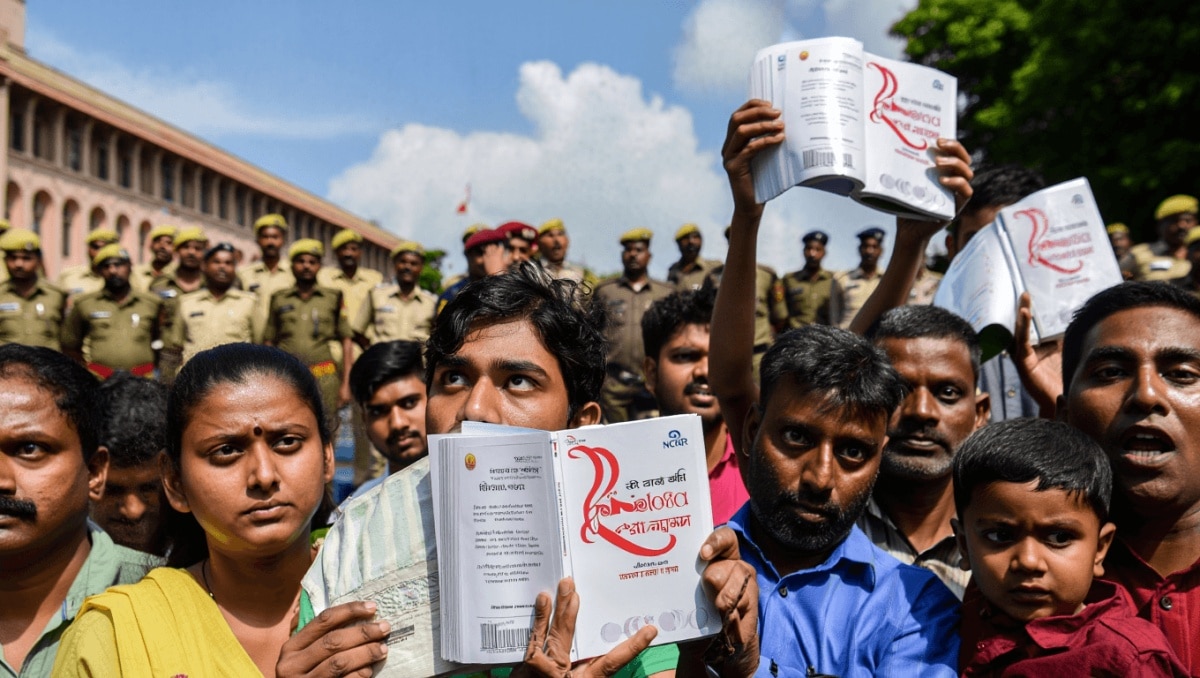
The release of a new Kannada third-language textbook for Class 6 published by NCERT has ignited criticism in Bengaluru, with a coalition of teachers and activists warning the material advances a narrow cultural agenda and sidelines the state’s regional diversity. Their objections — focused on the book’s title, content and dietary guidance — raise immediate questions about curriculum oversight and how language instruction will be handled under the CBSE’s updated policy.
People’s Alliance for the Fundamental Right to Education, a coalition of educationists and activists, says the text emphasizes religious and mythological themes at the expense of Karnataka’s plural literary and cultural traditions. The group argues that naming the book after a Hindu deity signals a shift toward a culturally one‑sided curriculum, a change they link to broader moves under the National Education Policy 2020.
Representatives of the collective singled out the choice of material and tone as problematic. They say the book omits stories, poetry and local histories from the coastal districts, northern Karnataka, the Malnad hills and the old Mysore region — areas that together shape the state’s linguistic and cultural richness. According to the group, the textbook’s narrative voice is didactic and carries value judgments rather than objective cultural description.
CAA urgency spikes after South Asia unrest: what citizens need to know
Glass shard in school snack sparks probe: book from another faith fuels parent outrage
One chapter on nutrition titled “health is wealth” drew particular criticism for recommending only vegetarian options, which the collective sees as an attempt to normativize dietary practice in school lessons. They want the lesson revised to depict a wider range of food choices, including eggs, fish and meat, arguing that presenting only vegetarian fare politicizes everyday family diets.
There has been no immediate response from NCERT to these allegations. The coalition has framed its objections as more than editorial complaints: they describe the textbook’s direction as part of a larger pattern of what they call cultural and political imprinting of school materials.
What the collective is demanding
- Withdraw the CBSE order to extend the same Class 6 Kannada text for Class 9 and reinstate separate, age-appropriate materials.
- Adopt existing state-approved Kannada texts such as Savi Kannada, Siri Kannada and Tili Kannada for CBSE schools, in line with the Kannada Education Act, 2015.
- Ensure the Karnataka State Council of Educational Research and Training (DSERT) is involved in developing or vetting Kannada textbooks intended for students in the state.
- Revise the nutrition lesson to include visual references to non-vegetarian foods and present balanced dietary information.
- Rename the book to better reflect Kannada identity rather than a religious figure.
These demands, the collective says, are aimed at protecting regional identity and preventing what they call a homogenized cultural narrative from being taught in schools that follow the CBSE syllabus.
Why this matters now
Under the CBSE’s revised language policy, the new third-language book will be used in higher classes, increasing its potential influence. For parents, teachers and school administrators across Karnataka, the controversy touches on classroom content that shapes children’s understanding of culture, language and social norms.
Legal and administrative implications are also at play. The Kannada Education Act, 2015 mandates prominence for Kannada in state schools; how CBSE schools operating in Karnataka reconcile central syllabi with state law could prompt administrative review or legal challenges if consensus is not reached.
Finally, the debate highlights a broader national conversation about textbook governance after the National Education Policy 2020, where questions about sources, perspective and representation in curricula remain unresolved.
For now, parents and educators are watching whether NCERT will revise the text or engage state authorities and stakeholders in a review. Any changes could affect textbook adoption timelines for the coming academic year and influence similar debates in other states.
Key facts at a glance
| Publisher | NCERT |
| Subject | Kannada (third language), Class 6 — proposed use in Class 9 under CBSE policy |
| Main controversy | Allegations of religiously slanted content, lack of regional representation, and promotion of vegetarian diet |
| Stakeholders | People’s Alliance for the Fundamental Right to Education, NCERT, CBSE, DSERT, parents and teachers in Karnataka |
| Immediate consequence | Calls for withdrawal of the Class 6/9 text decision and revision of specific lessons; possible administrative review |
The controversy is likely to evolve as state officials, NCERT and CBSE respond. For families and educators in Karnataka, the outcome will determine how Kannada language instruction balances local culture, religious content and inclusive representation in classrooms moving forward.