Show summary Hide summary
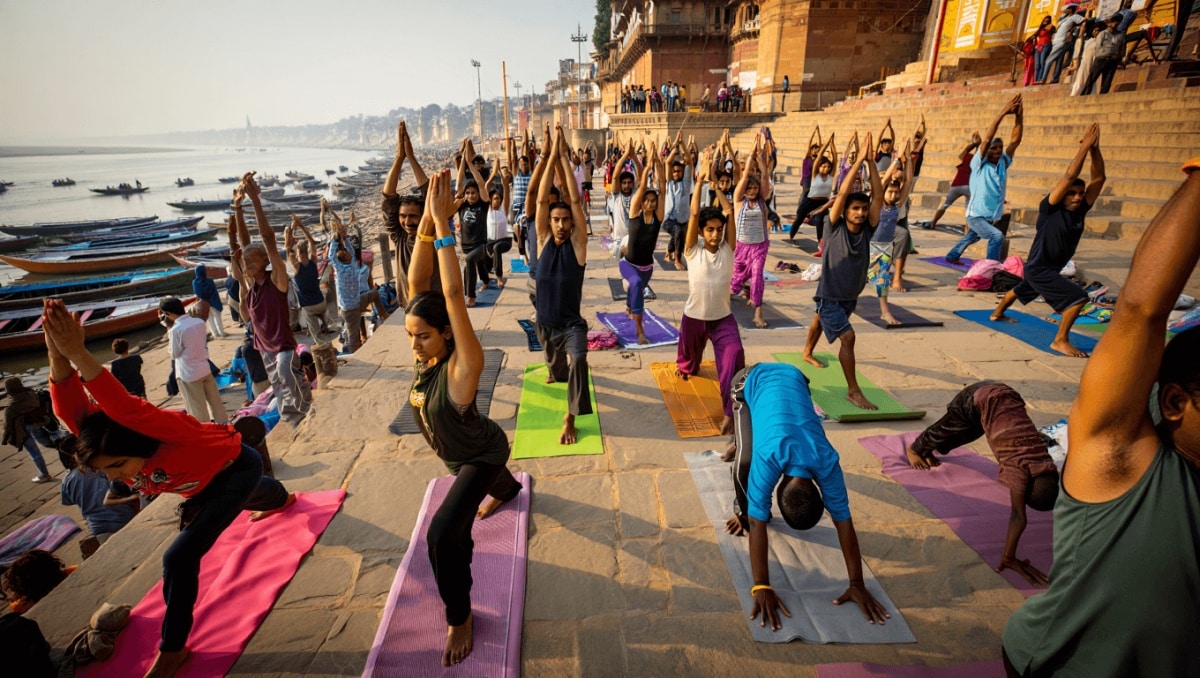
On June 16, 2026, a public yoga session at Dashashwamedh Ghat in Varanasi drew local residents and visitors to the riverfront, underscoring the ghat’s role beyond ritual worship. The gathering combined physical practice with a visible push to keep traditional communal spaces active for health and cultural events.
Rows of mats were spread across the stone steps facing the Ganga, with instructors guiding sequences while municipal staff and police oversaw crowd movement and safety. The atmosphere was calm and deliberately low-key — a blend of gentle stretches, meditation and the ambient sounds of the city.
Quick facts
Shah Rukh Khan used the name Abinav to ease in-law worries: Gauri adopted Ayesha during nikaah
Javed Akhtar hails Hindu festivals as cultural glue: throwback of atheist celebrating resurfaces
- Date: June 16, 2026
- Location: Dashashwamedh Ghat, Varanasi
- Activity: Public yoga session open to all ages
- Organisers: Local yoga groups and community committees
- Official presence: Municipal staff and local police for crowd and cleanliness management
The event attracted a mix of long-time practitioners and newcomers, many drawn by the ghat’s unique riverside setting. For some attendees, the session was an opportunity to connect a modern wellness practice with the long-standing spiritual rhythms of Varanasi; for others it was simply a communal, free exercise class in a prominent public space.
Why this matters now
Public wellness activities at major ghats can have ripple effects beyond a single gathering. They spotlight the potential for cultural sites to host inclusive, non-commercial programming that supports tourism, local livelihoods and public health messaging. At the same time, increased activity raises questions about waste management, noise and the long-term upkeep of heritage steps that are already under environmental pressure.
City officials present emphasized routine clean-up and crowd-control measures; volunteers helped collect used mats and single-use items after the session. Such logistics are now part of event planning whenever large numbers assemble along the river.
Broader context
In recent years, Varanasi has balanced its identity as a pilgrimage destination with a growing calendar of cultural and wellness events. These gatherings can attract photographers, domestic tourists and foreign visitors, offering economic benefits to nearby vendors and guides. They also prompt local authorities to weigh preservation priorities against community use.
Organisers said they plan additional sessions in the coming weeks, aiming to sustain interest and expand participation among different age groups. Whether such initiatives remain occasional or become a regular fixture will depend on coordination between community groups and municipal services.
For residents and visitors alike, the Dashashwamedh gathering was a reminder that the city’s riverfront is not just a backdrop for ritual life but an active public arena where heritage, health and everyday urban concerns intersect.