Show summary Hide summary
Three distinct cultural practices from Madhya Pradesh — an unconventional orchestra, an ancestral ironworking craft and a regional culinary tradition — have been added to the Sangeet Natak Akademi’s National Inventory of Intangible Cultural Heritage, moving them one step closer to possible UNESCO recognition. The listing recognizes living traditions that survive through practice and memory rather than monuments or books, and it raises immediate questions about preservation and local livelihoods.
The national inventory is maintained by the Sangeet Natak Akademi, the nodal body under the Ministry of Culture responsible for implementing the 2003 UNESCO Convention on safeguarding intangible heritage. Inclusion on this list is the formal prerequisite for any cultural element to be put forward for the UNESCO Representative List.
Three traditions now recorded
The selections highlight different modes of cultural transmission — musical innovation, craft-based technology and culinary memory — each rooted in community practice.
Hinduism gains ground in Africa: new communities reshape culture and commerce
Shah Rukh Khan used the name Abinav to ease in-law worries: Gauri adopted Ayesha during nikaah
- Maihar Band–Nal Tarang — A century-old orchestral tradition founded in 1918 by Ustad Allauddin Khan. The ensemble is notable for integrating Western and Indian instruments and for the Nal Tarang, a melodic device ingeniously fashioned from repurposed gun barrels.
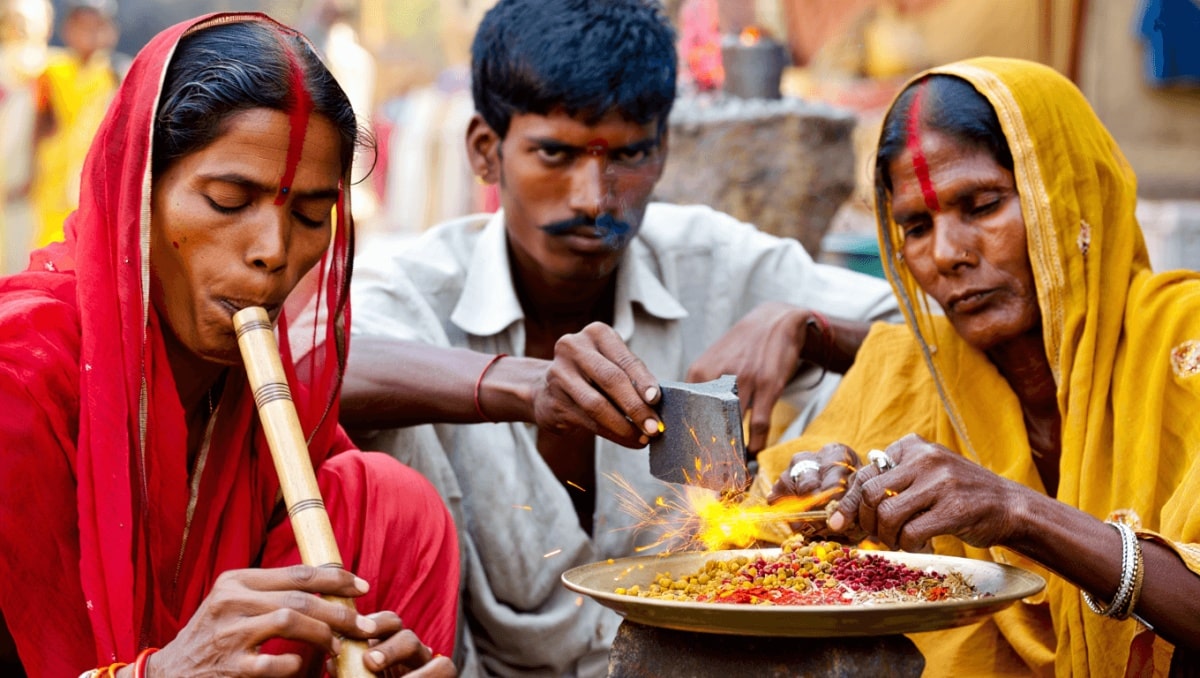
- Agaria iron-smelting — An indigenous metallurgical method maintained by the Agaria community, relying on clay furnaces, charcoal and local ore. Technique and know‑how are transmitted through apprenticeship, hands‑on observation and family networks rather than written manuals.
- Nimad cuisine — The foodways of Barwani, Khargone and Burhanpur, where recipes such as dal paniya, bafla and bhutte ki kees circulate orally across households and festivals alongside a rich tradition of pickles, kebabs and biryanis.
These entries are not simply cultural curiosities. Being recorded in the National Inventory establishes an official recognition that can support documentation, community-led preservation and potential funding routes. T. Illayaraja, secretary (tourism) and managing director of the Madhya Pradesh Tourism Board, emphasised that the move reinforces the state’s track record with UNESCO processes and noted that Orchha is a contender for inclusion on a permanent list in 2028.
Why this matters now
Intangible cultural heritage survives only while people practise it: in kitchens, workshops, rituals and performances. The new listings underscore that the future of these traditions depends on sustaining the social contexts in which they live — apprenticeships, village economies and festival seasons — rather than on archival recognition alone.
For communities, national recognition can translate into concrete outcomes: systematic documentation, formal support for craftspeople and performers, and stronger arguments when applying for conservation grants or tourism initiatives. For policymakers and researchers, the entries provide a clearer inventory of living knowledge that may warrant protection or revival measures.
At a glance
- What the listing is: A first, required step for international nomination to UNESCO’s Representative List.
- Who maintains it: Sangeet Natak Akademi, under the Ministry of Culture.
- Immediate impact: Official recognition, opportunities for documentation and eligibility for national support mechanisms.
The additions from Madhya Pradesh join a growing roster of community-centred traditions being mapped across India. Preservation of such practices will depend on ongoing intergenerational transmission and on policies that value living knowledge as much as built heritage.